Skip to content

Products

TVs

The right TV depends on your room's light, your seating distance, and how much you care about black levels. Use the size and distance calculators first, then pick a panel type for your room.

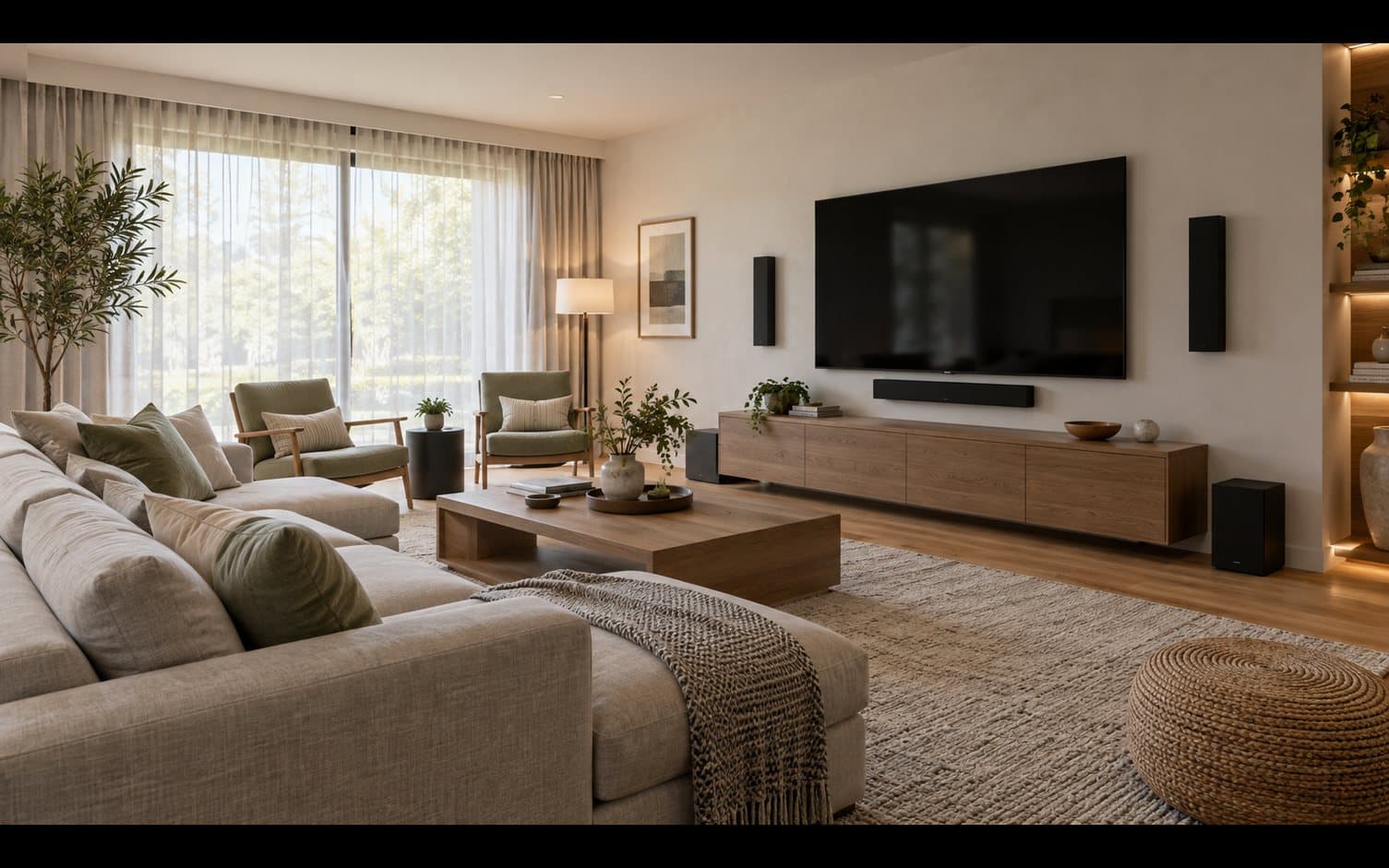
Bright living room with a wall-mounted TV above a low wood console and a light gray sectional

Which one is for you

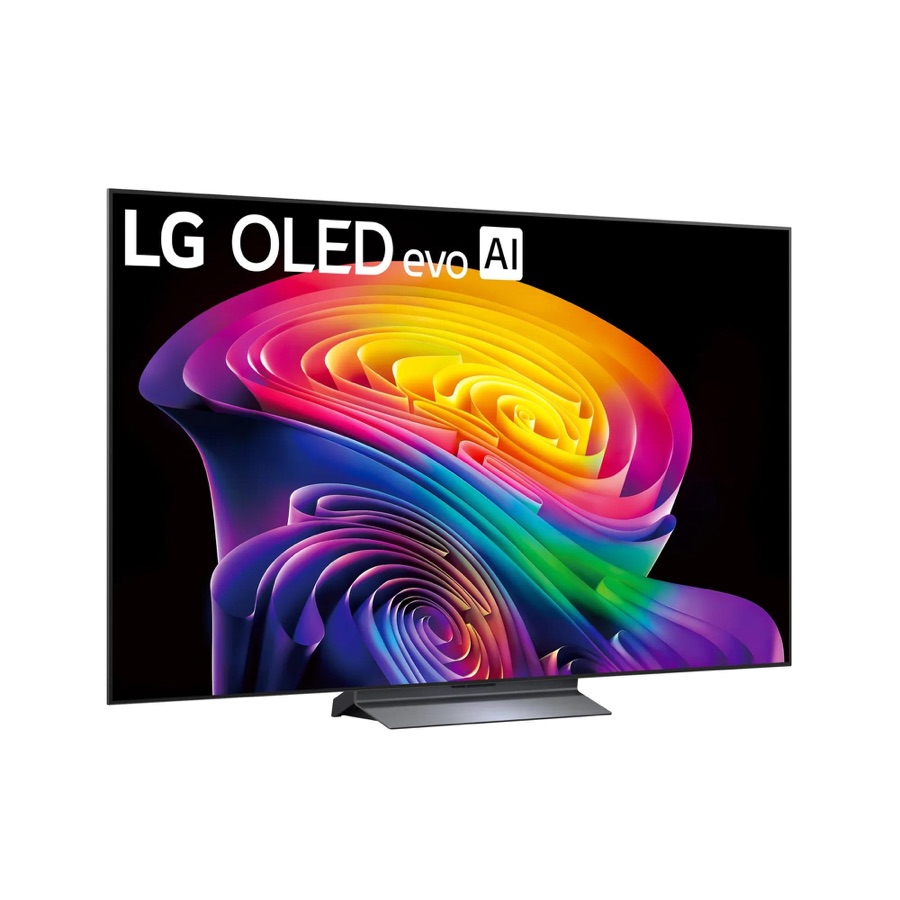
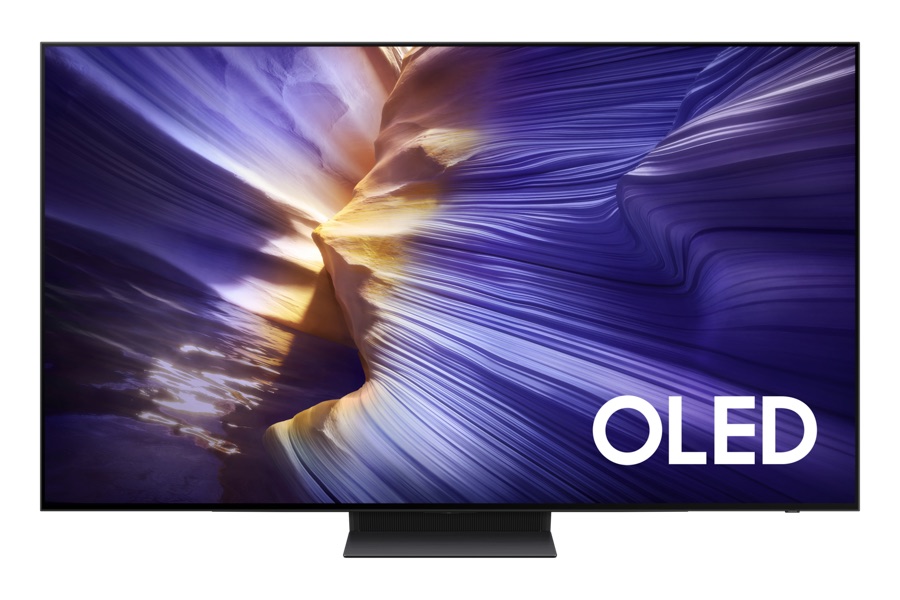
  • Dark room, movies first, and a budget near the middle: the LG C6 65-inch OLED evo (OLED65C6PUA) or, for wider color and a lower price, the Samsung S90F 65-inch QD-OLED (QN65S90FAFXZA).
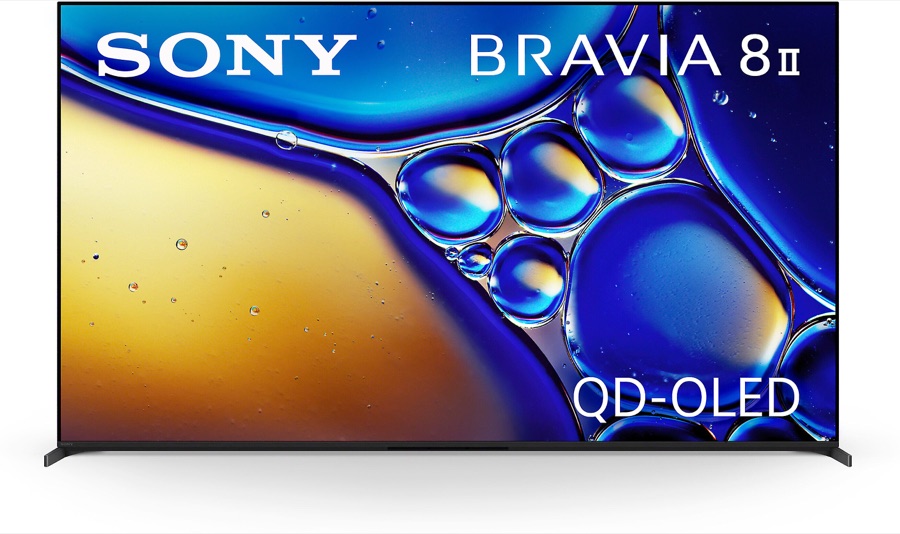
  • Reference picture quality and a Sony or PlayStation household: the Sony BRAVIA 8 II 65-inch QD-OLED (K-65XR80M2).
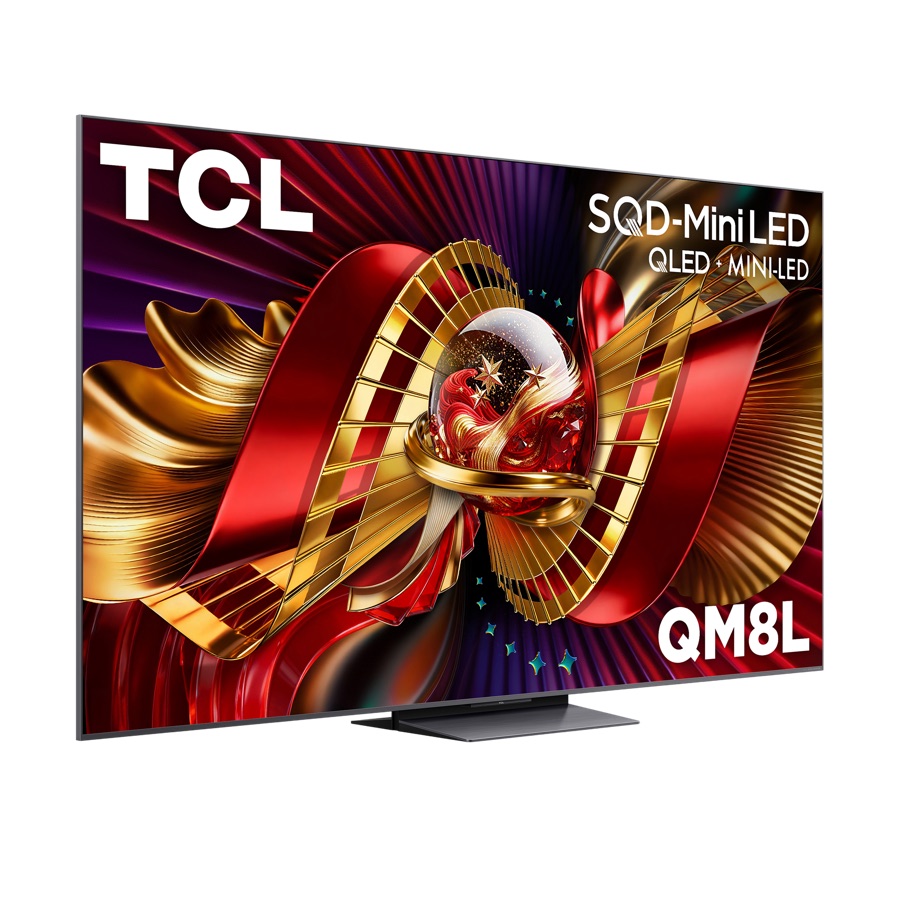
  • Bright living room with sports on all day or a giant screen without a projector: the TCL QM8L 85-inch SQD-Mini-LED (85QM8L).
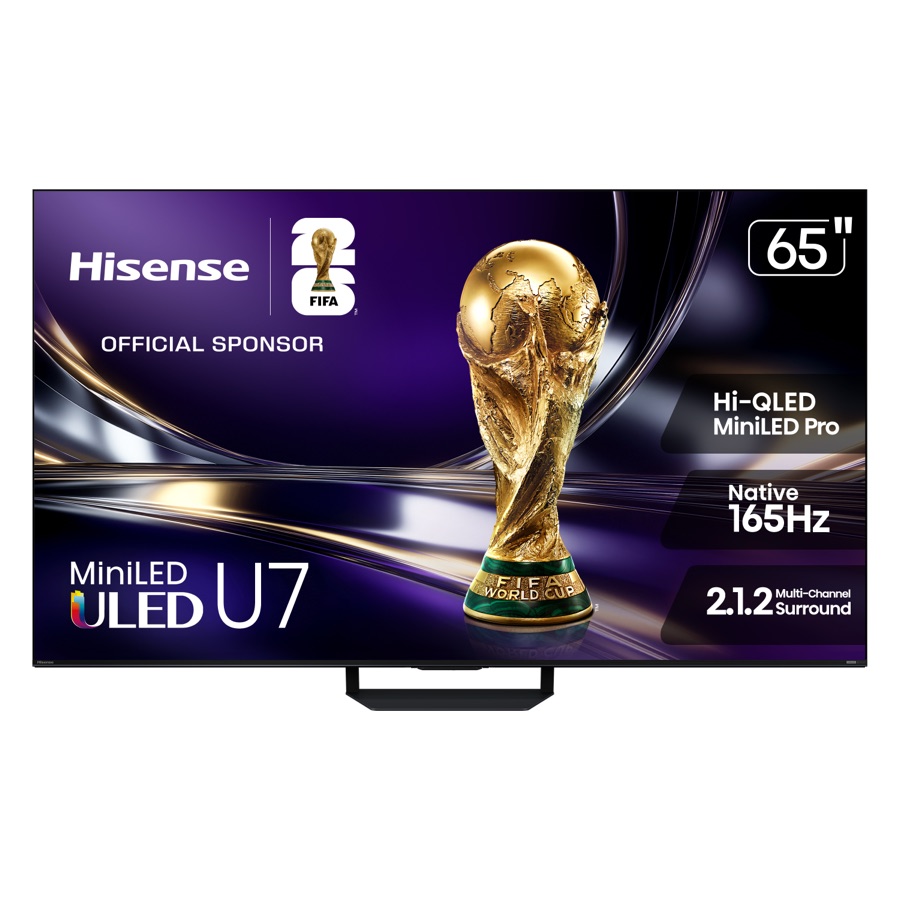
  • Tight budget: the Hisense U7SG 65-inch Mini-LED ULED (65U7SG) for a main room, or the Roku Pro Series 55-inch 4K QLED Mini-LED (55R8C5, 2025) for a bedroom or second room.

The picks

8 picks, budget to premium · prices as of October 2026 · affiliate links

1. Budget · Bright rooms, gaming on a budget

  • Mini-LED QLED
  • 4K 165Hz
  • 4x HDMI 2.1
  • Dolby Vision IQ / HDR10+

It is the least expensive 65-inch set in the catalog that still has real local dimming, a 165Hz panel, and full-bandwidth HDMI 2.1 on all four inputs. RTINGS measured strong HDR brightness for the price and the matte coating handles daytime reflections far better than the glossy OLEDs.

Pros

  • High HDR brightness for the money
  • Four full HDMI 2.1 inputs
  • Matte anti-reflection coating

Cons

  • Narrow viewing angle (VA panel)
  • Blooming visible on subtitles in dark scenes
  • Google TV ads and clutter

Watch out: Off-axis picture fades faster than an OLED, so it suits a couch straight in front of it rather than a wide seating arc.
2. Budget · Vivid color and bright HDR on a budget

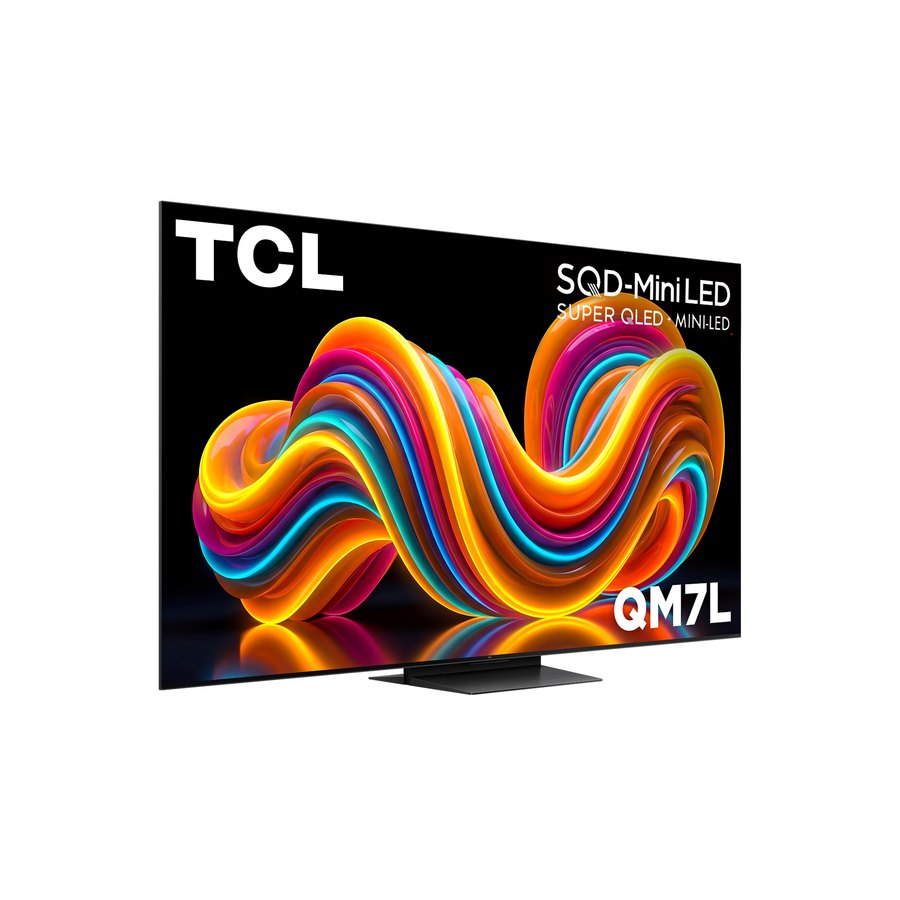
  • SQD Mini-LED, up to 2,100+ zones
  • 4K 144Hz
  • 2x HDMI 2.1
  • Dolby Vision IQ / HDR10+

It brings most of the QM8L's picture to the U7SG's price. Tom's Guide measured 90 percent of the Rec.2020 color space, ahead of the Hisense U7SG, gave it 4.5 out of 5 and its Best Mini-LED TV award for 2026, and TechRadar, also at 4.5 out of 5, called it close to the QM8L for much less money. Input lag of 9.4 ms puts it among the most responsive TVs at any price.

Pros

  • Class-leading color for the price
  • Bright HDR with real local dimming
  • 9.4 ms input lag

Cons

  • Only two HDMI 2.1 inputs
  • Glossier screen than the Hisense U7SG
  • HDR runs overbright out of the box

Watch out: Only two of the four HDMI ports are 2.1, so a second console or a gaming PC will be limited to 60 Hz, and RTINGS found its HDR tracking overbright out of the box and motion slightly blurry.

3. Budget · Bedrooms, second rooms, and anyone who hates TV menus

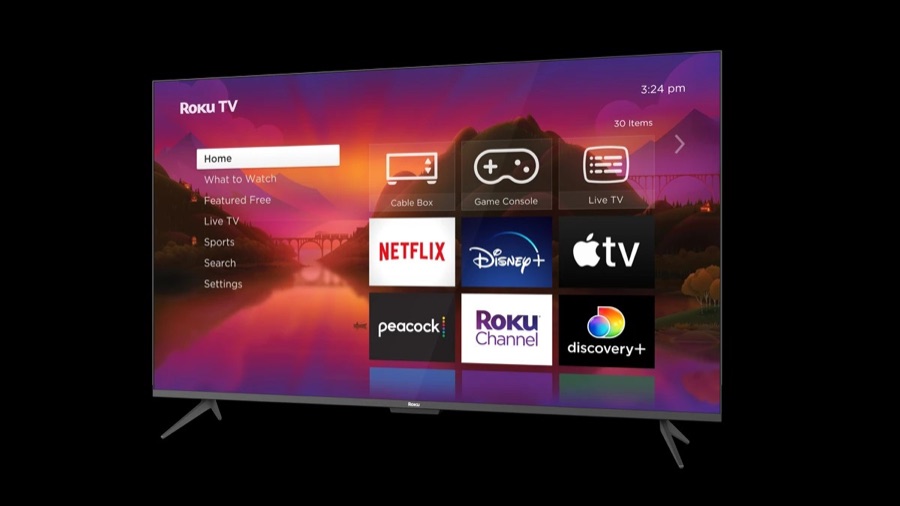
  • QLED Mini-LED
  • 4K 120Hz
  • 2x HDMI 2.1
  • Dolby Vision IQ / HDR10+

At this price most sets are edge-lit 60Hz panels; the Pro Series brings a Mini-LED backlight with local dimming, a native 120Hz panel with two 4K120 inputs, and Dolby Vision IQ. Tom's Guide measured 1,532 nits and 9.4 ms of lag, and Roku OS stays the simplest, fastest interface for a household that just wants to stream.

Pros

  • Roku OS is simple and quick
  • Bright for the price with Dolby Vision IQ
  • 120Hz panel with low input lag

Cons

  • Blooming in dark scenes
  • Only two HDMI 2.1 inputs
  • Narrow VA viewing angle

Watch out: Roku does not publish the zone count and reviews note blooming around subtitles in dark scenes, so it is not a dark-room movie set.

4. Mid-range · Dark rooms, movies, gaming

  • OLED evo (WOLED)
  • 4K 165Hz
  • 4x HDMI 2.1
  • Dolby Vision

The C series is the reference mid-range OLED every year, and the C6 keeps that spot with infinite contrast, near-perfect off-axis uniformity, and four full HDMI 2.1 ports, which no Samsung or Sony OLED at this price matches. RTINGS input lag under 10 ms at 4K120 makes it the safest all-round pick for a dark room that also games.

Pros

  • Perfect blacks and wide viewing angle
  • Four HDMI 2.1 inputs at up to 165Hz
  • Best-in-class gaming features

Cons

  • Mid-pack HDR brightness for an OLED
  • Glossy screen shows reflections
  • No HDR10+ support

Watch out: Peak HDR brightness trails the QD-OLED and tandem-panel flagships, so very bright rooms are better served by a Mini-LED.

5. Mid-range · Color-rich movies and gaming in a dim room

  • QD-OLED
  • 4K 144Hz
  • 4x HDMI 2.1
  • HDR10+ (no Dolby Vision)

Quantum-dot OLED gives the S90F noticeably more saturated reds and greens than a WOLED at the same price, and RTINGS and AVForums both measured it in the 1,300 to 1,500 nit class with near-perfect color accuracy out of the box. Four full-bandwidth HDMI 2.1 ports and a 144Hz panel make it the strongest gaming OLED in the mid tier.

Pros

  • Wider color gamut than WOLED rivals
  • Four HDMI 2.1 inputs at up to 144Hz
  • Very low input lag

Cons

  • No Dolby Vision support
  • Blacks wash out in a bright room
  • Tizen menus carry ads

Watch out: No Dolby Vision, and the QD-OLED panel has no polarizer, so blacks lift to a purple-grey under strong room light.

6. Mid-range · Sony fans who value processing and natural color

  • Mini-LED (VA), full-array local dimming
  • 4K 120Hz
  • 2x HDMI 2.1 (one is eARC)
  • Dolby Vision / IMAX Enhanced

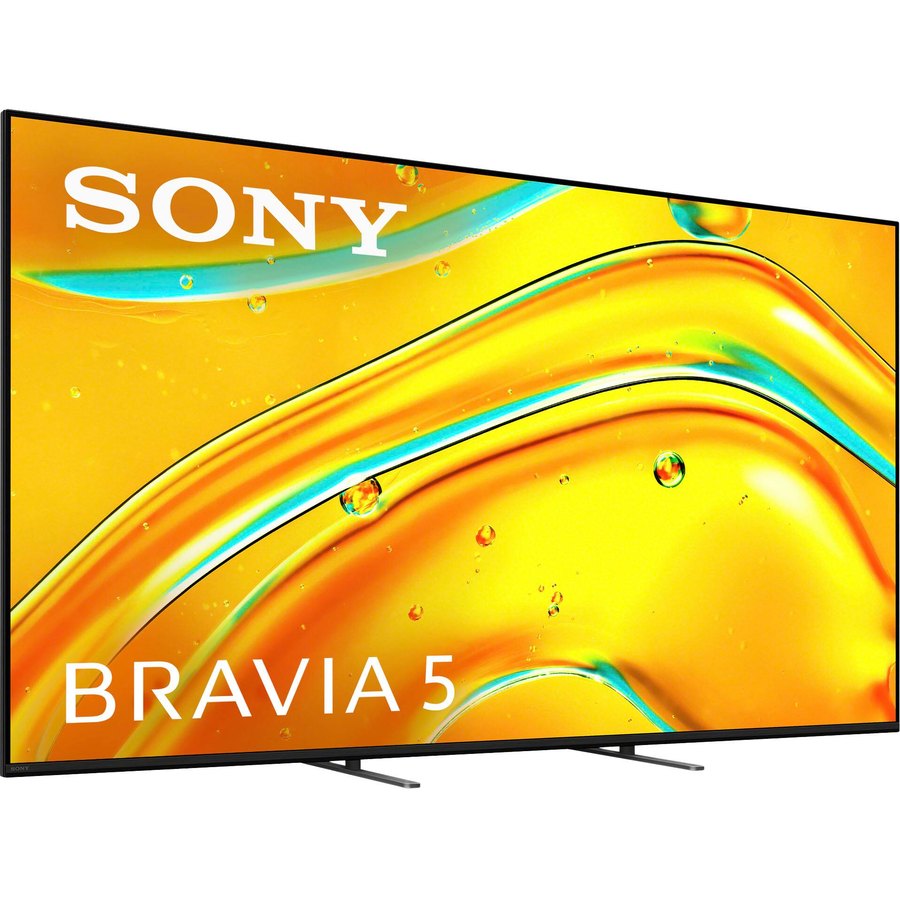
Sony's processing is the reason to buy it. RTINGS rates its upscaling superb and found it removes 24p judder from every source, and What Hi-Fi awarded it five stars for its backlight control and natural color, with TechRadar praising its contrast and minimal blooming. If most of what you watch is streamed or broadcast rather than 4K HDR, that processing matters more than peak brightness.

Pros

  • Excellent upscaling and motion processing
  • Natural, accurate color
  • Dolby Vision and IMAX Enhanced

Cons

  • Modest HDR brightness for a Mini-LED
  • Weak glare handling
  • Only two HDMI 2.1 ports, one shared with eARC

Watch out: RTINGS called it a disappointing follow-up to the X90L: HDR brightness is modest for a Mini-LED, it handles glare poorly, and motion blurs in Game Mode. It has also sold for close to 1,000 dollars several times, so it is worth waiting for a sale.

7. Premium · Big bright rooms, sports and HDR movies

  • SQD Mini-LED, up to 4,000 zones
  • 4K 144Hz
  • 4x HDMI 2.1
  • Dolby Vision / HDR10+

At 85 inches it is the catalog's answer to a projector in a room that cannot be darkened: measured peak HDR of 2,000 nits in Filmmaker Mode and well past 4,000 in Standard, with thousands of dimming zones keeping halos off subtitles. The anti-reflective wide-angle filter also fixes the two usual VA complaints.

Pros

  • Very high HDR brightness
  • Thousands of dimming zones with little blooming
  • Anti-reflective wide-angle panel

Cons

  • Heavy 85-inch chassis
  • Motion clarity behind OLED
  • Google TV can be sluggish

Watch out: It is heavy and deep, so budget for a mount rated well above its weight and two people to hang it.

8. Premium · Reference movie watching, Sony and PlayStation households

  • QD-OLED
  • 4K 120Hz
  • 2x HDMI 2.1
  • Dolby Vision / IMAX Enhanced

It is the OLED reviewers keep calling the reference for processing: XR upscaling, gradation and motion are a step ahead of LG and Samsung, and FlatpanelsHD measured 1,561 nits on a 10 percent window with Dolby Vision support the Samsung S90F lacks. Acoustic Surface Audio+ also makes the panel itself the center channel if you run it without a receiver.

Pros

  • Best-in-class processing and accuracy
  • Bright QD-OLED with Dolby Vision and IMAX Enhanced
  • Sound radiates from the screen surface

Cons

  • Only two HDMI 2.1 inputs
  • Input lag roughly double the LG C6
  • Costs more than the LG C6 or Samsung S90F

Watch out: Only two of the four HDMI ports are 2.1, and one of those is the eARC port, so a console plus a receiver uses both.

Common questions

OLED or Mini-LED?
OLED wins in a dark or dim room because every pixel turns off, which gives perfect blacks and no blooming. Mini-LED wins in a bright room because it gets two to three times brighter and handles daytime reflections with matte coatings.
Do I need HDMI 2.1 on every input?
Only if you have more than two 4K120 sources, such as two consoles and a PC. Most rooms need one 4K120 input for the console and one eARC port for the receiver or soundbar, and every set in this catalog has both.
Is 65 inches big enough?
At 8 to 9 feet, 65 inches gives about a 30 degree field of view, which is the low end of a cinematic experience. At 10 feet or more, step up to 77 or 85 inches, or use the TV size calculator with your actual seating distance.

At a glance

All 8 picks side by side, budget to premium. Read down a column to see where they differ.

ProductTypical pricePanelSizeRefresh ratePeak brightnessHDMI 2.1 inputsGamingPlatform
Hisense U7SG 65-inch Mini-LED ULED (65U7SG)Bright rooms, gaming on a budget$848Mini-LED QLED (VA)65 in4K 165Hz~2,500 nits class (mfr)4 (all full bandwidth)VRR to 165Hz, ALLM, Game BarGoogle TV
TCL QM7L 65-inch SQD-Mini-LED (65QM7L)Vivid color and bright HDR on a budget$898SQD Mini-LED QLED (VA)65 in4K 144Hz~2,270 nits measured (10% window)2 of 4 (4K144); 2 more at HDMI 2.0VRR, ALLM, FreeSync Premium Pro, 9.4 ms lagGoogle TV
Roku Pro Series 55-inch 4K QLED Mini-LED (55R8C5, 2025)Bedrooms, second rooms, and anyone who hates TV menus$598QLED Mini-LED (VA)55 in4K 120Hz~1,500 nits (Tom's Guide 1,532)2 of 4 (4K120)VRR, FreeSync Premium Pro, ALLM, 9.4 ms lagRoku OS
LG C6 65-inch OLED evo (OLED65C6PUA)Dark rooms, movies, gaming$1,600OLED evo (WOLED)65 in4K 165Hz~1,300 to 1,500 nits class4 (all 4K165)G-Sync, FreeSync, VRR, ALLM, 165HzwebOS 26
Samsung S90F 65-inch QD-OLED (QN65S90FAFXZA)Color-rich movies and gaming in a dim room$1,398QD-OLED65 in4K 144Hz~1,300 to 1,500 nits (10% window)4 (all 4K144)VRR, FreeSync Premium Pro, G-Sync, ~9 ms lagTizen OS
Sony BRAVIA 5 65-inch Mini-LED (K-65XR50)Sony fans who value processing and natural color$1,498Mini-LED (VA), full-array local dimming65 in4K 120Hz~750 to 900 nits measured (10% window)2 of 4 (4K120); one is the eARC portVRR, ALLM, ~13 ms lag at 60HzGoogle TV
TCL QM8L 85-inch SQD-Mini-LED (85QM8L)Big bright rooms, sports and HDR movies$2,498SQD Mini-LED QLED (VA)85 in4K 144Hz2,000+ nits (mode dependent)4 (all 4K144)VRR to 144Hz, ALLM, Game AcceleratorGoogle TV
Sony BRAVIA 8 II 65-inch QD-OLED (K-65XR80M2)Reference movie watching, Sony and PlayStation households$2,498QD-OLED65 in4K 120Hz~1,500 to 1,800 nits (10% window)2 of 4 (4K120)VRR, ALLM, 4K120, ~16 ms lagGoogle TV

Typical prices as of October 2026; check the retailer for today's price.

We may earn a commission when you buy through links on this site, at no extra cost to you. It never affects what we recommend. Learn more.

More categories