Head to head
Hisense U7SG vs TCL QM8L
Hisense's value Mini-LED against TCL's step-up SQD Mini-LED. The QM8L has finer dimming and more brightness; the U7SG handles glare better and costs far less. Here is how to choose at every size.
We may earn a commission when you buy through links on this site, at no extra cost to you. It never affects what we recommend. Learn more.
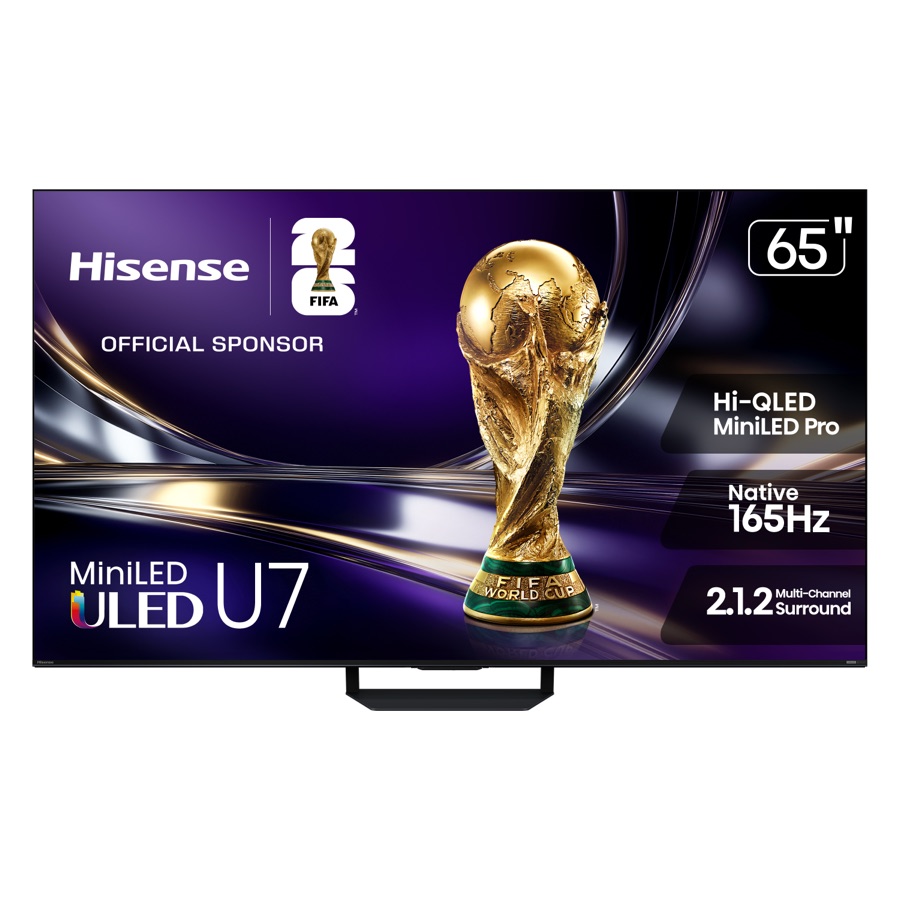
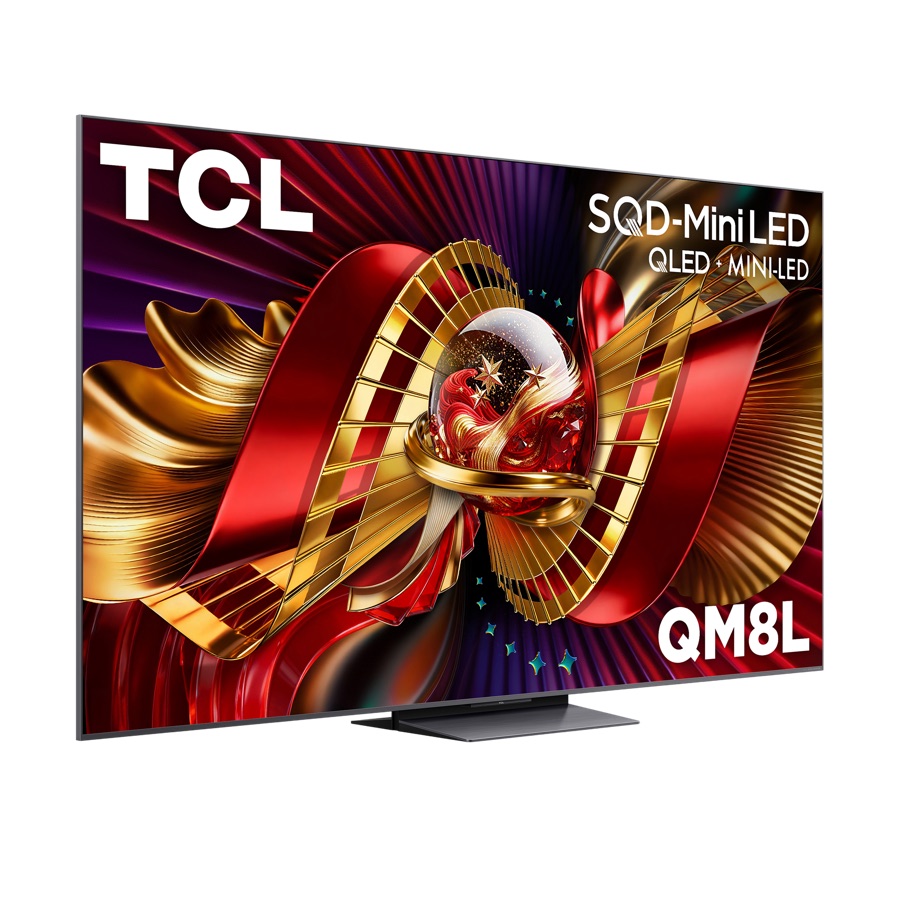
These are the two Mini-LED TVs most people shortlist in 2026, and they overlap at 65, 75, and 85 inches. The TCL QM8L is the better TV on paper and in testing: more dimming zones, deeper blacks, and less glow around subtitles. The Hisense U7SG costs much less, goes to 165 Hz, and has a matte screen that handles a sunny room better. The one question that decides it: is your room bright during the day, or do you watch mostly at night?
| Spec | ||
|---|---|---|
| Best for | Bright rooms, gaming on a budget | Big bright rooms, sports and HDR movies |
| Price tier | Budget | Premium |
| Sizes available | 55, 65, 75, 85, 100 in | 65, 75, 85, 98 in |
| Our pick reviewed here | 65 in (65U7SG) | 85 in (85QM8L) |
| Panel | Mini-LED QLED (VA) | SQD Mini-LED QLED (VA) |
| Dimming zones | Not published | Up to 4,000+ (mfr) |
| Peak HDR brightness | About 2,500 nits class (mfr) | 2,000 nits in Filmmaker Mode, 4,000+ in Standard (measured) |
| Refresh | 4K 165 Hz | 4K 144 Hz |
| HDMI 2.1 inputs | 4 (all full bandwidth) | 4 (all 4K144) |
| HDR formats | Dolby Vision IQ, HDR10+ | Dolby Vision, HDR10+ |
| Screen finish | Matte anti-reflection | Anti-reflective wide-angle filter |
| Platform | Google TV | Google TV |
Comparing them at the same size
Our picks are the 65-inch U7SG and the 85-inch QM8L, but most people choosing between these two are comparing the same size. Both come in 65, 75, and 85 inches, so you can buy either at the size your seating distance calls for.
At 65 inches the gap is mostly price. In October 2026 the 65-inch QM8L's 30-day average was about 1,480 dollars, against a typical 850 dollars or so for the 65-inch U7SG, though QM8L sales have dipped close to 1,080 dollars. If the QM8L drops near that sale price, the case for it gets much stronger.
Dark scenes: the QM8L's real advantage
RTINGS rates the QM8L slightly ahead overall, and the reason is local dimming. Its thousands of zones are controlled more precisely, so dark scenes show deeper blacks and far less glow around bright highlights and subtitles.
The U7SG has real local dimming too, which puts it well ahead of edge-lit sets at its price, but blooming around white subtitles on a black background is visible. If you watch a lot of films at night, that is the difference you will notice.
Bright rooms: the U7SG's real advantage
The QM8L gets brighter, but much of that extra headroom goes unused in everyday content. Where the U7SG pulls ahead is glare: its matte anti-reflection coating diffuses windows and lamps rather than mirroring them, and RTINGS rates it slightly better for a bright room for that reason.
Both are VA panels, so colors and contrast fade as you move off to the side. The QM8L's wide-angle filter reduces that fade; the U7SG is best with the sofa straight in front of it.
Gaming
This one is close to a tie. Both have four full-bandwidth HDMI 2.1 inputs with VRR and ALLM, so two consoles and a PC can all run at 4K120. The U7SG goes to 165 Hz against the QM8L's 144 Hz, which only matters for a PC that can push those frame rates.
Pick the Hisense U7SG if
- The room gets daylight or has lamps facing the screen; the matte coating handles glare better.
- You want the best value Mini-LED and would rather put the savings into speakers and a subwoofer.
- You game on a PC that can use 165 Hz.
Pick the TCL QM8L if
- You watch a lot of movies at night and blooming around subtitles would bother you.
- Family watches from wide angles; the wide-angle filter holds the picture better off to the side.
- You want the brightest HDR highlights, or you are buying at 85 inches or larger for sports.
Verdict
Buy the Hisense U7SG if the TV lives in a bright living room or the budget is firm; it does most of what the QM8L does for far less, and its matte screen is the better tool against glare. Buy the TCL QM8L if you watch at night or from wide angles, because its finer dimming and deeper blacks are the clearest picture-quality gap between the two. The exception is a dedicated dark theater, where an OLED such as the LG C6 beats both.
Common questions
- Which is better, the U7SG or the QM8L?
- The QM8L is the better TV, with finer local dimming, deeper blacks, and more brightness, and RTINGS rates it slightly ahead overall. The U7SG is the better value and the better choice for a room with a lot of glare.
- Is the QM8L worth the extra money at 65 inches?
- If you watch mostly at night, yes, especially when it is on sale. In a bright room the U7SG gives you most of the picture for much less, and its anti-glare coating is an advantage there.
- Which is better for gaming?
- They are close. Both have four full-bandwidth HDMI 2.1 inputs with VRR and ALLM. The U7SG runs to 165 Hz and the QM8L to 144 Hz, which matters only for a high-frame-rate PC.
- Do both come in 85 inches?
- Yes. The U7SG comes in 55, 65, 75, 85, and 100 inches; the QM8L in 65, 75, 85, and 98 inches.
- What about the TCL QM7L?
- The QM7L is TCL's step-down Mini-LED and the U7SG's closest rival on price. Tom's Guide tested the two head to head and scored them a tie; see our U7SG vs QM7L comparison. The QM8L is the step up from both.