Skip to content

Products

Powered Speakers

A powered speaker has the amplifier, DAC, and inputs built into the cabinet, so a pair of them plus a TV is a complete system with no receiver, no speaker wire, and no rack. The spec that decides which one you need is how it connects to the television.

Two black bookshelf speakers on stands behind a beige sofa in a warm living room, angled toward the seats

Which one is for you

  • For the most speaker per dollar with a real HDMI eARC input, the Edifier R2750DB MKII is a genuine three-way for the price of a mid-range soundbar.
  • For the best-reviewed pair in the middle of the market, the Kanto REN has HDMI ARC with CEC and near-universal praise, with the caveat that every reviewer asks for a subwoofer alongside it.
  • For a TV-first system with room correction, the Klipsch The Sevens II includes a Dirac Live license and dual HDMI 2.1 with eARC.
  • For a music-first pair in a small room or on a desk, the Cambridge Audio L/R S and the Ruark MR1 Mk3 both have a phono stage and both take a TV over optical, but neither has HDMI.
  • If you want one system that does hi-fi and television equally well, the Cambridge Audio L/R M and L/R X add eARC, Wi-Fi streaming, and a phono stage in one cabinet.

The picks

8 picks, budget to premium · prices as of September 2026 · affiliate links

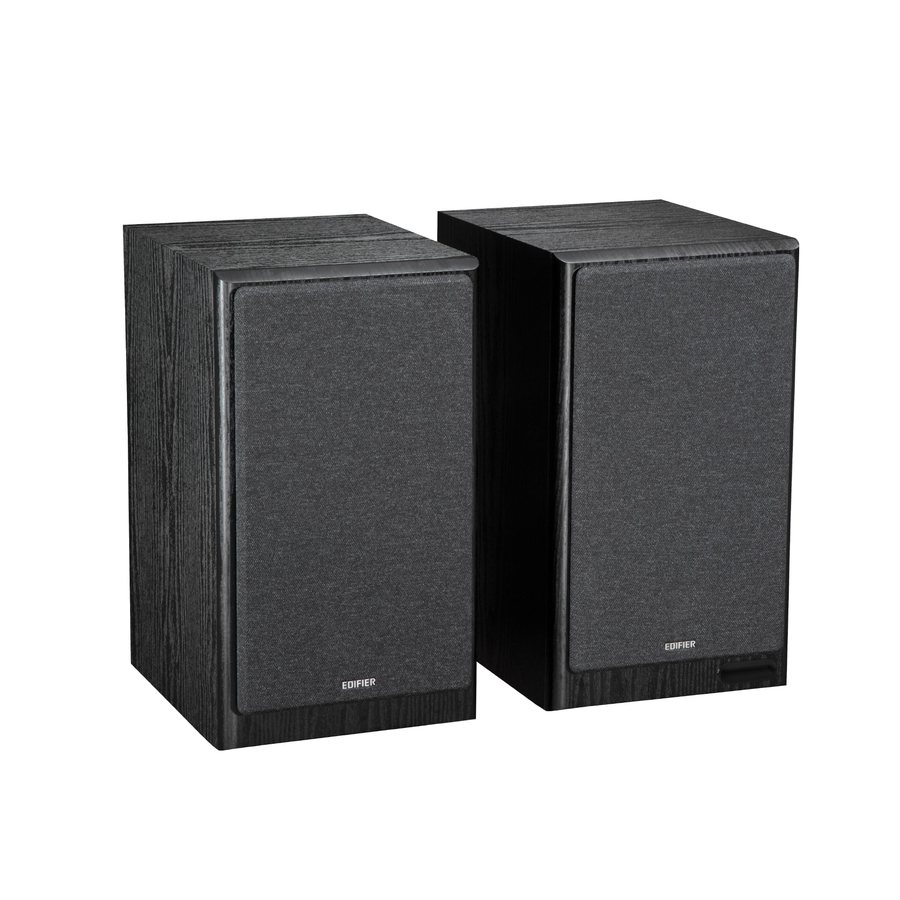
1. Budget · The most speaker per dollar with a real eARC input

  • HDMI eARC, optical, coax, RCA
  • 144 W RMS, three-way active
  • 7 in woofer, 4.5 in mid, 1 in dome
  • Bluetooth 6.0 with LDAC

Almost everything with an eARC port at this price is a two-way with a single small woofer. The R2750DB MKII is a real three-way with a dedicated midrange driver, which is why ecoustics found it stayed cohesive both near-field and across a room rather than shouting in the upper mids. It handles 24-bit/96 kHz over line, optical, coax and eARC, so the TV feed is not the weak link.

Pros

  • A true three-way at a two-way price
  • HDMI eARC, optical and coax all included
  • LDAC Bluetooth and 24/96 over wired inputs

Cons

  • No Wi-Fi streaming of any kind
  • No phono stage
  • Cabinet dimensions not published by Edifier

Watch out: There is no Wi-Fi and no phono stage, so streaming is Bluetooth-only and a turntable needs an external preamp.

2. Budget · A music-first compact pair with a tidy input set

  • Optical, RCA, USB-C
  • 100 W total (2 x 50 W)
  • Bluetooth aptX HD
  • 226 x 134 x 180 mm each

What Hi-Fi found the sound 'even-toned, refined and easy-to-listen-to' and called that impressive for the type and price, which is the Cambridge house character in a much smaller box than usual. The optical input takes a TV feed and the subwoofer output means it can grow, so it suits a bedroom or a desk where a full system will not fit.

Pros

  • Refined, easy-going Cambridge voicing
  • Compact enough for a desk or narrow shelf
  • Subwoofer output for a 2.1 upgrade

Cons

  • No HDMI, so no TV remote volume control
  • Bluetooth only, no Wi-Fi streaming
  • What Hi-Fi rate rivals higher for outright sound

Watch out: There is no HDMI, so the TV remote cannot control volume, and What Hi-Fi were clear that 'class leaders have more to offer' at the price.

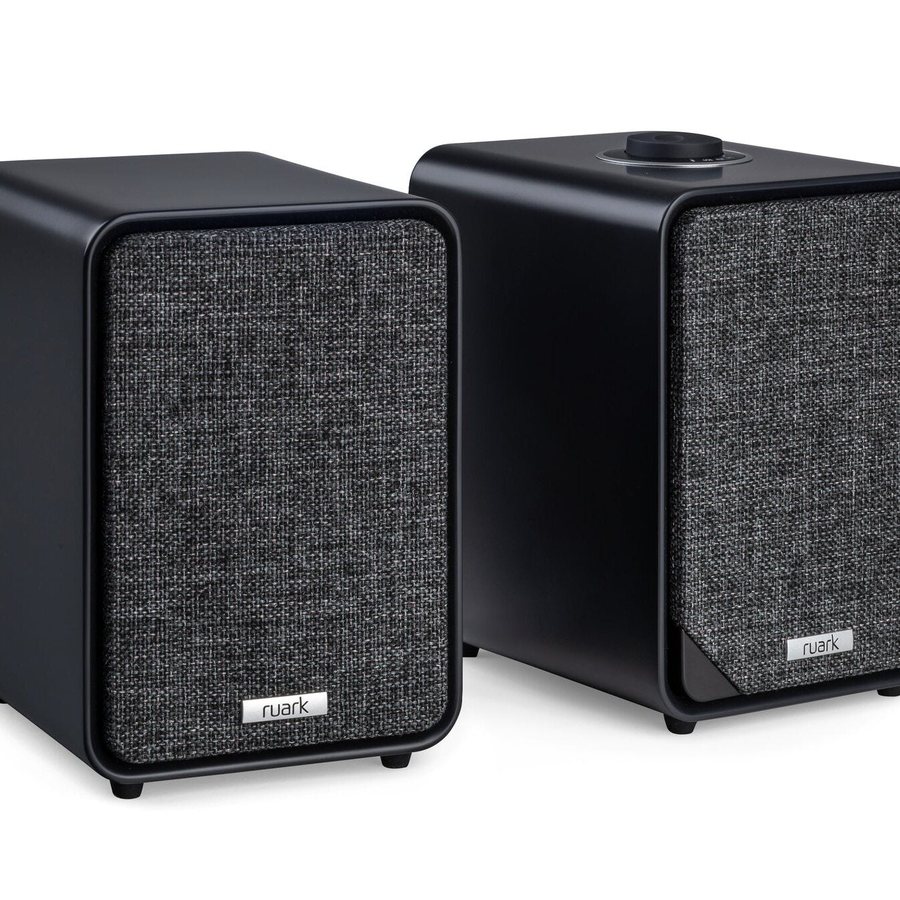
3. Budget · A small pair for a desk or turntable, with a phono stage built in

  • Optical via 3.5 mm, USB-C, RCA
  • 2 x 25 W Class D
  • Moving-magnet phono stage
  • 202 x 135 x 165 mm each

What Hi-Fi gave the MR1 a 2025 Award and described them as 'powerful, robust-sounding speakers that are a great fit for small spaces, and work particularly well with turntables'. The built-in moving-magnet stage is the reason for that last clause: a turntable plugs straight in with no separate preamp, which no other pair in this category under 1,000 dollars manages.

Pros

  • Moving-magnet phono stage built in
  • What Hi-Fi Award winner
  • Genuinely small footprint

Cons

  • No HDMI of any kind
  • 25 W a side limits it to small spaces
  • Not available new on Amazon

Watch out: It is not sold new on Amazon at all, so The Listening Room is the buying route, and with 25 watts a side it is a desk and bedroom system rather than a main-room one.

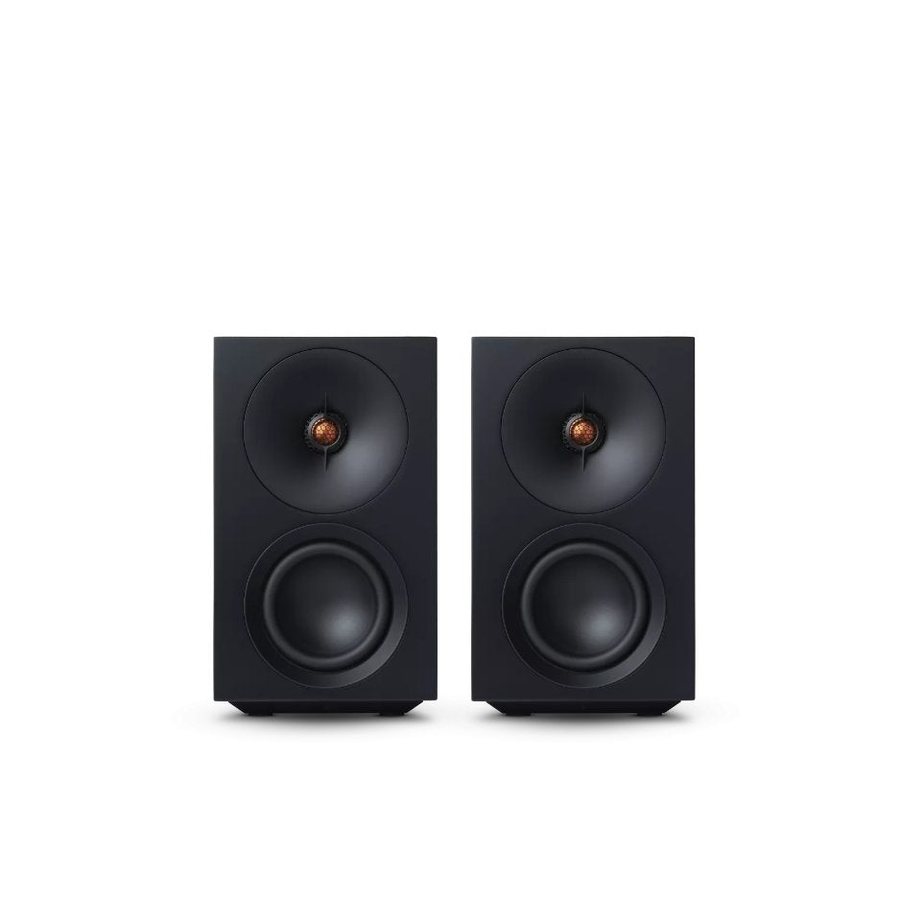
4. Mid-range · A genuine soundbar replacement for a small to medium room

  • HDMI ARC with CEC
  • 100 W RMS, 200 W peak
  • 5.25 in aluminium woofer, 1 in silk dome
  • 50 Hz to 22 kHz

This is the most consistently praised product in the category: five stars from T3, positive reviews from Audioholics, TechRadar, Trusted Reviews, SoundStage Access and Sound and Vision. The subwoofer output applies an automatic 80 Hz high-pass filter when you connect a sub, which is proper bass management rather than a passthrough, and matters because every one of those reviewers said the same thing about the bass.

Pros

  • HDMI ARC with working CEC volume control
  • The best professional review record in the category
  • Automatic 80 Hz crossover when a sub is connected

Cons

  • Bass is the acknowledged weak point
  • No phono stage and no Wi-Fi
  • Bluetooth lacks aptX or LDAC

Watch out: Reviewers agree the bass runs out before the volume does, so budget for a subwoofer in anything larger than a small room.

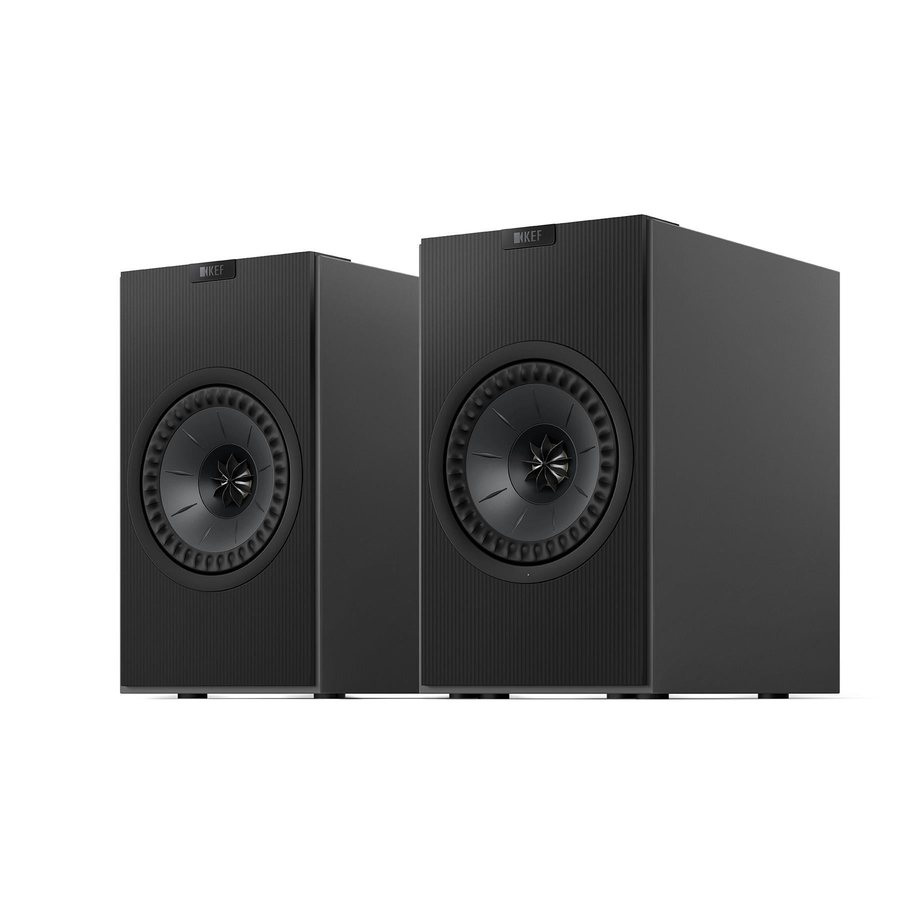
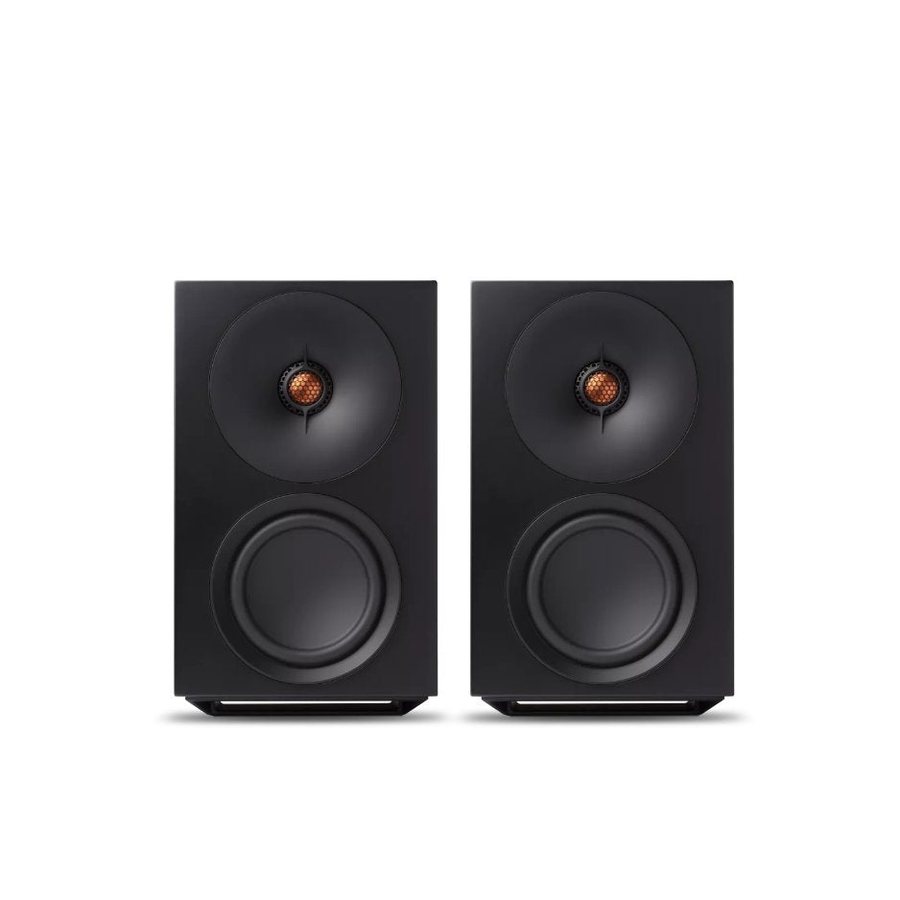
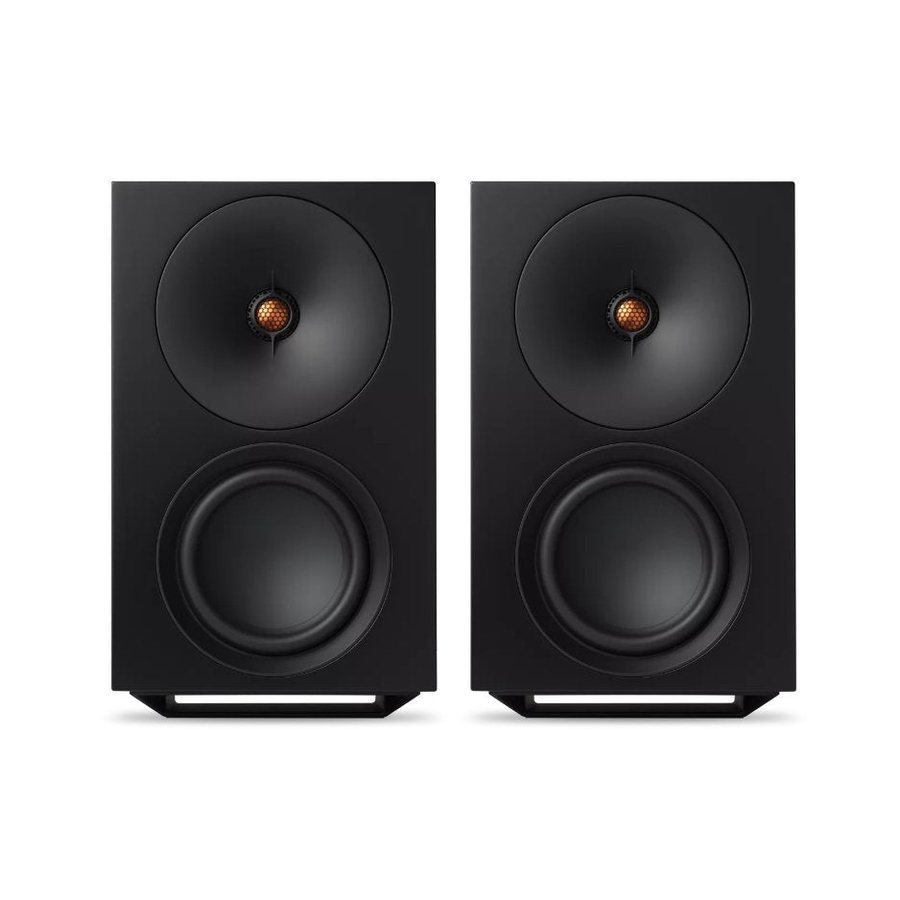
5. Mid-range · Uni-Q imaging with HDMI ARC and a phono stage

  • HDMI ARC, optical, USB-C, RCA
  • 200 W total Class D
  • Uni-Q point-source driver
  • Bluetooth 5.4 aptX Lossless

Uni-Q is the reason to buy a KEF: because the tweeter sits inside the midrange cone, the vertical and horizontal dispersion match, so the sweet spot is wider and the sound changes less when you stand up. The Coda W carries that driver plus HDMI ARC, aptX Lossless and a phono stage, which is a lot of input flexibility for the money.

Pros

  • Uni-Q point-source driver and its wide sweet spot
  • HDMI ARC plus a moving-magnet phono stage
  • aptX Lossless Bluetooth

Cons

  • No Wi-Fi streaming of any kind
  • Review evidence is still thin
  • Amazon stock is third-party rather than shipped by Amazon

Watch out: There is no Wi-Fi at all, so no AirPlay, Chromecast or Roon. Reviews are also early: the Amazon average of 3.9 comes from only 18 ratings and no full measured review has been published yet.

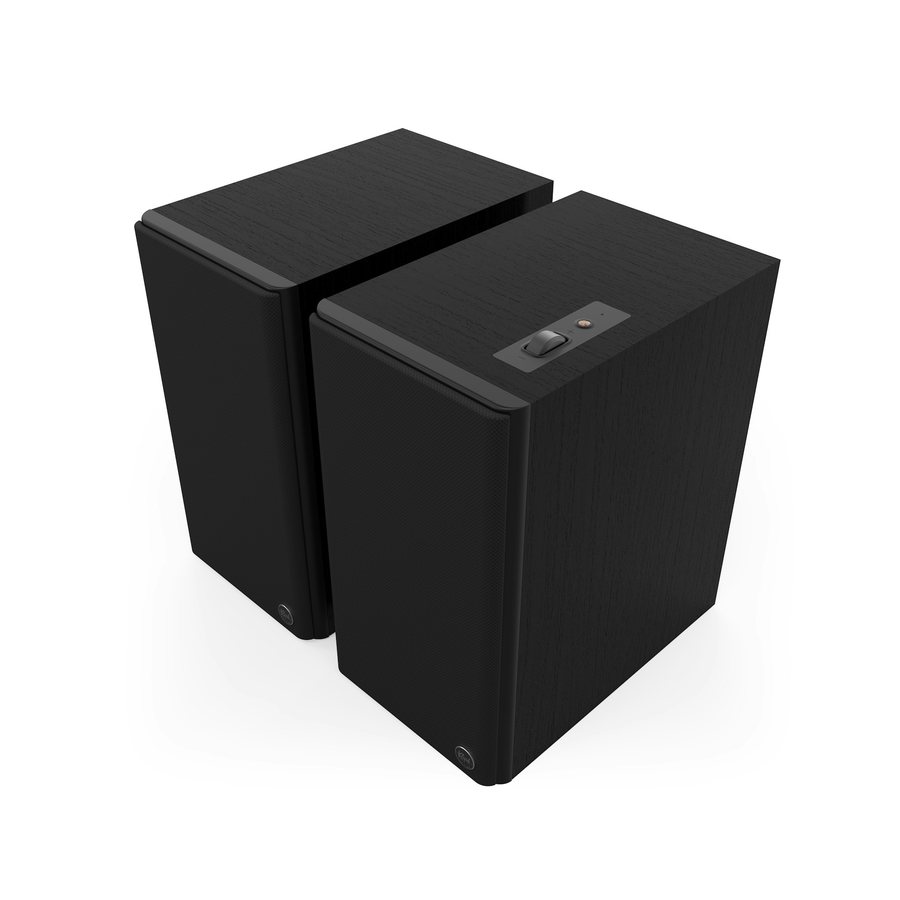
6. Mid-range · One pair that does hi-fi and television equally well

  • HDMI eARC, optical, USB, RCA
  • 300 W total (2 x 150 W)
  • 2.5-way with passive radiators
  • StreamMagic Wi-Fi streaming

The step from the L/R S to the L/R M is the step from a music pair to a system: eARC arrives, power triples to 150 watts a side, and Wi-Fi streaming through StreamMagic replaces Bluetooth-only. The force-cancelling passive radiators fire from the sides in opposing pairs, which cancels cabinet vibration and is why a box this size can be placed near a wall without bloating.

Pros

  • HDMI eARC and Wi-Fi streaming in one pair
  • Moving-magnet phono stage built in
  • Force-cancelling passive radiators ease placement

Cons

  • Pre-order rather than in stock
  • No independent measured review yet
  • Not sold on Amazon

Watch out: It is a newer release than the rest of this category and currently shows as pre-order at The Listening Room, so confirm the ship date before paying. No full measured review has been published yet.

7. Premium · A TV-first system with real room correction

  • Dual HDMI 2.1 with eARC
  • Dirac Live licence included
  • MM phono, coax, optical, USB-C
  • AirPlay 2 and Google Cast

Dirac Live is the differentiator. Every other pair here asks you to live with whatever your room does to the bass; this one measures the room and corrects it, and the licence is included rather than sold separately. ecoustics gave it their Editors' Choice with 8 out of 10 across performance, usability, build and value, praising the bold sound, deep bass and connectivity.

Pros

  • Dirac Live room correction included
  • Dual HDMI 2.1 with eARC, in and out
  • The widest streaming support in the category

Cons

  • Fiddly Wi-Fi setup reported by reviewers
  • Audible delay when switching input modes
  • Sold by third parties on Amazon, stock is thin

Watch out: ecoustics hit trouble with the Wi-Fi setup and noticed an audio delay when switching modes, and Amazon stock is third-party with only a few units at a time.

8. Premium · A full main-room system without a rack of components

  • HDMI eARC, optical, USB-C and USB-A
  • 800 W total (2 x 400 W)
  • StreamMagic Gen 4, Roon Ready
  • 330 x 200 x 260 mm, 10.4 kg each

At 10.4 kilos and 400 watts a side per speaker, this is the only pair in the category with the mass and power to anchor a proper living room rather than a desk or a bedroom. Roon Ready certification and StreamMagic Gen 4 mean it slots into a serious streaming setup, and the eARC input means it still answers the television.

Pros

  • 800 W and enough cabinet for a real living room
  • HDMI eARC plus Roon Ready streaming
  • Moving-magnet phono stage built in

Cons

  • No full independent review published yet
  • Expensive against a receiver and passive speakers
  • Walnut finish costs 100 dollars more

Watch out: What Hi-Fi have published only a hands-on impression so far, with no final rating, so the independent evidence is thinner than the price suggests. Some launch coverage quoted 2,299 dollars; Cambridge and dealers both list 2,399 today.

Common questions

Can powered speakers really replace an AV receiver?
For two-channel and 2.1 systems, yes. A pair with HDMI ARC handles TV audio, volume, and streaming with no separate box. What they cannot do is surround: there is no centre channel, no surrounds, and no Atmos height layer. If you want 5.1 or more, you need a receiver and passive speakers.
What is the difference between HDMI ARC and optical?
ARC is bidirectional, so the TV can send audio out and receive volume commands back over CEC, which means your TV remote controls the speakers. Optical is one-way audio only: you need a second remote, and its bandwidth caps out below lossless Atmos and DTS:X. eARC is the newer version of ARC with enough bandwidth for uncompressed formats.
Are powered speakers better than a soundbar?
For sound quality at the same price, almost always. A stereo pair puts real distance between left and right, which a single bar cannot fake, and the cabinets are large enough for drivers that reach lower. A soundbar wins on tidiness and on virtual surround.
Do I still need a subwoofer?
In anything bigger than a bedroom, usually yes. Reviewers say the same thing about almost every pair in this category: the bass runs out before the volume does. Every model listed here has a subwoofer output for exactly that reason.

At a glance

All 8 picks side by side, budget to premium. Read down a column to see where they differ.

ProductTypical priceTV connectionAmplifier powerDriversStreamingPhono inputSubwoofer outDimensions (each)
Edifier R2750DB MKII Active Stereo SpeakersThe most speaker per dollar with a real eARC input$500 pairHDMI eARC, plus optical and coaxial144 W RMS, quad amplificationThree-way: 7 in woofer, 4.5 in midrange, 1 in silk domeBluetooth 6.0 with LDAC; no Wi-FiNoYes, RCANot published
Cambridge Audio L/R S Ultra Compact Active Stereo SpeakersA music-first compact pair with a tidy input set$549 pairOptical TOSLINK only; no HDMI100 W total (2 x 50 W)Two-way activeBluetooth aptX HD; no Wi-FiNoYes, RCA226 x 134 x 180 mm
Ruark MR1 Mk3 Desktop Speaker SystemA small pair for a desk or turntable, with a phono stage built in$599 pairOptical TOSLINK via 3.5 mm combo jack; no HDMI2 x 25 W Class DTwo-way activeBluetooth; no Wi-FiYes, moving magnetYes, RCA202 x 135 x 165 mm
Kanto REN Powered Bookshelf SpeakersA genuine soundbar replacement for a small to medium room$650 pairHDMI ARC with CEC volume control100 W RMS, 200 W peak, Class D1 in silk dome, 5.25 in aluminium concave wooferBluetooth 5.3 (AAC, SBC); no Wi-FiNoYes, with automatic 80 Hz filterNot published
KEF Coda W Wireless Hi-Fi SpeakersUni-Q imaging with HDMI ARC and a phono stage$1,000 pairHDMI ARC, plus optical200 W total: 70 W LF and 30 W HF per speakerUni-Q coaxial point sourceBluetooth 5.4 with aptX Adaptive and aptX Lossless; no Wi-FiYes, moving magnetYesNot published
Cambridge Audio L/R M Versatile Active Stereo Streaming SpeakersOne pair that does hi-fi and television equally well$1,599 pairHDMI eARC, plus optical TOSLINK300 W total (2 x 150 W)2.5-way: 28 mm torus-chambered tweeter, two 4 in woofers, two 4.75 in side passive radiatorsWi-Fi with StreamMagic, plus BluetoothYes, moving magnetYes, RCANot published
Klipsch The Sevens II Powered SpeakersA TV-first system with real room correction$1,999 pairDual HDMI 2.1 with eARC, in and out190 W maximum output, bi-ampedTwo-way horn-loadedAirPlay 2, Google Cast, Spotify, Tidal and Qobuz Connect, Bluetooth 5.4Yes, moving magnetYesNot published
Cambridge Audio L/R X Advanced Active Stereo Streaming SpeakersA full main-room system without a rack of components$2,399 pairHDMI eARC, plus optical TOSLINK800 W total (2 x 400 W)Two-way activeWi-Fi with StreamMagic Gen 4: AirPlay 2, Chromecast, Roon ReadyYes, moving magnetYes, RCA330 x 200 x 260 mm, 10.4 kg

Typical prices as of September 2026; check the retailer for today's price.

We may earn a commission when you buy through links on this site, at no extra cost to you. It never affects what we recommend. Learn more.

More categories