Skip to content

Products

Projectors

Projectors give you 100 to 150 inch images for the price of a mid-size TV, but they need light control and the right throw distance. Run the throw calculator with your room before you shop.

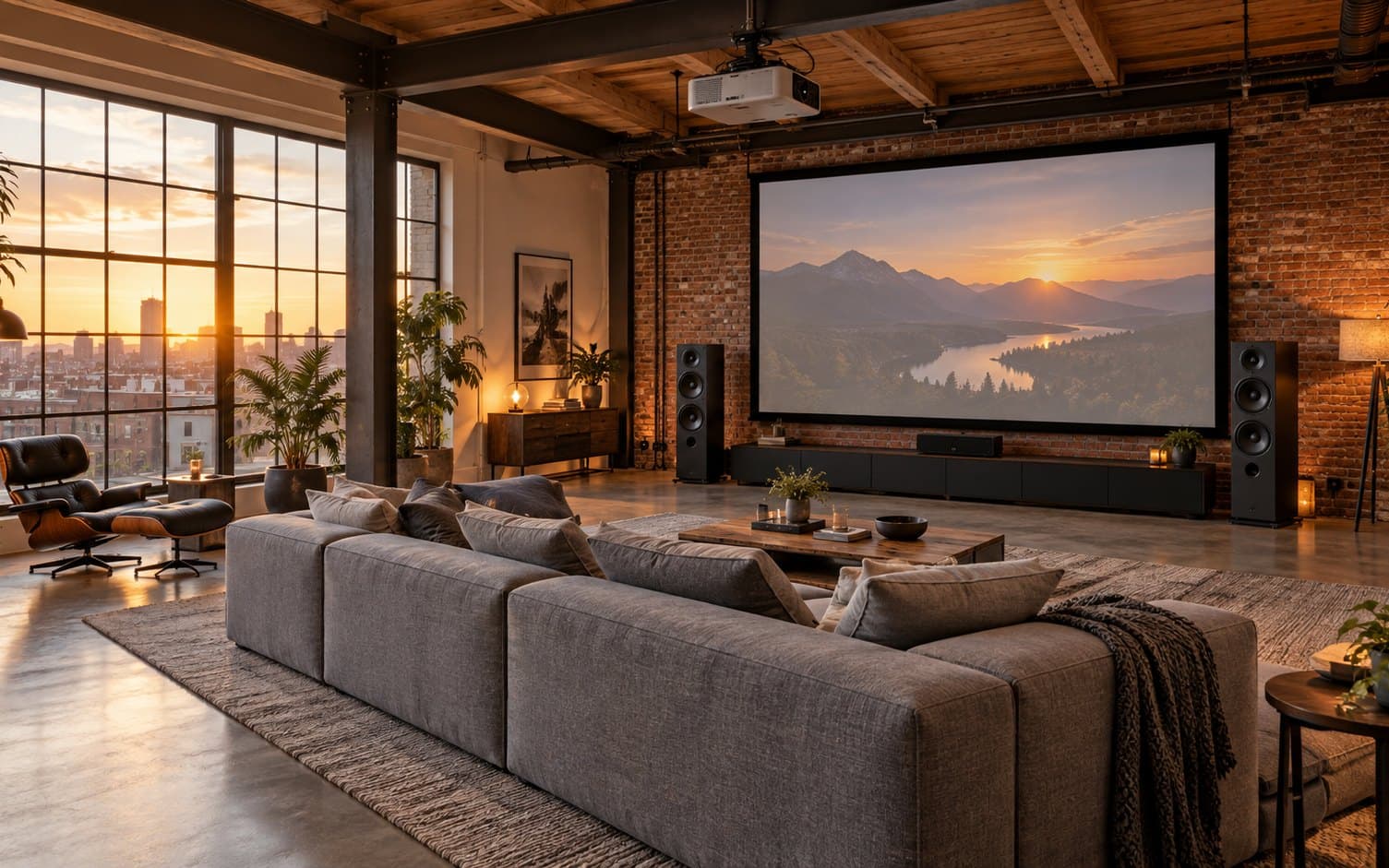
Open loft home theater with a projector throwing a mountain scene onto a large screen above a wide sectional

Which one is for you

  • First projector in a room you can darken: the Epson Home Cinema 2350 4K PRO-UHD, or the BenQ TK710 4K HDR Laser Projector if you game or want to skip lamp changes.
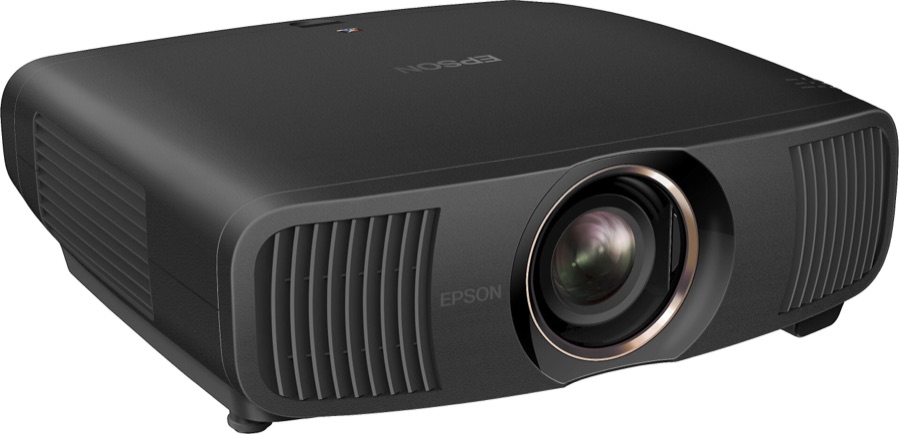
  • Dedicated theater where color accuracy and lens shift matter: the BenQ W4100i 4K 4LED Home Theater Projector; for a large room and a motorized lens, the Epson QB1000 4K HDR 3LCD Laser Projector (Black).
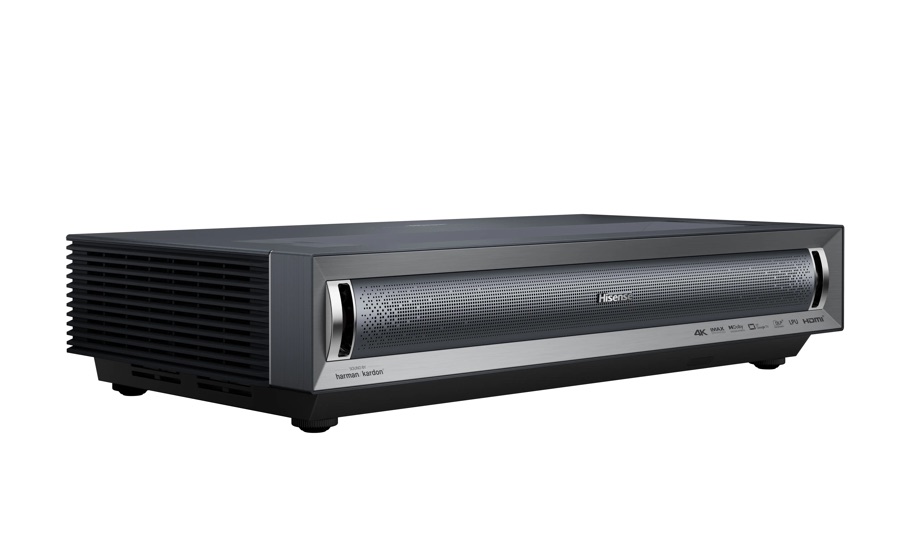
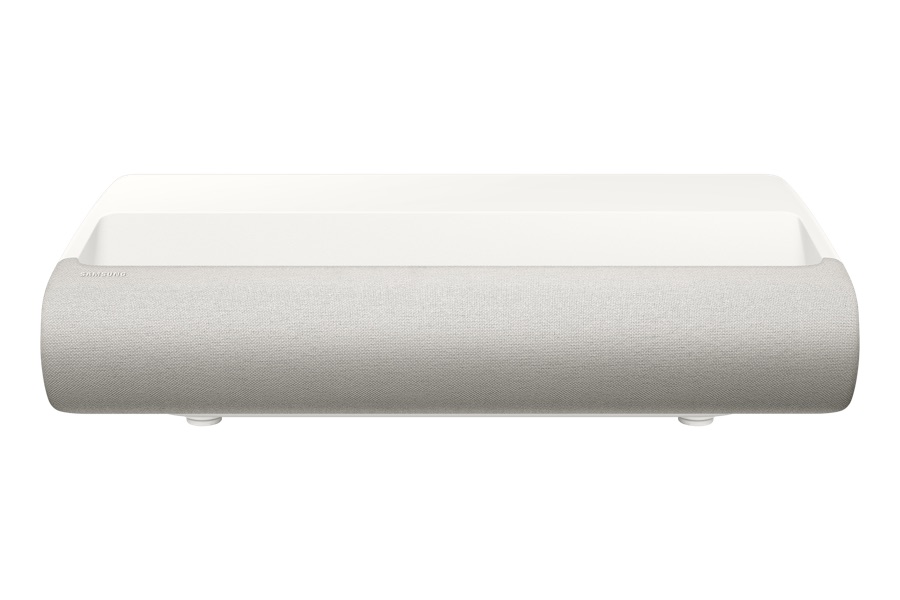
  • Living room with no ceiling mount and some ambient light: the Hisense PX3-PRO TriChroma Laser Cinema UST on a CLR screen, or the Samsung The Premiere 7 4K Laser UST Projector (SP-LPU7DSAXXZA) if you want a smart TV platform and speakers built in.

The picks

6 picks, budget to premium · prices as of October 2026 · affiliate links

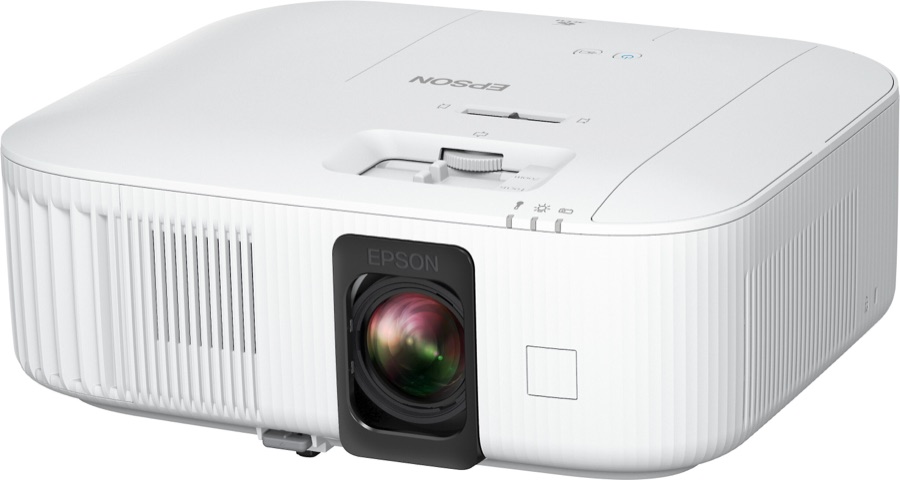
1. Budget · First home theater, light-controlled living rooms

  • 3LCD pixel-shift 4K
  • 2,800 lumens
  • Throw 1.32 to 2.15
  • Vertical lens shift

ProjectorCentral measured it close to its 2,800 lumen rating with equal color and white brightness, which is the 3LCD advantage over DLP at this price. Vertical lens shift plus a 1.6x zoom means it can sit on a shelf or ceiling without keystone correction, and it doubles as a low-lag gaming display.

Pros

  • Lens shift and 1.6x zoom for easy placement
  • Bright, accurate 3LCD color
  • Input lag under 20 ms

Cons

  • Lamp light source
  • Only two pixel-shift positions, not full 4K
  • Middling native contrast

Watch out: It is a lamp projector, so brightness fades over a few thousand hours and a replacement bulb is part of the cost of ownership.
2. Budget · Gaming, sports and movie nights in rooms with some light

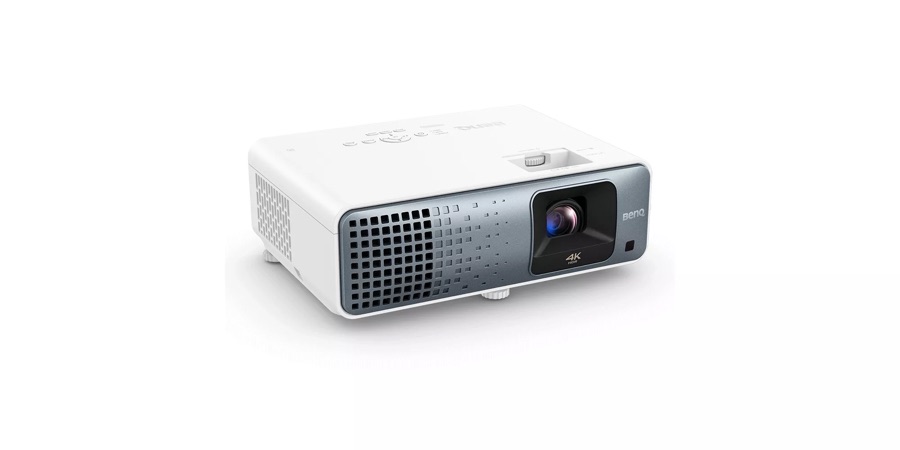
  • 0.65-in DLP, 4K pixel shift
  • 3,200 lumens (2,478 measured)
  • Throw 1.15 to 1.50, 1.3x zoom
  • 4 ms at 1080p240, laser

ProjectorCentral measured 4 ms of input lag at 1080p240 and 16 ms at 4K60, the fastest numbers in its class, with 1,800:1 native contrast from the larger 0.65-inch DLP chip. The laser light source removes the lamp-replacement cost that the Epson Home Cinema 2350 carries, and the small vertical shift plus 1.3x zoom make it easier to place than most DLP projectors at this price.

Pros

  • Lowest input lag in a home projector
  • Laser light source with no lamp changes
  • Sharp 0.65-inch DLP image with vertical shift

Cons

  • Measured brightness falls short of the rating
  • Only 10 percent vertical lens shift
  • Rec.709 gamut, no wide color for HDR

Watch out: Bright mode has a strong green bias and measured well under its 3,200 lumen rating, so plan around 1,500 to 1,800 usable lumens in the accurate modes.

3. Mid-range · Dedicated theater rooms, color-critical viewing

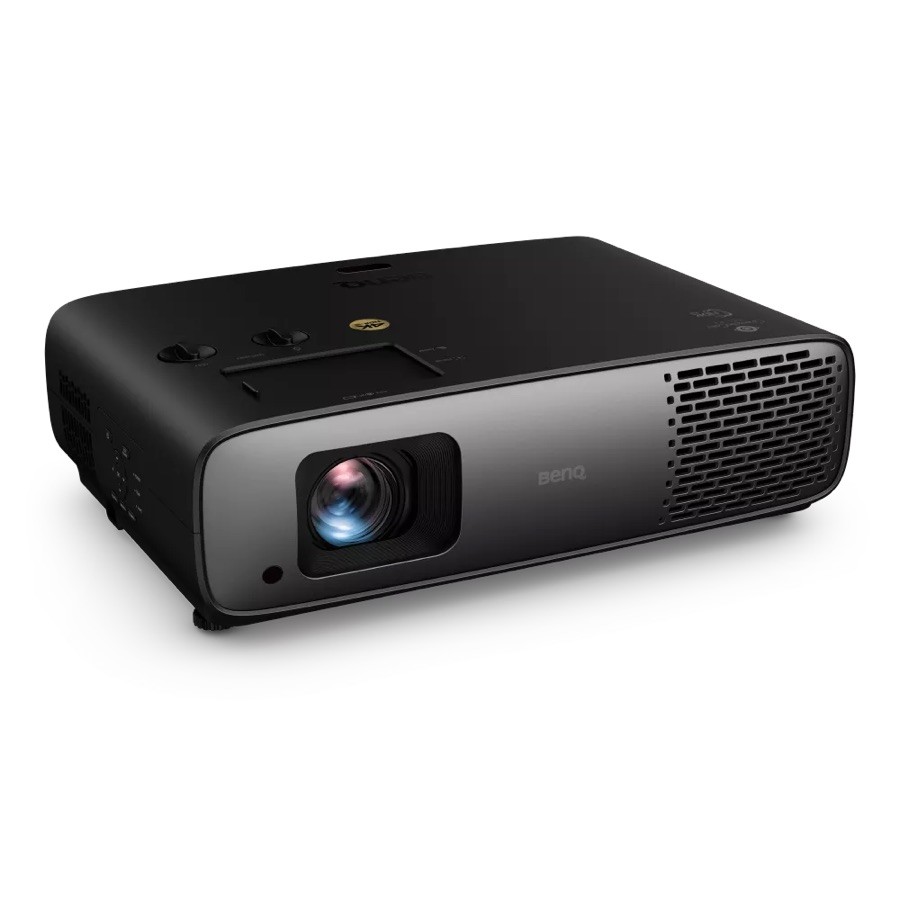
  • 0.65-inch DLP pixel-shift 4K
  • 3,200 lumens 4LED
  • Throw 1.15 to 1.50
  • H/V lens shift

Projector Reviews gave it an Editors' Choice for factory-calibrated 100 percent DCI-P3 color and a measured 4K60 input lag under 18 ms, both rare in a DLP under three thousand dollars. Horizontal and vertical lens shift with a 4LED light source that never needs a lamp makes it the mid-tier long-throw to build a dedicated room around.

Pros

  • Full DCI-P3 color out of the box
  • Both horizontal and vertical lens shift
  • Low input lag for a projector

Cons

  • Contrast trails LCoS and Epson UB models
  • Only 1.3x zoom
  • Rainbow artifacts for sensitive viewers

Watch out: Native contrast is DLP-typical, so a very dark room with a black-velvet ceiling shows its limits next to an LCoS projector.

4. Premium · Living rooms, no ceiling mount, UST ALR screens

  • RGB triple laser UST
  • 3,000 ANSI lumens
  • Throw 0.22:1, 80 to 150 in
  • Dolby Vision / HDR10+

It won the UST comparisons at ProjectorCentral and Projector Reviews on the strength of a measured 3,246 lumens, 3,000:1 native contrast, and 110 percent BT.2020 color from the triple laser, plus Dolby Vision and 18 ms input lag. That mix of picture and price is why it is the default living-room projector in the catalog.

Pros

  • Very wide color gamut with Dolby Vision
  • Bright enough for lights-on viewing
  • Low input lag and 240Hz at 1080p

Cons

  • Speckle and rainbows possible on a triple-laser DLP
  • Needs a perfectly flat UST screen
  • Google TV interface can lag

Watch out: Needs a UST-specific lenticular ALR screen such as the Elite Screens Aeon CLR 3 to look its best; a standard white screen washes out with the lights on.

5. Premium · Large dedicated theaters, 130 to 150 inch screens, awkward mounting positions

  • 3LCD laser, 4-way pixel shift
  • 3,300 lumens (3,383 measured)
  • Throw 1.35 to 2.84, 2.1x zoom
  • Motorized H/V lens shift

ProjectorCentral gave it an Editor's Choice after measuring 3,383 lumens with equal color brightness, 5,833:1 native contrast and just 21 ms of lag at 4K120, a combination no DLP in the catalog matches. The motorized 2.1x zoom lens with ten memory presets means the same projector can fill a 2.35:1 screen and a 16:9 screen without touching the mount.

Pros

  • Very bright with equal color and white output
  • Motorized zoom, focus and shift with lens memories
  • HDR10+ with dynamic tone mapping and 4K120

Cons

  • DCI-P3 coverage below 90 percent
  • Contrast trails JVC LCoS at this price
  • No Dolby Vision or 3D

Watch out: The pixel grid is visible from about six feet and can moire on woven acoustically transparent screens; there is no Dolby Vision or 3D.

6. Premium · Lights-on living rooms with no separate audio system

  • Single laser DLP UST
  • 2,500 ISO lumens
  • Throw 0.25:1, 100 to 120 in
  • HDR10+ / HLG, Tizen OS

It is the only UST in the catalog with a full smart TV platform, native Netflix and Samsung's Gaming Hub built in, plus a 30 W 2.2-channel speaker system that removes the need for a soundbar in a casual room. At 2,500 ISO lumens it is bright enough for daytime viewing on a CLR screen, and it undercuts the Hisense PX3-PRO by several hundred dollars.

Pros

  • Tizen smart platform and Gaming Hub built in
  • Bright enough for lights-on viewing on a CLR screen
  • 30 W 2.2-channel speakers with Dolby Atmos decoding

Cons

  • Low native contrast for the price
  • 0.25:1 throw needs a deeper cabinet than newer USTs
  • No HDMI 2.1, 4K120 or Dolby Vision

Watch out: Native contrast is only about 1,000:1 and there is no HDMI 2.1, 4K120 or Dolby Vision, so treat it as a bright-room TV replacement rather than a theater projector.

Common questions

How many lumens do I need?
For a 100 to 120 inch screen in a dark room, 1,500 to 2,500 measured lumens is plenty. For lights-on viewing you want 3,000 or more plus an ALR screen, and remember that measured output is often 15 to 30 percent below the rating.
Is pixel-shift 4K really 4K?
Pixel-shift projectors put 8.3 million pixels on the screen from a lower-resolution chip, and from normal seating distances the result is very close to native 4K. The difference shows up mainly in fine text and when sitting closer than 1.2 screen widths.
UST or long throw?
Ultra-short-throw sits on a cabinet inches from the wall and needs a special lenticular screen, which suits living rooms. Long throw goes on the ceiling or a rear shelf, works with any screen, and generally gives better contrast and sharpness for the money in a dedicated room.

At a glance

All 6 picks side by side, budget to premium. Read down a column to see where they differ.

ProductTypical priceTypeResolutionBrightnessThrow ratioLens shiftInput lagLight source
Epson Home Cinema 2350 4K PRO-UHDFirst home theater, light-controlled living rooms$1,2793LCD4K PRO-UHD (1080p x 2 pixel shift)2,800 lumens (mfr)1.32 to 2.15Vertical +/-60%Under 20 ms (1080p120 and 4K60)UHE lamp
BenQ TK710 4K HDR Laser ProjectorGaming, sports and movie nights in rooms with some light$1,7990.65-in DLP4K UHD (XPR pixel shift)3,200 lumens (2,478 measured)1.15 to 1.50Vertical, 10%4 ms 1080p240, 8 ms 1080p120, 16 ms 4K60Laser, 20,000 h
BenQ W4100i 4K 4LED Home Theater ProjectorDedicated theater rooms, color-critical viewing$2,7550.65-in DLP4K UHD (XPR pixel shift)3,200 lumens (mfr)1.15 to 1.50Vertical 0 to 60%, horizontal +/-15%17.9 ms 4K60, 13 ms 1080p1204LED, up to 30,000 h
Hisense PX3-PRO TriChroma Laser Cinema USTLiving rooms, no ceiling mount, UST ALR screens$2,9000.47-in DLP UST, triple laser4K UHD (XPR pixel shift)3,000 ANSI lumens (3,246 measured)0.22:1None (UST)18 ms 4K60 (measured)RGB triple laser, 25,000 h
Epson QB1000 4K HDR 3LCD Laser Projector (Black)Large dedicated theaters, 130 to 150 inch screens, awkward mounting positions$6,6953LCD4K UHD (4-way pixel shift)3,300 lumens (3,383 measured)1.35 to 2.84Motorized, V +/-96%, H +/-47%21 ms 4K60 and 4K120Laser, 20,000 h
Samsung The Premiere 7 4K Laser UST Projector (SP-LPU7DSAXXZA)Lights-on living rooms with no separate audio system$2,9970.47-in DLP UST, laser phosphor4K UHD (XPR pixel shift)2,500 ISO lumens (mfr)0.25:1None (UST)About 44 ms at 60Hz (no 120Hz)Laser phosphor, 20,000 h

Typical prices as of October 2026; check the retailer for today's price.

We may earn a commission when you buy through links on this site, at no extra cost to you. It never affects what we recommend. Learn more.

More categories