Head to head
Sony BRAVIA 5 vs TCL QM8L
Sony's processing-first Mini-LED against TCL's flagship, which is several times brighter, has twice the HDMI 2.1 ports, and often costs about the same on sale. The deciding factor is what you watch.
We may earn a commission when you buy through links on this site, at no extra cost to you. It never affects what we recommend. Learn more.
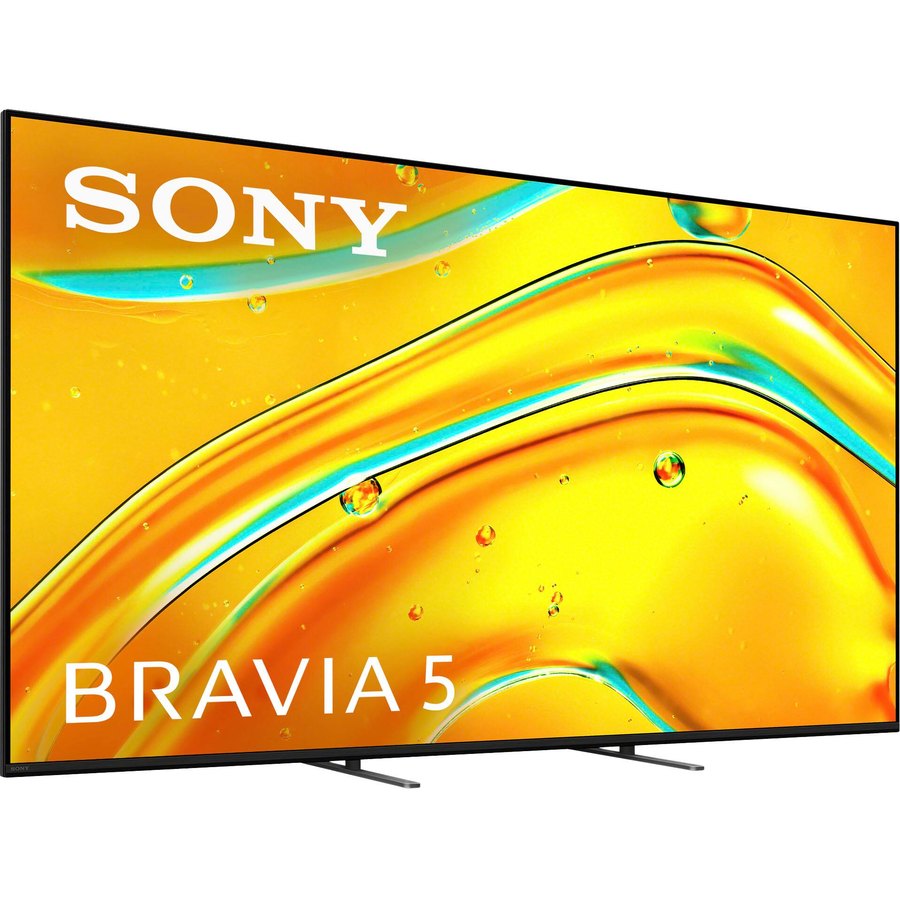
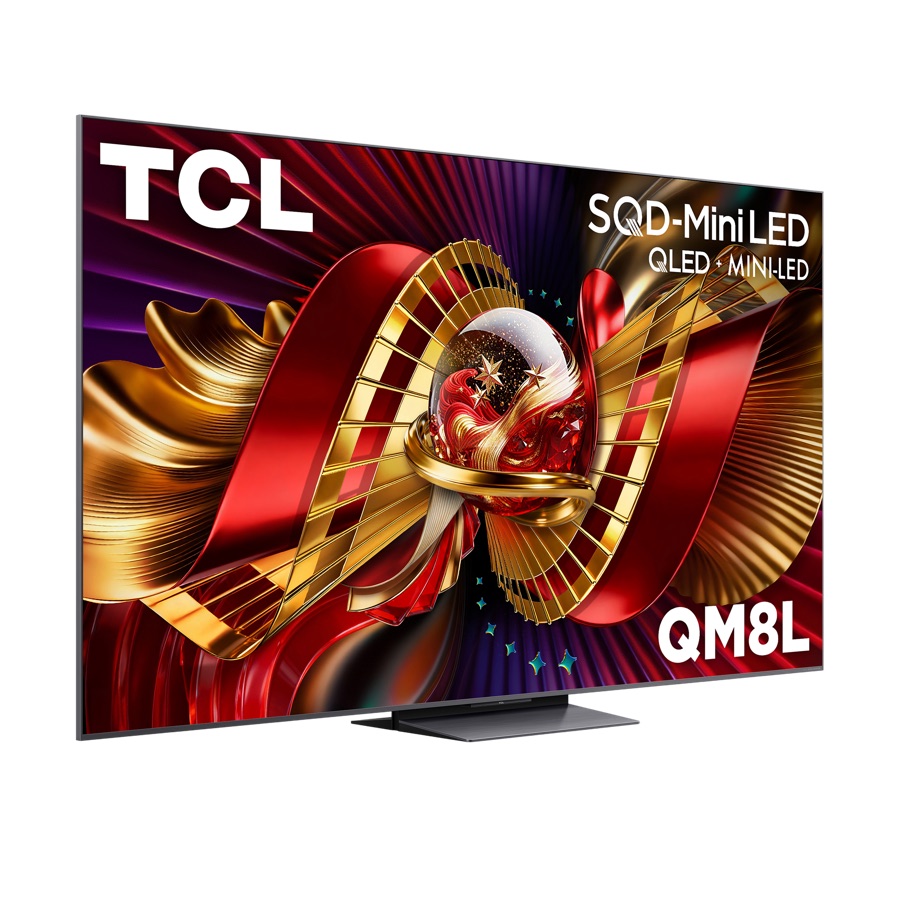
Both are Mini-LED TVs on Google TV with Dolby Vision, and at 65 inches they often land within a few hundred dollars of each other. The similarity ends there. The TCL QM8L is TCL's flagship: about four times brighter in HDR, with thousands of dimming zones and HDMI 2.1 on every port. The Sony BRAVIA 5 is a mid-range set whose strength is processing: upscaling, motion, and natural color. The one question that decides it: do you watch mostly 4K HDR and games, or mostly HD streaming, cable, and sports?
| Spec | Sony BRAVIA 5 65-inch Mini-LED (K-65XR50) Sony fans who value processing and natural color View on Amazon | |
|---|---|---|
| Best for | Sony fans who value processing and natural color | Big bright rooms, sports and HDR movies |
| Price tier | Mid-range | Premium |
| Sizes available | 55, 65, 75, 85, 98 in | 65, 75, 85, 98 in |
| Our pick reviewed here | 65 in (K-65XR50) | 85 in (85QM8L) |
| Panel | Mini-LED (VA) | SQD Mini-LED QLED (VA), wide-angle filter |
| Peak HDR brightness (10% window, measured) | About 750 to 900 nits | About 3,720 nits (Tom's Guide) |
| Refresh | 4K 120 Hz | 4K 144 Hz |
| HDMI 2.1 inputs | 2 of 4, one shared with eARC | 4 (all 4K144) |
| Input lag | About 13 ms at 60 Hz | 9.5 ms |
| HDR formats | Dolby Vision, IMAX Enhanced, no HDR10+ | Dolby Vision 2 Max, HDR10+ |
| Glare handling | Weak (RTINGS) | Anti-reflective |
| Upscaling and motion | Superb upscaling; removes 24p judder | Good; motion clarity behind OLED |
Brightness and dimming: not close
Tom's Guide measured the QM8L at about 3,720 nits on a 10 percent window. The BRAVIA 5 measured roughly 750 to 900 nits, and RTINGS rates its HDR brightness mediocre for a Mini-LED. With far more dimming zones, the QM8L also keeps halos tighter around subtitles and bright objects. On HDR movies, sports in a sunny room, and anything with bright highlights, the TCL is in a different class.
Processing: the Sony's whole case
The BRAVIA 5's advantage happens before the picture reaches the panel. RTINGS rates its upscaling superb and found it removes 24p judder from every source, so HD streaming, cable, and older films look cleaner than on most rivals, the QM8L included. What Hi-Fi gave it five stars for its natural color and backlight control. If most of what you watch is not 4K HDR, that matters more than peak brightness.
Gaming and ports
The QM8L has HDMI 2.1 on all four inputs, runs at 144 Hz, and measured about 9.5 ms of input lag. The BRAVIA 5 has two HDMI 2.1 ports and one of them is also the eARC port, so a receiver or soundbar uses half of your 4K120 inputs; RTINGS also found its motion blurs in Game Mode. For a PS5, an Xbox, or a gaming PC, the QM8L is the clear choice.
Price
In October 2026 the 65-inch BRAVIA 5 sold for about 1,500 dollars, while the 65-inch QM8L was on sale at Amazon for about 1,080. The Sony has dropped close to 1,000 dollars in past sales. At similar prices, the QM8L gives you far more TV unless processing is your priority.
Pick the Sony BRAVIA 5 if
- Most of what you watch is HD streaming, cable, or sports, where Sony's upscaling and motion processing show.
- You prefer a natural, accurate picture to maximum punch.
- You can catch it on sale near 1,000 dollars.
Pick the TCL QM8L if
- You watch 4K HDR movies, or the room gets daylight.
- You game, or have more than one 4K120 source.
- You want a large screen: the QM8L comes in 85 and 98 inches with the same picture.
Verdict
Buy the TCL QM8L for most rooms: it is far brighter, has better dimming and four HDMI 2.1 ports, and on sale it costs about the same as the BRAVIA 5 at 65 inches. Buy the Sony BRAVIA 5 only if processing matters more than brightness, for a lot of HD streaming, cable, and sports, and ideally on sale near 1,000 dollars. If you are choosing the Sony for its processing on a tighter budget, compare it with the TCL QM7L too.
Common questions
- Is the TCL QM8L better than the Sony BRAVIA 5?
- For HDR, brightness, dimming, and gaming, yes, by a wide margin. The BRAVIA 5 is better at upscaling and motion processing, which shows most on HD and broadcast content.
- Which is brighter?
- The QM8L: about 3,720 nits on a 10 percent window in Tom's Guide testing, against roughly 750 to 900 nits measured for the BRAVIA 5.
- Which is better for a PS5 or Xbox?
- The QM8L. All four of its inputs are HDMI 2.1 at up to 144 Hz with about 9.5 ms of lag; the BRAVIA 5 has two HDMI 2.1 ports, one shared with eARC, and RTINGS found motion blur in Game Mode.
- Does the QM8L come in 65 inches?
- Yes, in 65, 75, 85, and 98 inches. Our product page covers the 85-inch model, and the comparison above uses 65-inch pricing for both TVs.