Head to head
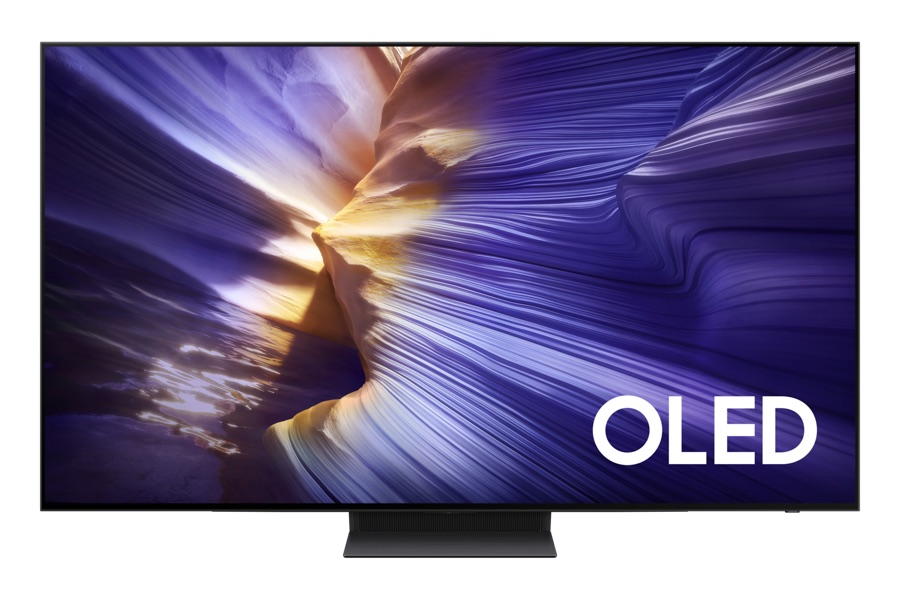
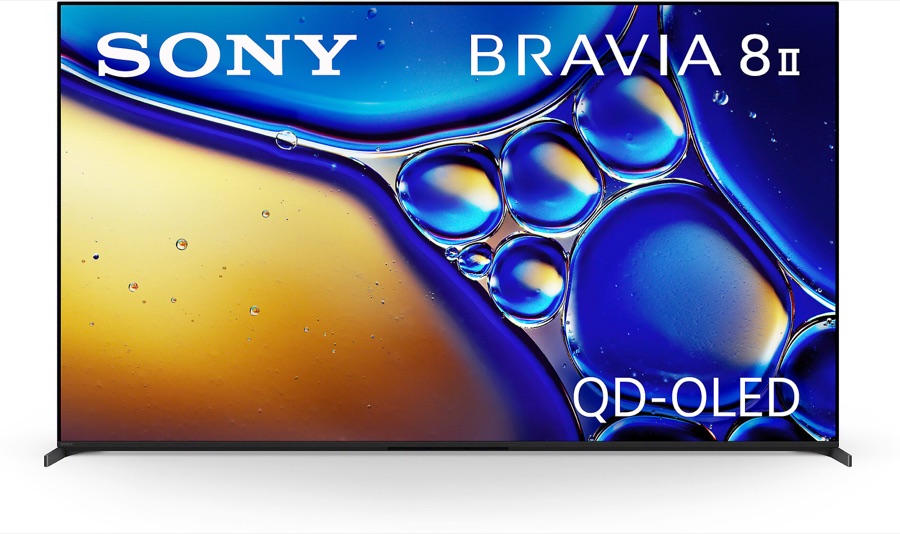
Samsung S90F vs Sony BRAVIA 8 II
Two 65-inch QD-OLEDs built on the same panel family: Samsung's mid-tier gaming OLED against Sony's reference-grade processing. The deciding factor is gaming and HDMI count versus Dolby Vision and image processing.
We may earn a commission when you buy through links on this site, at no extra cost to you. It never affects what we recommend. Learn more.
Both TVs use a quantum-dot OLED panel, so color volume and black levels start from the same place. What separates them is everything around the panel. The Samsung has four full-bandwidth HDMI 2.1 inputs, 144 Hz, and about 9 ms of input lag. The Sony has Dolby Vision, IMAX Enhanced, a little more measured brightness, and the processing reviewers treat as the reference. The one question that decides it: is this a gaming TV that also plays movies, or a movie TV that also plays games?
| Spec | Samsung S90F 65-inch QD-OLED (QN65S90FAFXZA) Color-rich movies and gaming in a dim room View on Amazon | Sony BRAVIA 8 II 65-inch QD-OLED (K-65XR80M2) Reference movie watching, Sony and PlayStation households View on Amazon |
|---|---|---|
| Best for | Color-rich movies and gaming in a dim room | Reference movie watching, Sony and PlayStation households |
| Price tier | Mid-range | Premium |
| Panel | QD-OLED | QD-OLED |
| Peak HDR brightness (10% window) | About 1,300 to 1,500 nits | About 1,500 to 1,800 nits (FlatpanelsHD 1,561) |
| Refresh | 4K 144 Hz | 4K 120 Hz |
| HDMI 2.1 inputs | 4 (all 4K144) | 2 of 4, one shared with eARC |
| Input lag | About 9 ms | About 16 ms |
| HDR formats | HDR10+, no Dolby Vision | Dolby Vision, IMAX Enhanced |
| Platform | Tizen OS | Google TV |
Pick the Samsung S90F 65-inch if
- You game on more than one console or a PC and want every input at full HDMI 2.1 bandwidth.
- You want the lowest input lag of any OLED in the catalog.
- You want QD-OLED color without paying the premium-tier price.
Pick the Sony BRAVIA 8 if
- Movies come first and you stream a lot of Dolby Vision, which the Samsung does not support.
- You care about upscaling, gradation, and motion handling, where Sony's processing is a step ahead.
- You have one console and a receiver, so two HDMI 2.1 ports are enough.
Verdict
Buy the Samsung S90F if the TV pulls double duty for gaming; four full HDMI 2.1 inputs and 9 ms of lag are things the Sony cannot match, and the panel underneath is the same family. Buy the Sony BRAVIA 8 II if this is a movie room first, because Dolby Vision and Sony's processing are the reasons it costs more and both are visible on film. The exception is a bright room, where neither QD-OLED holds deep blacks and a Mini-LED is the better tool.
Common questions
- Do they use the same panel?
- They use the same type: both are quantum-dot OLED. Sony's processing and tuning are what separate the pictures, along with a slightly higher measured peak brightness.
- Is the Sony worth the premium?
- For a movie-first room with Dolby Vision content, yes. For a mixed gaming and TV household, the Samsung delivers most of the picture for considerably less and has twice the HDMI 2.1 inputs.
- Which is better for a PS5?
- The Samsung, on input lag and port count. The Sony has PlayStation-specific features such as auto HDR tone mapping, but its lag is roughly double and two HDMI 2.1 ports go fast with a receiver connected.