Head to head
Samsung S90F vs Hisense U7SG
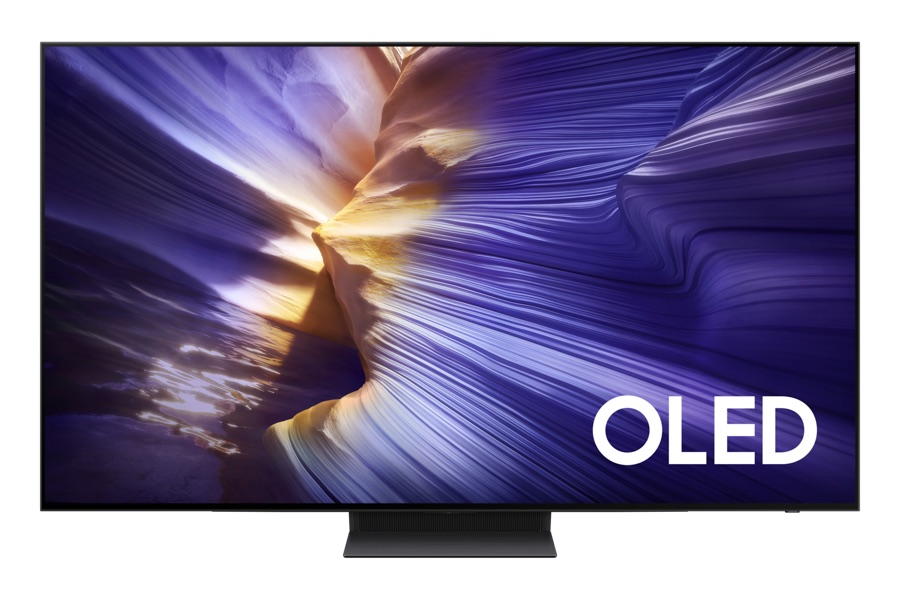
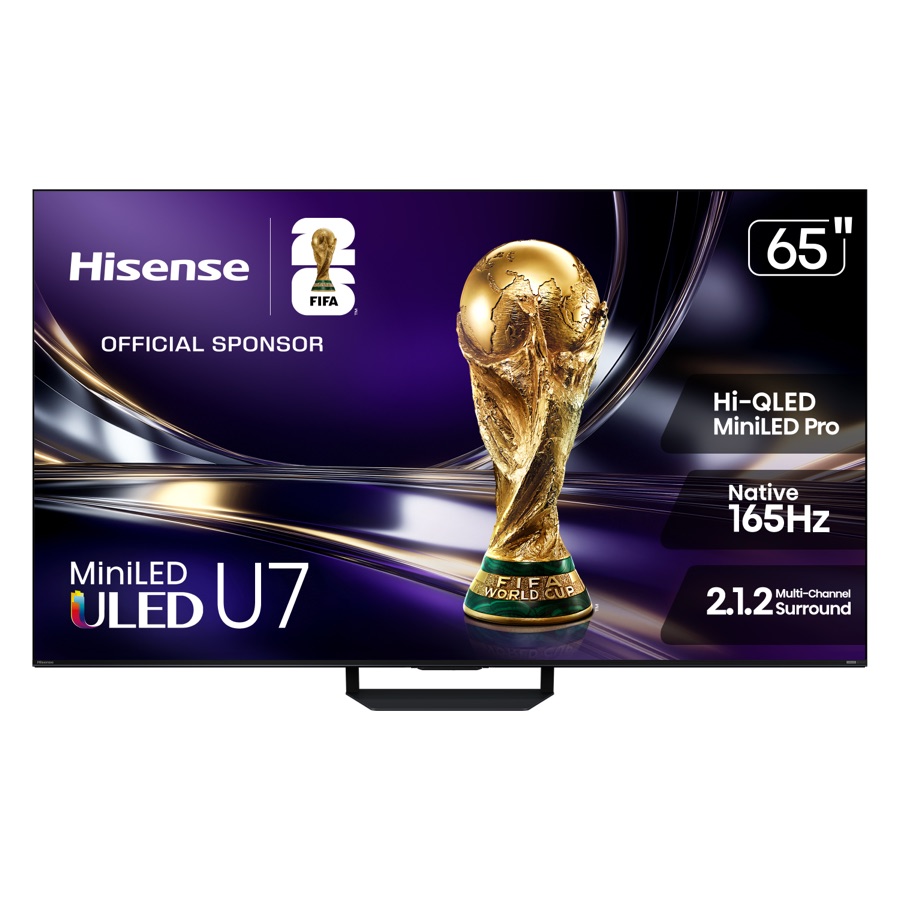
A 65-inch QD-OLED against a 65-inch budget Mini-LED. The deciding factor is how much light your room gets, and whether perfect blacks are worth the extra money.
We may earn a commission when you buy through links on this site, at no extra cost to you. It never affects what we recommend. Learn more.
This is the classic OLED-or-Mini-LED question at the most common size. The Samsung's pixels switch off individually, so blacks are perfect and there is no blooming around subtitles. The Hisense uses a Mini-LED backlight with local dimming, which gets brighter and has a matte coating that shrugs off windows. Both have four full-bandwidth HDMI 2.1 inputs. The one question that decides it: will you mostly watch at night with the lights down, or in a sunny room during the day?
| Spec | Samsung S90F 65-inch QD-OLED (QN65S90FAFXZA) Color-rich movies and gaming in a dim room View on Amazon | |
|---|---|---|
| Best for | Color-rich movies and gaming in a dim room | Bright rooms, gaming on a budget |
| Price tier | Mid-range | Budget |
| Panel | QD-OLED (self-emissive) | Mini-LED QLED (VA) with local dimming |
| Peak HDR brightness | About 1,300 to 1,500 nits (10% window) | About 2,500 nits class (mfr) |
| Refresh | 4K 144 Hz | 4K 165 Hz |
| HDMI 2.1 inputs | 4 (all 4K144) | 4 (all full bandwidth) |
| HDR formats | HDR10+, no Dolby Vision | Dolby Vision IQ, HDR10+ |
| Screen finish | Glossy, no polarizer | Matte anti-reflection |
| Viewing angle | Wide | Narrow (VA panel) |
| Platform | Tizen OS | Google TV |
Pick the Samsung S90F 65-inch if
- You watch mostly in the evening with the lights low, where OLED's perfect blacks are the whole point.
- Your seating is spread out in an arc; OLED holds its picture off-axis and the Hisense fades.
- Blooming around subtitles and stars on a black sky would bother you.
Pick the Hisense U7SG 65-inch if
- The room has windows facing or beside the screen and gets used during the day.
- You want Dolby Vision, which the Samsung does not support.
- You want the most screen for the money and will sit straight in front of it.
Verdict
Buy the Hisense U7SG for a bright living room; it is brighter, the matte coating handles daylight far better, and it supports Dolby Vision at well under the Samsung's price. Buy the Samsung S90F for a room you can darken, because nothing at the Hisense's price matches OLED blacks and the S90F's lag is among the lowest in the catalog. The exception is a wide seating arc, where the OLED wins in any light because the Hisense's VA panel washes out off-axis.
Common questions
- Does the Hisense really get brighter than the OLED?
- Yes. Hisense rates it in the 2,500 nit class against the S90F's measured 1,300 to 1,500 nits on a 10 percent window, and Mini-LEDs also hold brightness better across a full bright scene.
- What is blooming?
- A faint halo of light around bright objects on a dark background, caused by the backlight zones being larger than the pixels. The Hisense shows some around subtitles in dark scenes; the OLED cannot, because it has no backlight.
- Which is better for gaming?
- Both are excellent, with four full HDMI 2.1 inputs each. The Hisense goes to 165 Hz; the Samsung's measured 9 ms of input lag is among the lowest of any TV.