Skip to content

Products

Speakers

Speakers are where the biggest sound-quality differences live. Prioritize the front three, match the center to the fronts, and buy a timbre-matched family so pans sound seamless.

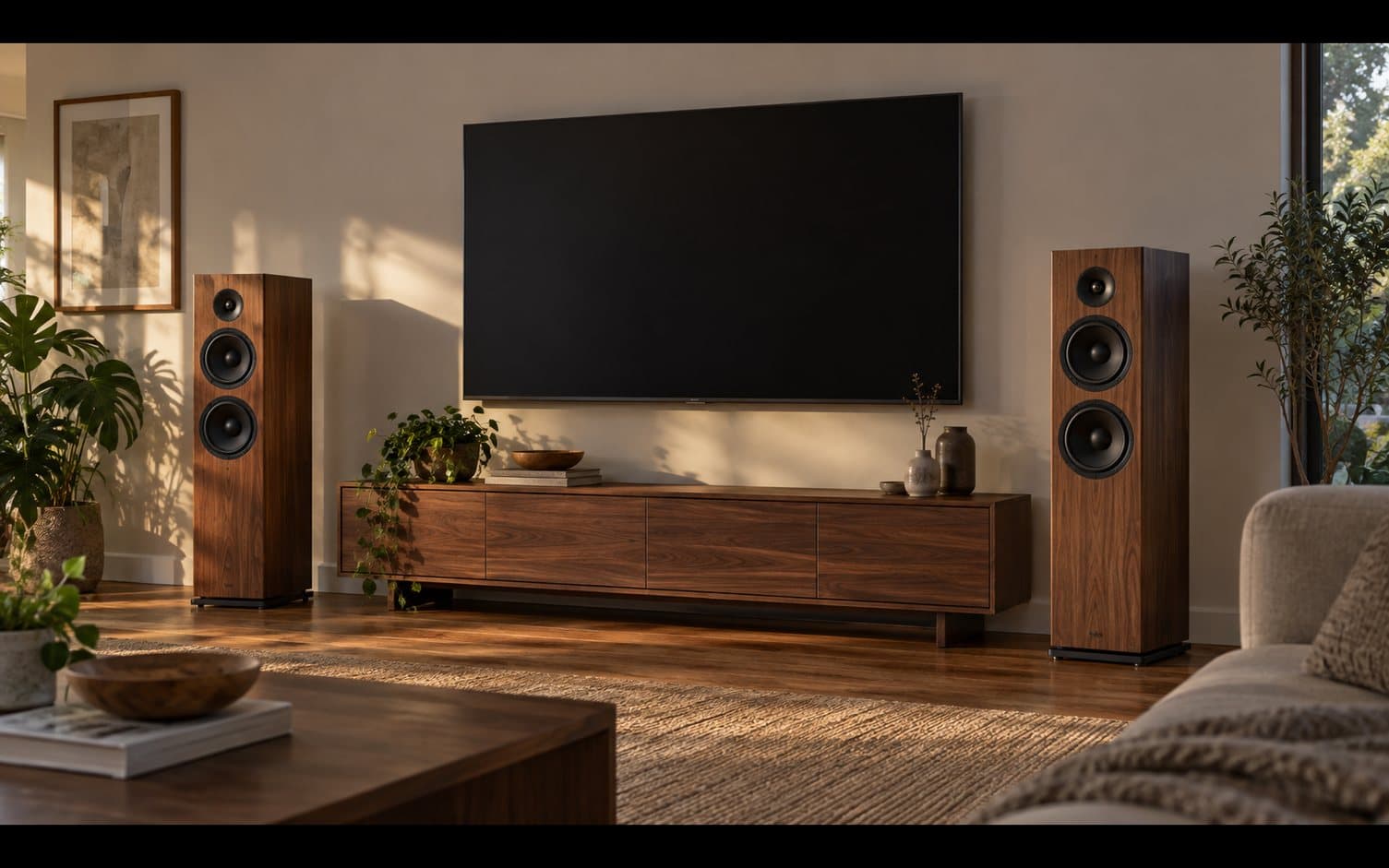
Wall-mounted TV above a long walnut console, flanked by floorstanding speakers

Which one is for you

  • For a budget front pair or surrounds, the Polk Audio Signature Elite ES20 and the ELAC Debut 3.0 DB63 cost about the same per pair; the Polk has the measurement pedigree and the ELAC the easier load.
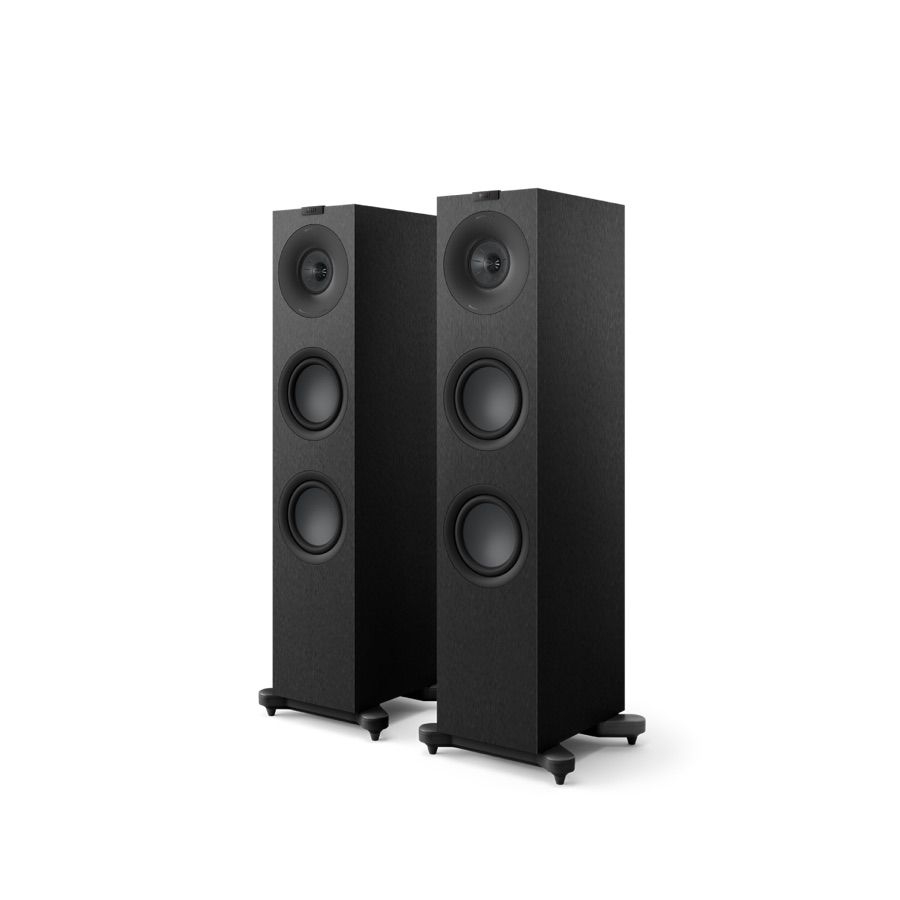
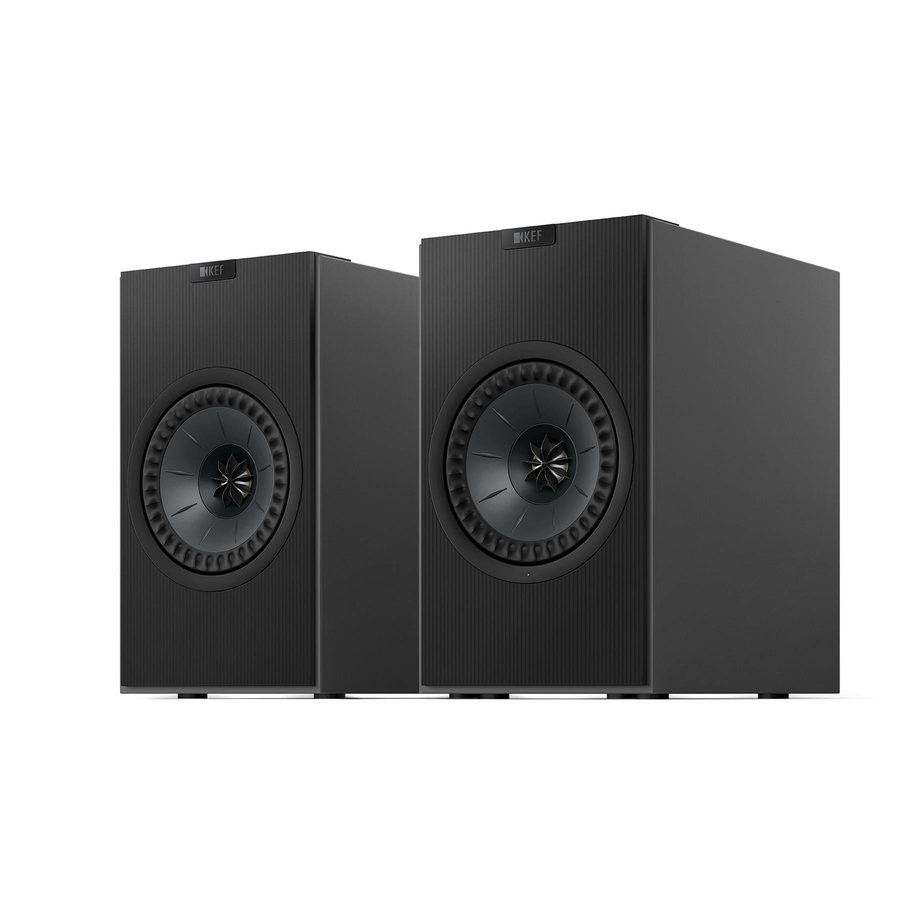
  • For full-range front towers in a medium room, the Polk Audio Reserve R700 with the Reserve R400 center is the measured-and-matched set; the KEF Q7 Meta with the KEF Q6 Meta Center is the more refined alternative with the same point-source Uni-Q driver in every speaker.
  • If your receiver is modest or you want big dynamics in a large room, the Klipsch Reference Premiere RP-8000F II plays several decibels louder per watt than any other tower here.
  • For Atmos heights, the Klipsch CDT-5800-C II aims at the seats from any joist bay, and the KEF Ci200QR is the premium option when the rest of the system is above entry level.

The picks

13 picks, budget to premium · prices as of October 2026 · affiliate links

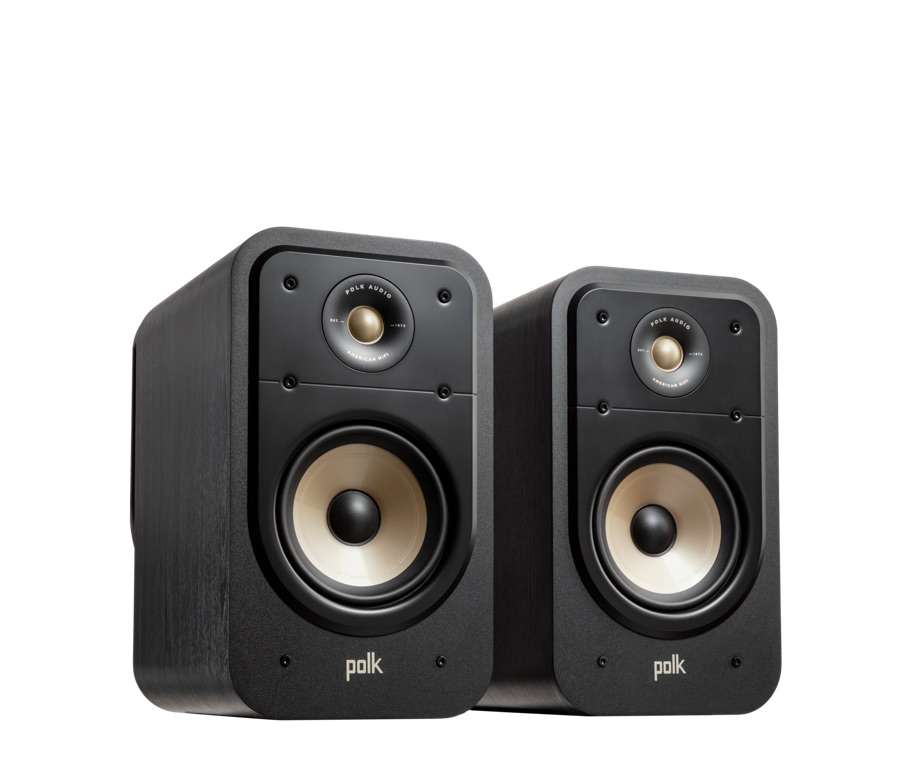
1. Budget · Surrounds or a small-room stereo pair on a budget

  • 2-way bookshelf, 6.5" woofer
  • 1" Terylene dome tweeter
  • 88 dB measured sensitivity
  • Bass to ~35 Hz in-room (ASR)

Audio Science Review measured smooth on-axis response, even horizontal dispersion, and in-room bass into the mid 30s Hz, then recommended it outright. That kind of measured behavior at this price is rare, and the wide dispersion makes it forgiving as a surround where the seats are off axis. The 6.5 in woofer gives it more weight than the typical 5.25 in budget bookshelf.

Pros

  • Measured and recommended by ASR
  • Real bass for a bookshelf
  • Wide, even dispersion for surround duty

Cons

  • Not timbre-matched to the Reserve towers
  • Rear port needs a little space from the wall
  • Vinyl finish, not veneer

Watch out: ASR noted a mild 600 Hz to 1 kHz resonance, so run room correction rather than leaving it flat.

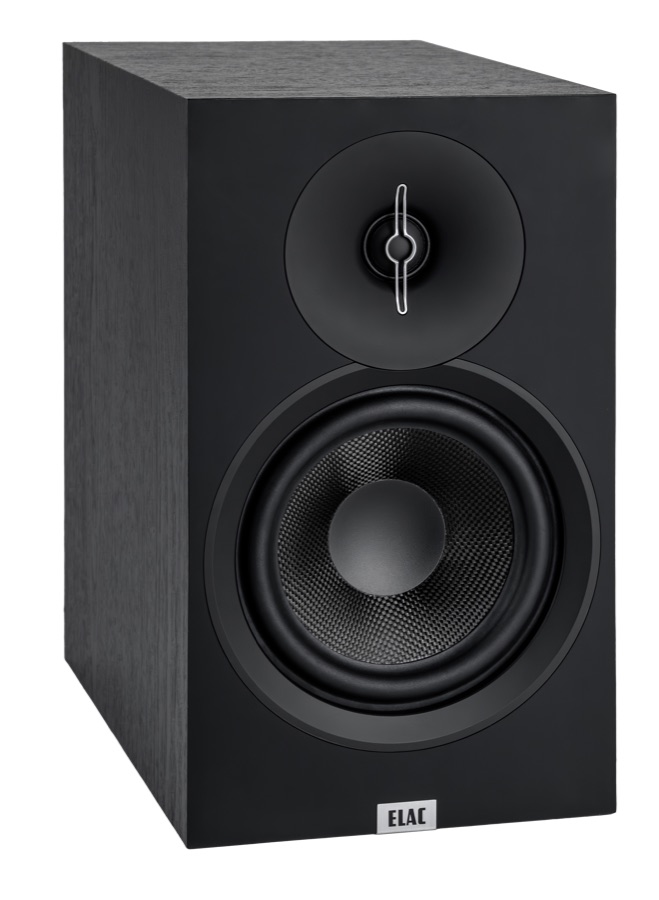
2. Budget · Budget front pair or surrounds, small-room stereo

  • 2-way bookshelf, 6.5" aramid fiber woofer
  • 1" aluminum dome tweeter in waveguide
  • 87 dB sensitivity, 6 ohm
  • 42 Hz to 38 kHz (-6 dB)

ELAC publishes a realistic -3 dB point of 70 Hz alongside the 42 Hz -6 dB figure, which tells you it is designed to be crossed to a subwoofer at 80 Hz rather than to fake bass with a boomy port tuning. The waveguide tweeter and a 1.9 kHz crossover give it smoother off-axis behavior than most speakers at this price, and 87 dB at 6 ohms is an easy load for any receiver in this catalog. Home Theater HiFi and Audio Pursuit both found it a clear step over the Debut 2.0 in clarity and control.

Pros

  • Real 6.5 in woofer at a budget price
  • Easy 6 ohm, 87 dB load for any receiver
  • Waveguide tweeter with controlled dispersion

Cons

  • Limited bass without a sub
  • Vinyl finish and visible rear ports
  • Independent measurements cover siblings, not this model

Watch out: Needs a subwoofer for anything but casual listening, and no measurement-based review of the DB63 itself was published when this entry was written.

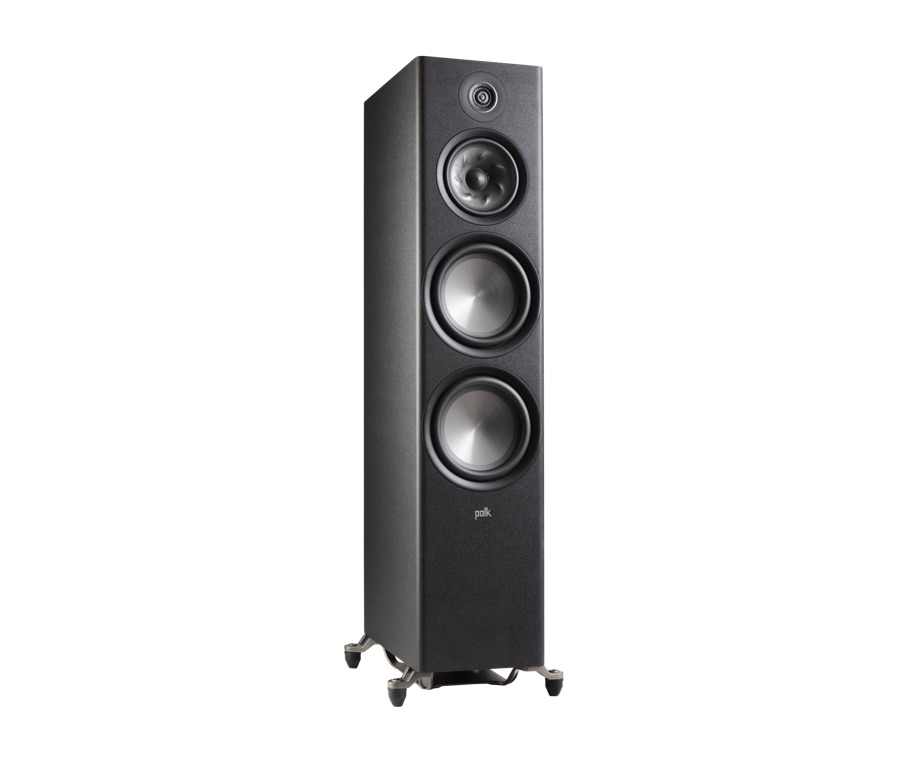
3. Mid-range · Front left/right in medium to large rooms

  • 3-way tower, dual 8" woofers + 6.5" mid
  • 1" Pinnacle ring radiator tweeter
  • 88 dB sensitivity, 8 ohm nominal
  • 38 Hz (-3 dB), ported

Erin's Audio Corner measured it within roughly plus or minus 2 dB on axis with a well behaved directivity index and bass to about 40 Hz anechoic, which is what a front pair needs to play full range in a medium room. The dedicated midrange keeps the 8 in woofers out of the vocal band, so dialogue through the towers stays clean at volume. Audioholics called the Reserve line a clear step up from the Signature series.

Pros

  • Measured flat on axis with clean off-axis behavior
  • Genuine 40 Hz bass without a sub for music
  • Same tweeter and cones as the Legend series

Cons

  • Low impedance dips tax budget receivers
  • Sold per speaker, so budget for two
  • Needs about two feet from the front wall

Watch out: Impedance dips into the 3 ohm range, so pair it with a receiver rated for 4 ohm loads or add an external amp.

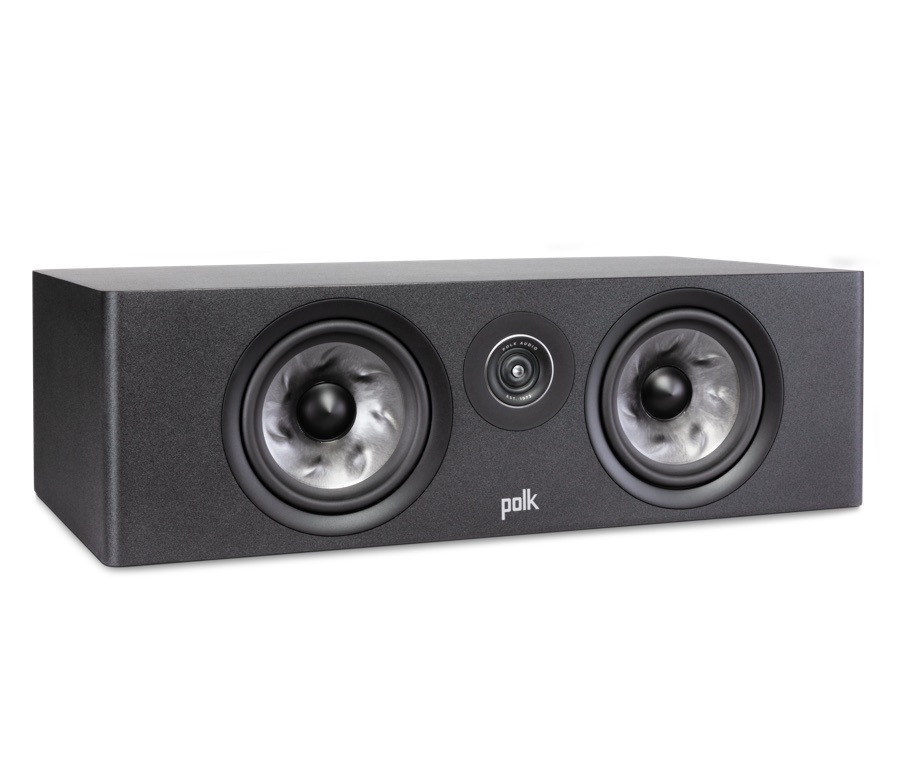
4. Mid-range · Center channel paired with Reserve R700 or R600 towers

  • Reserve series center (matches R700)
  • Dual 6.5" Turbine Cone woofers
  • 1" Pinnacle ring radiator tweeter
  • 89 dB sensitivity, 48 Hz (-3 dB)

It uses the same Pinnacle tweeter and Turbine Cone woofers as the R700 and R600, so dialogue does not change character as it pans across the front stage. The dual 6.5 in woofers and 48 Hz reach mean it keeps up with the towers on loud scenes instead of thinning out. Sound & Vision found the full Reserve system dynamic and seamless.

Pros

  • Exact timbre match to Reserve towers
  • Plays low enough for an 80 Hz crossover with margin
  • High sensitivity for a center

Cons

  • Two-way, no dedicated midrange
  • Wide cabinet needs a deep shelf
  • Off-axis lobing typical of horizontal centers

Watch out: A horizontal woofer-tweeter-woofer layout narrows coverage off axis, so keep the seats within about 30 degrees of center.

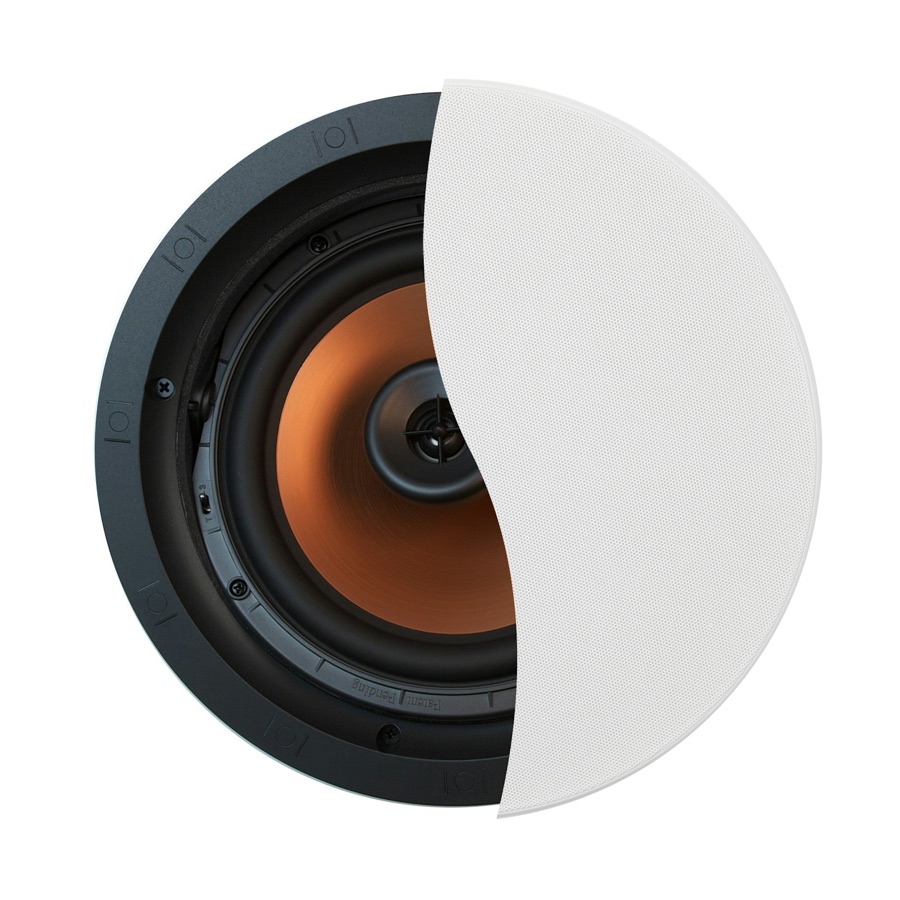
5. Mid-range · Atmos height channels in medium to large rooms

  • 8" pivoting Cerametallic woofer
  • 1" titanium compression tweeter on swiveling horn
  • 95 dB sensitivity, 8 ohm
  • 49 Hz to 23 kHz (+/-3 dB)

Both the woofer and the horn tweeter pivot toward the seats, which solves the main problem of fixed in-ceiling Atmos speakers installed wherever the joists allow. A 95 dB rating means the height channels of a mid-priced receiver never run out of headroom. The 8 in woofer also plays low enough to cross at 80 Hz like the rest of the system.

Pros

  • Pivoting woofer and tweeter aim at the seats
  • Very high sensitivity
  • 8 in woofer with real bass for a ceiling speaker

Cons

  • No independent lab measurements found
  • Horn treble may be bright in live rooms
  • Needs a deep ceiling cavity

Watch out: The horn tweeter can sound forward in a bare, reflective room, so plan on a rug and some treatment or dial the heights back a decibel.

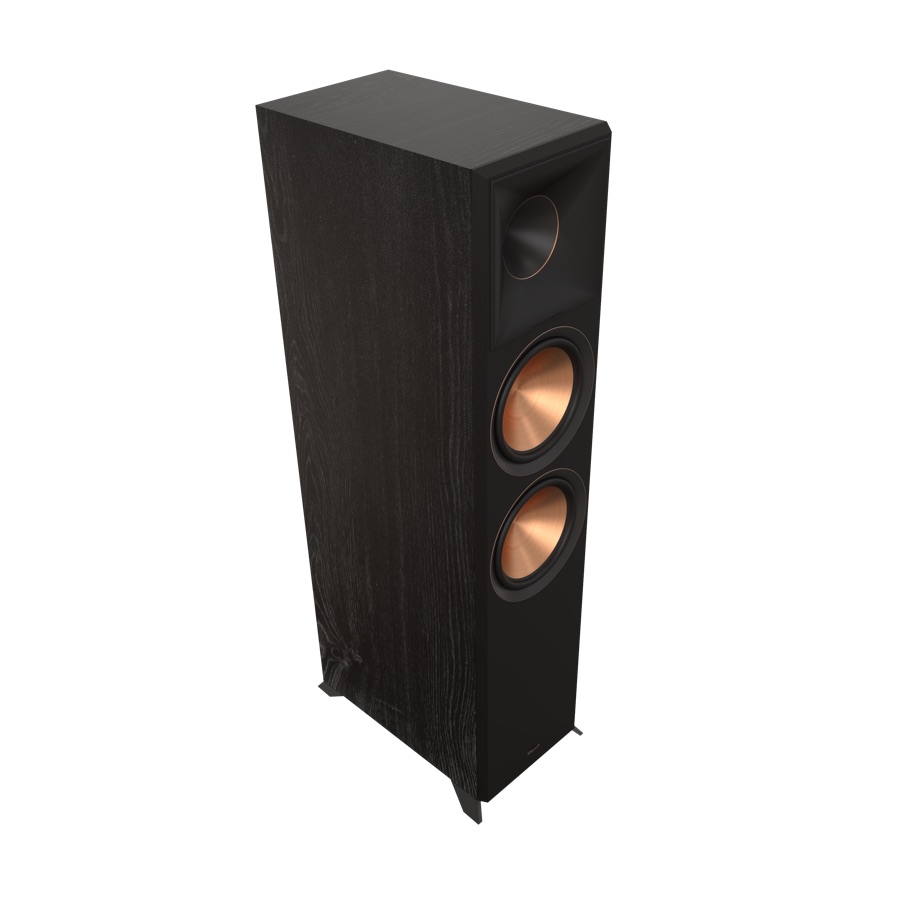
6. Mid-range · Large rooms and modest receivers that need big dynamics

  • 2.5-way tower, dual 8" Cerametallic woofers
  • 1" titanium LTS tweeter, 90 x 90 Tractrix horn
  • 98 dB rated, 91.7 dB anechoic measured
  • 35 Hz to 25 kHz (+/-3 dB)

Erin's Audio Corner measured 91.7 dB anechoic sensitivity and only about 2 dB of on-axis deviation through the midrange, which is both louder per watt and flatter than the Klipsch reputation suggests. The 90 by 90 degree Tractrix horn narrows treble dispersion, so less energy hits the side walls and dialogue stays intelligible in a lively room. Audioholics found the dual-chamber cabinet and improved woofer motor gave it tighter bass and more composure at high volume than the first RP-8000F.

Pros

  • Very high sensitivity for modest receivers
  • Controlled directivity from the Tractrix horn
  • Big dynamics at a falling street price

Cons

  • Bright presentation in untreated rooms
  • Vinyl finish on a 61 lb cabinet
  • Relies on a sub below about 40 Hz

Watch out: The horn tweeter still tilts forward in the treble and the anechoic -3 dB point is around 90 Hz before room gain, so cross it at 80 Hz to a sub and go easy on toe-in in reflective rooms.

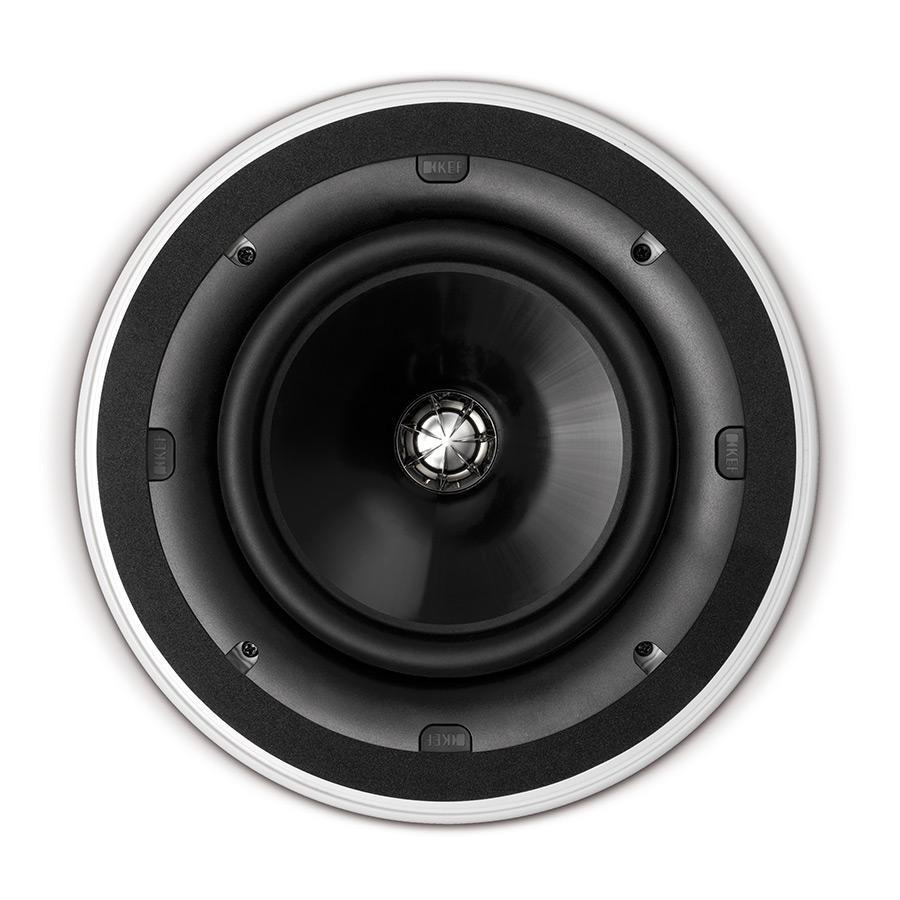
7. Premium · Premium Atmos heights where joist placement is not ideal

KEF Ci200QR

$350each
  • 8" Uni-Q coaxial driver
  • 1" aluminum dome tweeter at cone center
  • 90 dB sensitivity
  • 35 Hz to 34 kHz (+/-6 dB)

KEF's Uni-Q coaxial driver behaves like a point source with wide, even coverage, so overhead effects stay diffuse and hard to localize even when the ceiling cutout lands off the ideal spot. The 8 in cone gives it more low-end weight than most Atmos heights, and the round, trimless grille almost disappears in a painted ceiling. It is the height speaker to buy when the rest of the system is above entry level.

Pros

  • Point-source coverage that is easy to place
  • Deep reach for a height channel
  • Trim-free magnetic grille

Cons

  • No pivoting tweeter
  • Sold per speaker at a premium price
  • Amazon stock is thinner than Crutchfield

Watch out: The tweeter does not mechanically pivot; wide dispersion is the substitute, so mount it as close to the recommended angles as the joists allow.

8. Premium · Front left/right in medium rooms where imaging and a slim cabinet matter

  • 3-way tower, 4" Uni-Q with MAT
  • Dual 6.5" hybrid aluminum woofers
  • 87 dB sensitivity, 4 ohm (3.2 min)
  • 46 Hz to 20 kHz (+/-3 dB)

The Uni-Q coaxial layout gives a single acoustic center and unusually consistent response off axis, so the seats at the ends of the sofa hear the same tonal balance as the middle one. MAT absorbs the tweeter's rear radiation and removes the resonances that gave earlier Q Series a slightly hard top end. Two 6.5 in woofers in a 3-way layout keep the midrange cone free to do only midrange, and KEF's published in-room extension of about 28 Hz is realistic for a medium room.

Pros

  • Point-source Uni-Q imaging with wide sweet spot
  • Slim 12.4 in deep cabinet
  • Matching Q6 Meta Center uses the same driver array

Cons

  • 4 ohm load and modest sensitivity
  • No independent measurements of this exact model yet
  • Priced per speaker

Watch out: It is a 4 ohm speaker with a 3.2 ohm minimum and only 87 dB sensitivity, so it wants a receiver rated for 4 ohms or an external amp, and it is sold per speaker.

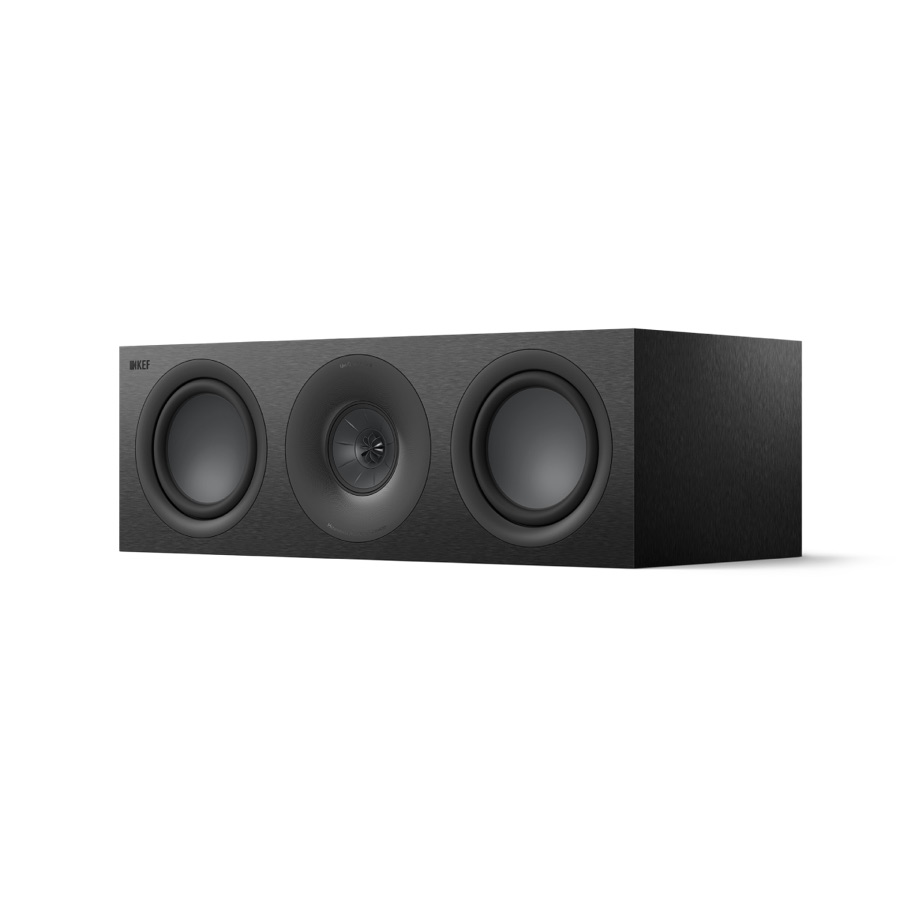
9. Premium · Center channel paired with Q7 Meta or Q11 Meta towers, or as an LCR trio

  • 3-way sealed center / LCR
  • 4" Uni-Q with MAT plus dual 6.5" woofers
  • 86 dB sensitivity, 4 ohm
  • 63 Hz to 20 kHz (+/-3 dB)

A coaxial tweeter and midrange mean the crossover between them does not create the comb-filter dips off axis that a tweeter between two woofers does, so dialogue stays clear for the seats at the edges of the row. It is a true 3-way with the woofers crossed low, and the sealed cabinet is forgiving of a shelf or cabinet placement. What Hi-Fi's award for the Q Concerto Meta 5.1 package that includes it praised the cohesion across the front stage.

Pros

  • Exact driver match to Q7 Meta towers
  • Coaxial layout avoids horizontal-center lobing
  • Sealed box is easy to place

Cons

  • 86 dB sensitivity and 4 ohm load
  • Limited low-end reach
  • Nearly 25 in wide

Watch out: 63 Hz is the -3 dB point, so cross it at 80 Hz or higher and do not expect it to fill in without a sub; it also shares the Q7 Meta's 4 ohm load.

Perlisten X5w On-Wall Speaker (each)
View at The Listening Room

We have a business relationship with Perlisten's US distributor.

Full details

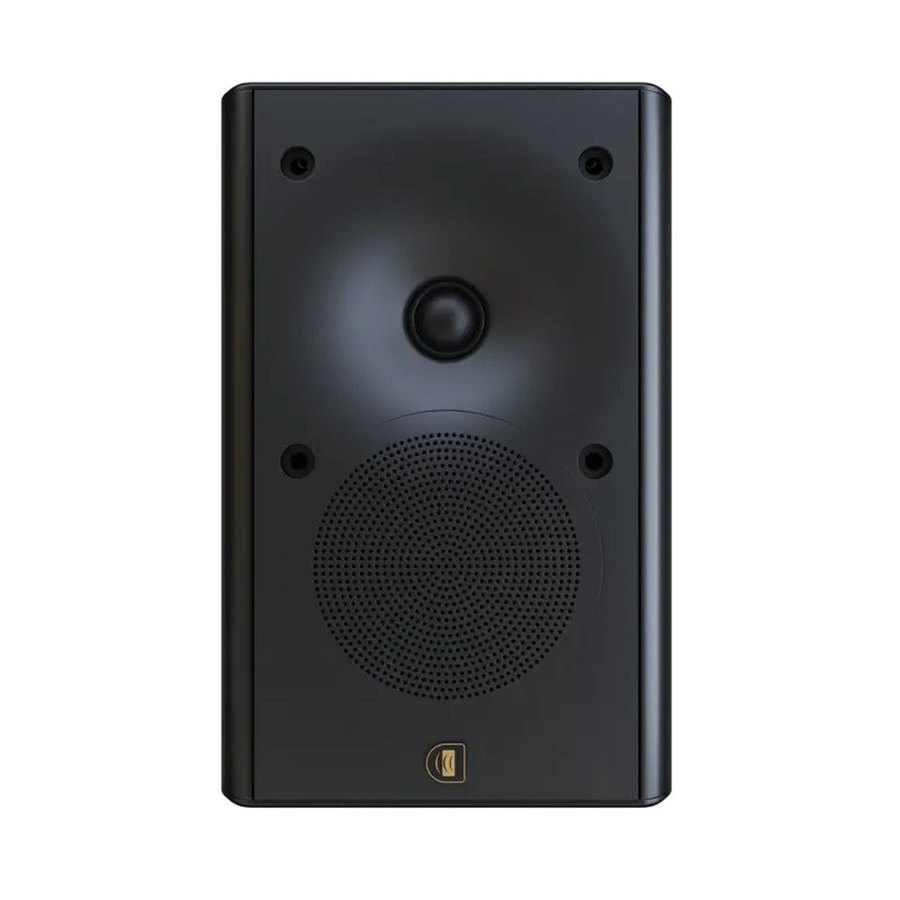
10. Premium · Wall-mounted left, center, and right channels beside a TV

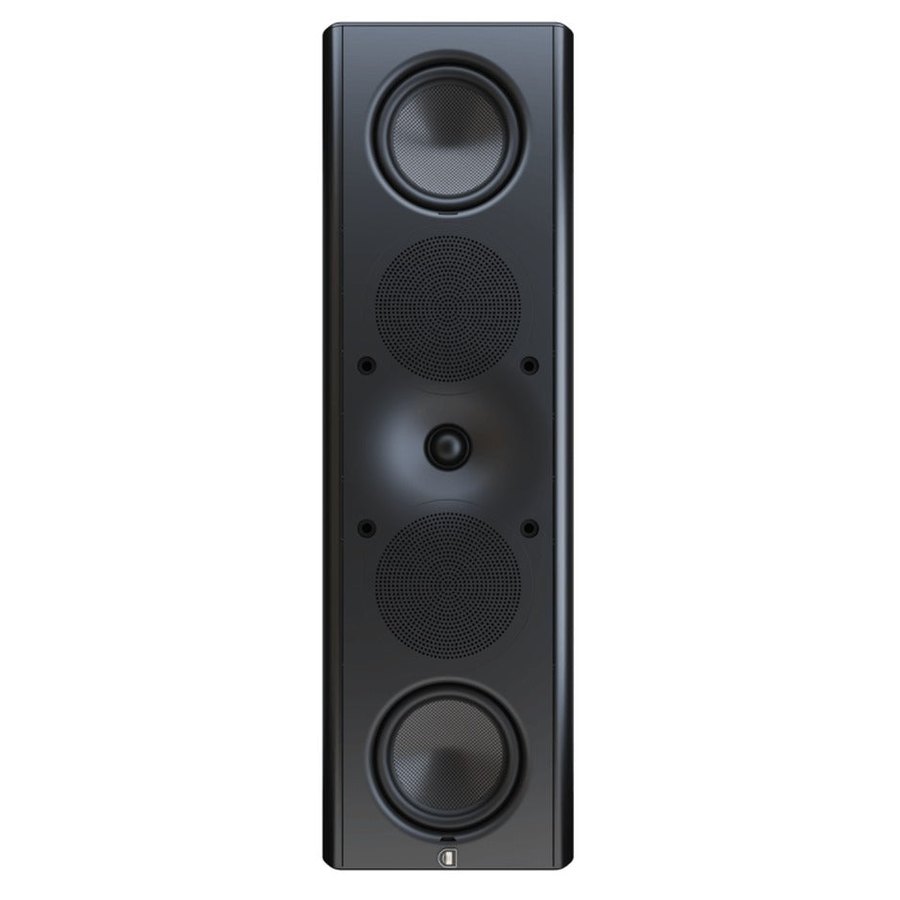
  • 3-way sealed on-wall, 100 mm deep
  • 4 x 5.5" carbon fiber woofers
  • 38 mm silk dome in waveguide
  • 92 dB sensitivity, 4 ohm

Perlisten designs every speaker around controlled dispersion: a waveguide shapes how widely the tweeter spreads sound, so less of it bounces off nearby walls and the ceiling before it reaches you. That matters more for an on-wall speaker than any other, because it sits flat against a reflective surface. The X5w pairs that waveguide with a true three-way layout and 92 dB sensitivity, so an ordinary AV receiver drives it with ease.

Pros

  • True 3-way design in a 4-inch-deep cabinet
  • High 92 dB sensitivity
  • Waveguide tweeter for controlled dispersion

Cons

  • No independent reviews or measurements yet
  • Needs a subwoofer below 60 Hz
  • Sold each, so an LCR set means three

Watch out: The X Series is new for 2026 and has no independent reviews or measurements yet, so the figures here are Perlisten's. Bass is specified to 60 Hz, so plan on a subwoofer, and it is sold individually.

Perlisten X3w On-Wall Speaker (each)
View at The Listening Room

We have a business relationship with Perlisten's US distributor.

Full details

11. Premium · Left, right, or center channels beside a mid-size wall-mounted TV

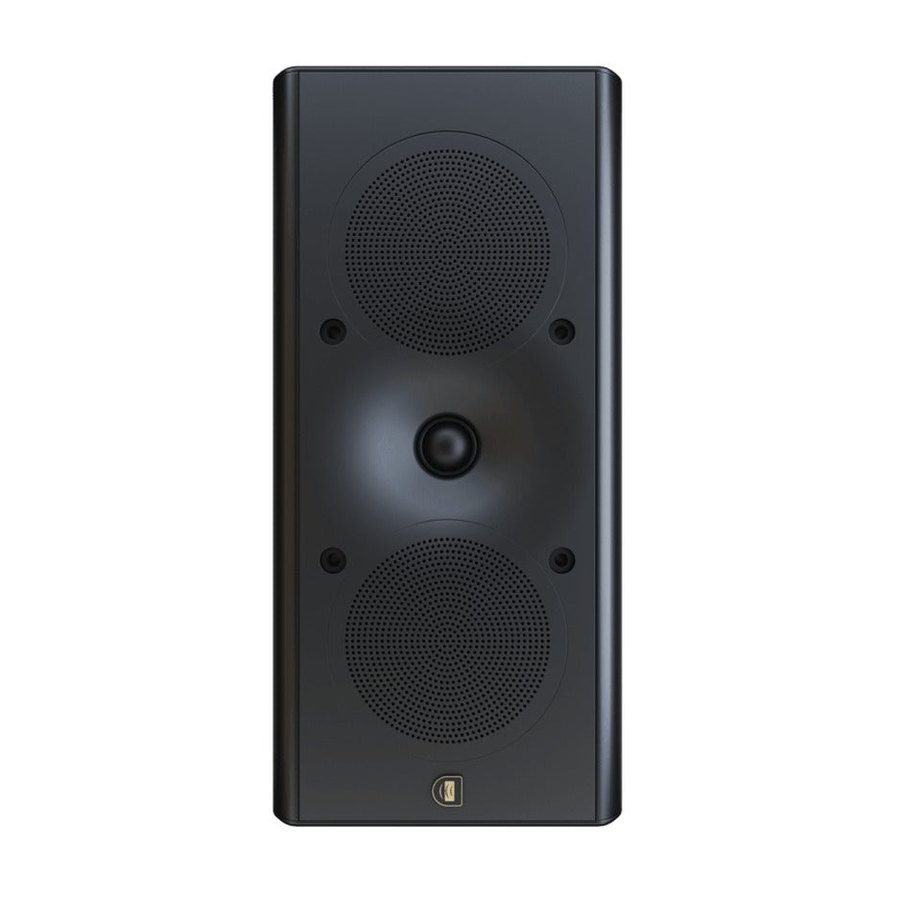
  • 2-way sealed on-wall (MTM), 100 mm deep
  • 2 x 5.5" carbon fiber woofers
  • 38 mm silk dome in waveguide
  • 89 dB sensitivity, 4 ohm

The woofer-tweeter-woofer layout keeps the sound consistent across the height of the cabinet, which helps an on-wall speaker that hangs a little above or below ear level, and Perlisten's waveguide narrows the tweeter's spread so less sound splashes off the wall and ceiling. It shares its tweeter and woofer type with the rest of the X Series, so it matches the X5w, X2w, and X2ic in a full system.

Pros

  • Compact on-wall that matches the rest of the X Series
  • Woofer-tweeter-woofer layout for even coverage
  • Includes wall and angle brackets

Cons

  • No independent reviews or measurements yet
  • Needs a subwoofer below 60 Hz
  • 4 ohm load wants a receiver rated for it

Watch out: The X Series is new for 2026 and has no independent reviews or measurements yet, so the figures here are Perlisten's. Bass is specified to 60 Hz, so pair it with a subwoofer.

Perlisten X2w On-Wall Speaker (each)
View at The Listening Room

We have a business relationship with Perlisten's US distributor.

Full details

12. Premium · Surround channels and compact rooms

  • 2-way sealed on-wall, 100 mm deep
  • 1 x 5.5" carbon fiber woofer
  • 38 mm silk dome in waveguide
  • 88 dB sensitivity, 4 ohm

Surround speakers should sound like the front speakers, or effects change character as they pan around you. The X2w shares the X Series tweeter, so it blends with an X5w or X3w front stage, and its sealed cabinet is forgiving of placement close to a wall or corner.

Pros

  • Matches the X Series front speakers
  • Sealed cabinet is easy to place
  • Flat 4-inch-deep cabinet

Cons

  • No independent reviews or measurements yet
  • Expensive for a surround speaker
  • Needs a subwoofer below 60 Hz

Watch out: The X Series is new for 2026 and has no independent reviews or measurements yet, so the figures here are Perlisten's. It costs more than most surround speakers, so it makes most sense in an all-Perlisten system.

Perlisten X2ic In-Ceiling Speaker (each)
View at The Listening Room

We have a business relationship with Perlisten's US distributor.

Full details

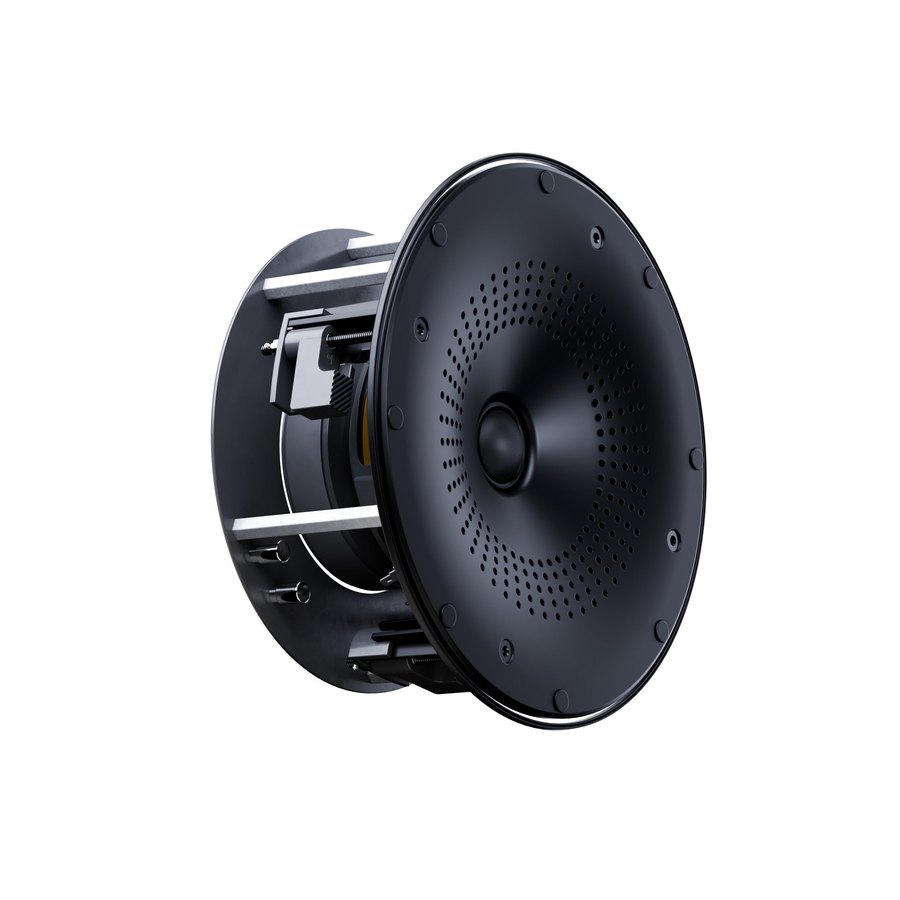
13. Premium · Dolby Atmos height channels in an X Series system

  • 2-way in-ceiling
  • 6.5" carbon fiber woofer
  • 38 mm silk dome in waveguide
  • 90 dB sensitivity, 4 ohm

Ceiling speakers sit close to the room's first reflection points, so a tweeter that sprays sound widely smears overhead effects. The X2ic's waveguide narrows that spread to keep height effects more precise, and sharing a tweeter with the X Series on-walls keeps the overhead channels consistent with the front stage. Its 90 dB sensitivity makes it an easy load for the height channels of most receivers.

Pros

  • Waveguide tweeter for precise height effects
  • Matches the X Series on-walls
  • Paintable magnetic metal grille

Cons

  • No independent reviews or measurements yet
  • Listed as a pre-order
  • Expensive next to typical in-ceiling speakers

Watch out: The X Series is new for 2026 and has no independent reviews or measurements yet, so the figures here are Perlisten's. It was listed as a pre-order at The Listening Room when we checked, so confirm the ship date before buying.

Common questions

Should I buy the same brand for every speaker?
Buy the same series for the front three so dialogue keeps its tone as it pans. Surrounds and heights can come from another line as long as they are not markedly brighter or duller.
What does sensitivity mean for my receiver?
Every 3 dB of sensitivity halves the power needed for the same volume. An 88 dB speaker needs about ten times the power of a 98 dB speaker to play equally loud, which is why horn speakers pair well with modest receivers.
Are towers worth it over bookshelves plus a subwoofer?
In a home theater with a good sub, bookshelves crossed at 80 Hz give up very little. Towers earn their place for music without a sub, or when their extra cone area helps in a large room.

At a glance

All 13 picks side by side, budget to premium. Read down a column to see where they differ.

ProductTypical priceTypeDriversSensitivityImpedanceFrequency responseRecommended powerFinish
Polk Audio Signature Elite ES20Surrounds or a small-room stereo pair on a budget$399 pair2-way bookshelf (sold per pair)6.5 in polypropylene woofer, 1 in Terylene dome tweeter88 dB (manufacturer)8 ohm compatible46 Hz to 40 kHz (-3 dB)20 to 125 WBlack, walnut, or white vinyl
ELAC Debut 3.0 DB63 (pair)Budget front pair or surrounds, small-room stereo$499 pair2-way ported bookshelf (sold per pair)6.5 in aramid fiber woofer, 1 in aluminum dome tweeter in waveguide87 dB (manufacturer)6 ohm nominal42 Hz to 38 kHz (-6 dB); 70 Hz (-3 dB)20 to 140 WBlack ash vinyl
Polk Audio Reserve R700Front left/right in medium to large rooms$1,079 each3-way floorstanding tower (sold per speaker)2 x 8 in Turbine Cone woofers, 6.5 in Turbine Cone midrange, 1 in Pinnacle ring radiator tweeter88 dB (manufacturer)8 ohm compatible, dips to about 3.5 ohm38 Hz to 40 kHz (-3 dB)30 to 300 WBlack, walnut brown, or white
Polk Audio Reserve R400Center channel paired with Reserve R700 or R600 towers$629 each2-way center channel (sold each)2 x 6.5 in Turbine Cone woofers, 1 in Pinnacle ring radiator tweeter89 dB (manufacturer)8 ohm compatible, 4.1 ohm minimum48 Hz to 40 kHz (-3 dB)30 to 200 WBlack, walnut brown, or white
Klipsch CDT-5800-C IIAtmos height channels in medium to large rooms$199 each2-way in-ceiling (sold each)8 in pivoting Cerametallic woofer, 1 in titanium compression tweeter on swiveling Tractrix horn95 dB (manufacturer)8 ohm compatible49 Hz to 23 kHz (+/-3 dB)100 W continuous, 400 W peakPaintable white magnetic grille
Klipsch Reference Premiere RP-8000F II (each)Large rooms and modest receivers that need big dynamics$549 each2.5-way floorstanding tower (sold each)2 x 8 in Cerametallic woofers, 1 in titanium LTS tweeter on 90 x 90 degree Tractrix horn98 dB (manufacturer, in-room); 91.7 dB measured anechoic (Erin's Audio Corner)8 ohm compatible35 Hz to 25 kHz (+/-3 dB)150 W continuous, 600 W peakEbony or walnut vinyl
KEF Ci200QRPremium Atmos heights where joist placement is not ideal$350 each2-way in-ceiling, Uni-Q coaxial (sold each)8 in Uni-Q driver with 1 in aluminum dome tweeter at the cone center90 dB (manufacturer)8 ohm35 Hz to 34 kHz (+/-6 dB)10 to 150 WPaintable white magnetic grille
KEF Q7 Meta (each)Front left/right in medium rooms where imaging and a slim cabinet matter$999 each3-way floorstanding tower (sold each)4 in Uni-Q midrange with 0.75 in vented aluminum dome tweeter and MAT, 2 x 6.5 in hybrid aluminum woofers87 dB (manufacturer)4 ohm nominal, 3.2 ohm minimum46 Hz to 20 kHz (+/-3 dB), 28 Hz typical in-room (-6 dB)15 to 200 WSatin black, satin white, or walnut
KEF Q6 Meta Center (each)Center channel paired with Q7 Meta or Q11 Meta towers, or as an LCR trio$850 each3-way sealed center or LCR (sold each)4 in Uni-Q midrange with 0.75 in vented aluminum dome tweeter and MAT, 2 x 6.5 in hybrid aluminum woofers86 dB (manufacturer)4 ohm nominal, 3.2 ohm minimum63 Hz to 20 kHz (+/-3 dB)15 to 200 WSatin black, satin white, or walnut
Perlisten X5w On-Wall Speaker (each)Wall-mounted left, center, and right channels beside a TV$1,995 each3-way sealed on-wall (sold each)4 x 5.5 in carbon fiber woofers (two high-excursion), 38 mm silk dome tweeter in waveguide92 dB (manufacturer)4 ohm60 Hz to 30 kHz (manufacturer)50 to 200 WSatin black or satin white
Perlisten X3w On-Wall Speaker (each)Left, right, or center channels beside a mid-size wall-mounted TV$1,695 each2-way sealed on-wall, woofer-tweeter-woofer (sold each)2 x 5.5 in carbon fiber woofers, 38 mm silk dome tweeter in waveguide89 dB (manufacturer)4 ohm60 Hz to 30 kHz (manufacturer)50 to 200 WSatin black or satin white
Perlisten X2w On-Wall Speaker (each)Surround channels and compact rooms$1,395 each2-way sealed on-wall (sold each)1 x 5.5 in carbon fiber woofer, 38 mm silk dome tweeter in waveguide88 dB (manufacturer)4 ohm60 Hz to 30 kHz (manufacturer)50 to 200 WSatin black or satin white
Perlisten X2ic In-Ceiling Speaker (each)Dolby Atmos height channels in an X Series system$1,195 each2-way in-ceiling (sold each)6.5 in carbon fiber woofer, 38 mm silk dome tweeter in waveguide90 dB (manufacturer)4 ohm60 Hz to 30 kHz (manufacturer)50 to 200 WWhite paintable magnetic metal grille

Typical prices as of October 2026; check the retailer for today's price.

We may earn a commission when you buy through links on this site, at no extra cost to you. It never affects what we recommend. Learn more.

More categories