Head to head
TCL QM7L vs QM8L
QM7L or QM8L? Same color and input lag; the QM8L adds far more brightness, nearly twice the dimming zones, and four HDMI 2.1 ports. When that is worth paying for, and where the Costco QM7L Pro sits between them.
We may earn a commission when you buy through links on this site, at no extra cost to you. It never affects what we recommend. Learn more.
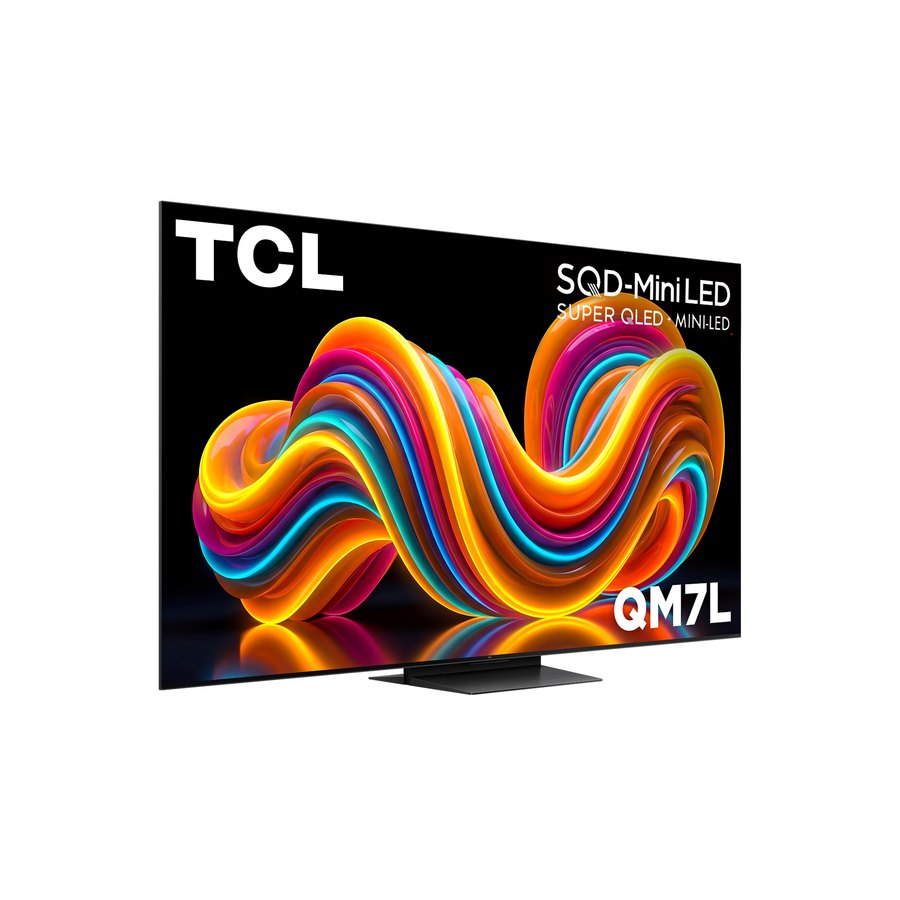
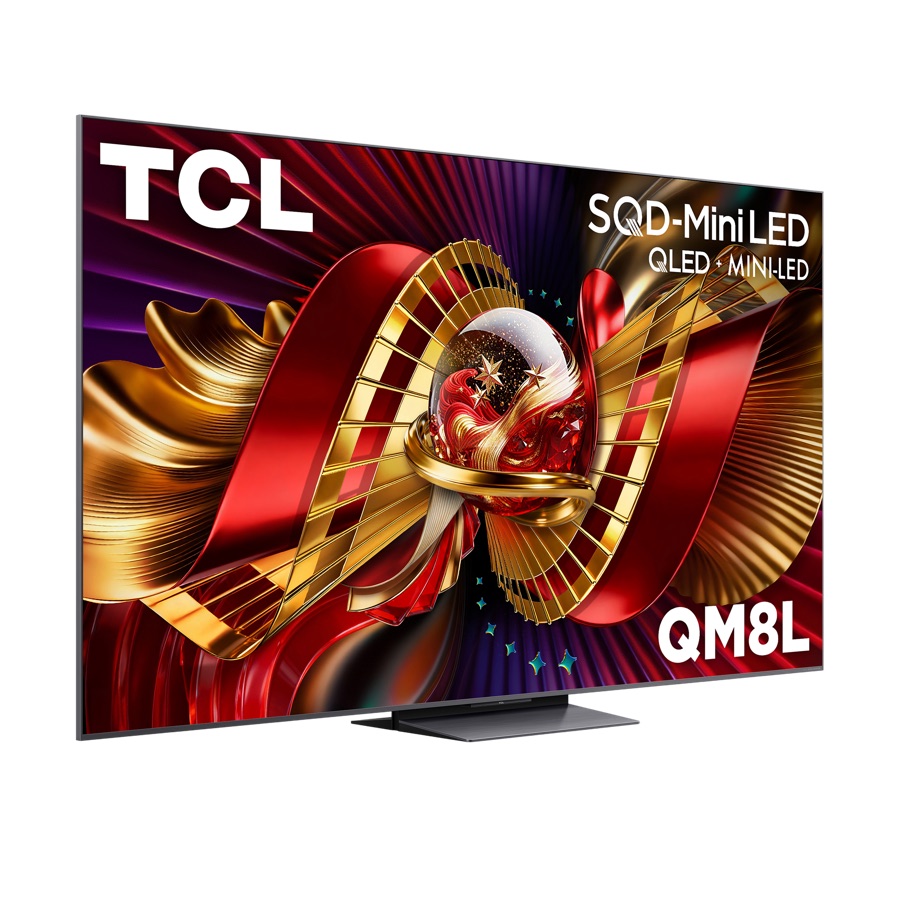
- View on Amazon
TCL QM7L
Typically $898Black Friday target: $670 or under
- View on Amazon
TCL QM8L
Typically $2,498Black Friday target: $1,870 or under
The QM7L and QM8L are built on the same SQD quantum-dot layer, so color is nearly identical, and Tom's Guide measured the same roughly 9.5 ms of input lag on both. What the QM8L adds is headroom: far more brightness, close to twice the dimming zones, and HDMI 2.1 on every port. The one question that decides it: do you watch in a dark room at night, or have more than one console?
Black Friday 2026
The sale price that makes each one worth buying
- TCL QM7L 65-inch SQD-Mini-LED (65QM7L)Typically $898. Buy at $670 or under.
- TCL QM8L 85-inch SQD-Mini-LED (85QM8L)Typically $2,498. Buy at $1,870 or under.
Black Friday is Friday, November 27. We mark each one the moment Amazon has it at or under target.
| Spec | ||
|---|---|---|
| Best for | Vivid color and bright HDR on a budget | Big bright rooms, sports and HDR movies |
| Price tier | Budget | Premium |
| Sizes available | 55, 65, 75, 85, 98 in | 65, 75, 85, 98 in |
| Our pick reviewed here | 65 in (65QM7L) | 85 in (85QM8L) |
| Panel | SQD Mini-LED QLED (VA) | SQD Mini-LED QLED (VA), wide-angle filter |
| Dimming zones (mfr, largest size) | Up to 2,100+ | Up to 4,000+ |
| Peak HDR brightness (Tom's Guide, 10% window) | About 2,270 nits | About 3,720 nits |
| Refresh | 4K 144 Hz | 4K 144 Hz |
| HDMI 2.1 inputs | 2 of 4; 2 more at HDMI 2.0 | 4 (all 4K144) |
| Input lag | 9.4 ms | 9.5 ms |
| HDR formats | Dolby Vision IQ, HDR10+ | Dolby Vision 2 Max, HDR10+ |
| Platform | Google TV | Google TV |
What stays the same
Color is the reason both TVs review so well, and it does not change between them: both use TCL's SQD quantum-dot layer, and Tom's Guide measured near-identical color volume. Input lag is also a match at about 9.5 ms, and both run at 144 Hz with VRR. If you mostly watch in daylight and have one console, you will struggle to tell them apart.
What the QM8L adds
Brightness is the biggest gap. Tom's Guide measured about 3,720 nits on a 10 percent window for the QM8L against about 2,270 for the QM7L, so HDR highlights like sun glints, explosions, and stadium lights have noticeably more punch.
Dimming is the second. With close to twice the zones, the QM8L keeps halos tighter around subtitles and bright objects on a dark background, which is the main thing that gives a Mini-LED away in a dark room. Its wide-angle filter also holds contrast better for people sitting off to the side.
Ports are the third. All four QM8L inputs are HDMI 2.1, so two consoles and a PC all get 4K at 120 Hz or more. The QM7L has two, and the other two stop at 4K60.
Price: watch the sales
The QM8L usually costs several hundred dollars more at the same size, which is hard to justify for a daytime TV with one console. But QM8L sales can close most of that gap: in October 2026 the 65-inch QM8L was on sale at Amazon for about 1,080 dollars against roughly 900 for the 65-inch QM7L. At a gap that small, the QM8L is the better buy.
Pick the TCL QM7L if
- You watch mostly in daytime or with lights on, where the extra brightness and zones matter least.
- You have one console, so two HDMI 2.1 ports are enough.
- You want 55 inches; the QM8L starts at 65.
Pick the TCL QM8L if
- You watch movies at night and want tighter halos around subtitles and highlights.
- You have two consoles or a gaming PC and want HDMI 2.1 on every port.
- The QM8L is on sale within a couple of hundred dollars of the QM7L at your size.
Verdict
Buy the TCL QM7L if you mostly watch in a lit room and have one console; you get the same color and responsiveness for much less, and Tom's Guide named it the best Mini-LED of 2026 for exactly that reason. Buy the QM8L if you watch at night, game on more than one device, or catch it on sale, because the extra brightness and dimming are visible in dark scenes and the four HDMI 2.1 ports remove the QM7L's one real limitation. The exception is a fully dark theater, where an OLED beats both.
Common questions
- Is the QM8L worth it over the QM7L?
- For night viewing, multiple consoles, or when the price gap is small, yes. For a bright living room with one console, the QM7L gives you most of the picture for much less.
- Do they have the same color?
- Nearly. Both use TCL's SQD quantum-dot layer and measured within a hair of each other in Tom's Guide's testing. Brightness and dimming are where they differ.
- Is the QM7L Pro the same as the QM8L?
- No. The Costco-only QM7L Pro gives the QM7L HDMI 2.1 at 4K 144 Hz on all four inputs and the QM8L's processor, which closes the port gap, but it keeps the QM7L's brightness and zone count. Our QM7L vs QM7L Pro comparison covers what the Pro does and does not change.
- Which is better for gaming?
- Both have about 9.5 ms of input lag and 144 Hz with VRR. The QM8L wins only if you have more than two HDMI 2.1 sources.
- Is the TCL C7L the same TV as the QM7L?
- In hardware, yes. C7L is the name TCL uses for this TV in the UK, Europe, and Australia, in the same 55 to 98 inch sizes. What Hi-Fi notes that TCL tunes the picture differently by region, so a European review of the C7L is a good guide to the QM7L but not an exact one. The prices and links on this page are for the US QM7L.