Skip to content
Home Theater HubPlan. Build. Enjoy.

Speakers

Which floorstanding speakers should carry the front of your theater?

The best floorstanding speakers for home theater: a measured three-way tower with real bass extension, plus the matching center that keeps dialogue seamless.

Updated September 12, 2026

We may earn a commission when you buy through links on this site, at no extra cost to you. It never affects what we recommend. Learn more.

The front left and right speakers carry most of a film's music and effects, and in a home theater they also have to blend with a center channel so voices do not change character as they pan. This page is for a medium to large room where towers make sense and the buyer wants a speaker with published measurements rather than marketing.

We used anechoic-style measurements from independent speaker labs, looking for flat on-axis response, smooth off-axis behavior, and real bass extension so the towers can play full range if needed. The tower pick has a matching center in the same series, and that pairing is the point of this page.

Our picks

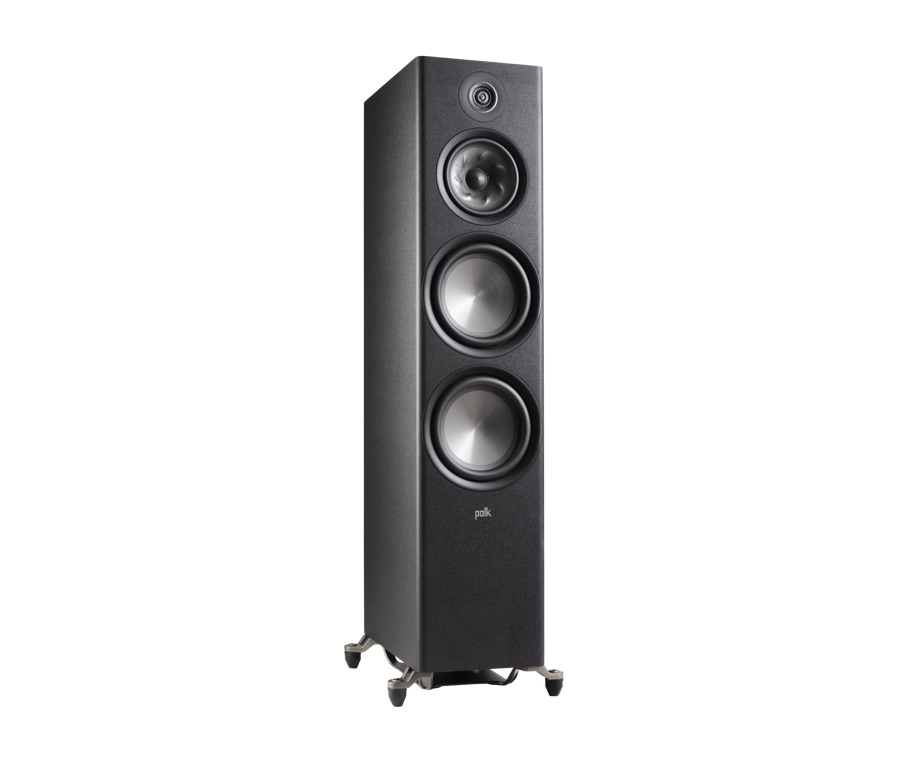
Polk Audio Reserve R700

1. Best overall

Polk Audio Reserve R700

  • 3-way tower, dual 8" woofers + 6.5" mid
  • 1" Pinnacle ring radiator tweeter
  • 88 dB sensitivity, 8 ohm nominal
  • 38 Hz (-3 dB), ported

The Polk Audio Reserve R700 is a three-way tower with dual 8-inch woofers, a 6.5-inch midrange, and a 1-inch Pinnacle ring radiator tweeter shared with Polk's flagship Legend series. Erin's Audio Corner measured it within roughly plus or minus 2 dB on-axis with real extension to about 40 Hz, and it is rated at 88 dB sensitivity into 8 ohms, so a mid-range receiver drives it comfortably. Erin's recommends no more than about 20 degrees of toe-in and at least 2 feet from the front wall.

Caveat: Sold and priced per speaker, so make sure you are buying two.

View on Amazon$$$ · Front left/right in medium to large rooms
Polk Audio Reserve R400

2. Matching center

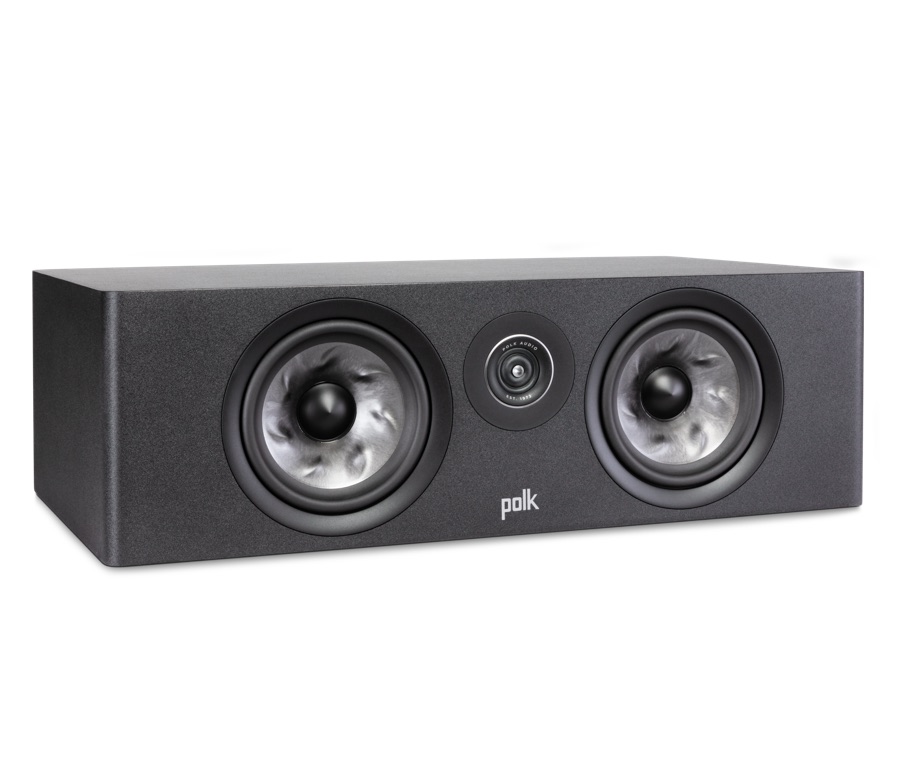
Polk Audio Reserve R400

  • Reserve series center (matches R700)
  • Dual 6.5" Turbine Cone woofers
  • 1" Pinnacle ring radiator tweeter
  • 89 dB sensitivity, 48 Hz (-3 dB)

The Reserve R400 is the large center in the same series, with the same Pinnacle tweeter and Turbine Cone woofers as the R700, so voices keep the same tonal character as they move across the front stage. It is rated at 89 dB sensitivity with extension to 48 Hz, which is enough for an 80 Hz crossover. Sound & Vision reviewed the full Reserve system and found it dynamic and immersive for its tier.

Caveat: Two-way design with a 4.1 ohm minimum impedance, and no independent measurement of the R400 alone was found.

View on Amazon$$ · Center channel paired with Reserve R700 or R600 towers

How we chose

  • Flat on-axis response within roughly plus or minus 2 dB
  • Bass extension near 40 Hz so the towers can run full range in a pinch
  • Sensitivity of 88 dB or higher for a mid-range receiver
  • A center channel in the same series with the same tweeter and midrange drivers

Common questions

Do I need floorstanding speakers for home theater?
Not necessarily. Bookshelf speakers with a good subwoofer and an 80 Hz crossover cover most rooms. Towers make sense in medium to large rooms where you want more dynamic headroom and midbass without pushing the sub to fill in.
Should the center channel match the front speakers?
Yes, as closely as possible. The same series with the same tweeter and midrange drivers is the standard. A mismatched center makes voices shift in tone as sounds pan across the front, which is distracting in dialogue-heavy scenes.
How far apart should floorstanding speakers be?
Start with the speakers and the main seat forming a rough equilateral triangle, then adjust. The speaker placement calculator gives a starting layout for your room dimensions and seating distance.

Head to head