Head to head
TCL QM7L Pro vs Hisense U7SG
Costco's TCL QM7L Pro or the Hisense U7SG? Both have four HDMI 2.1 inputs and bright SQD or Mini-LED panels; the Hisense adds a matte screen, 165 Hz and better accuracy, and RTINGS rates it a bit better overall. The deciding factor is the room's light.
We may earn a commission when you buy through links on this site, at no extra cost to you. It never affects what we recommend. Learn more.
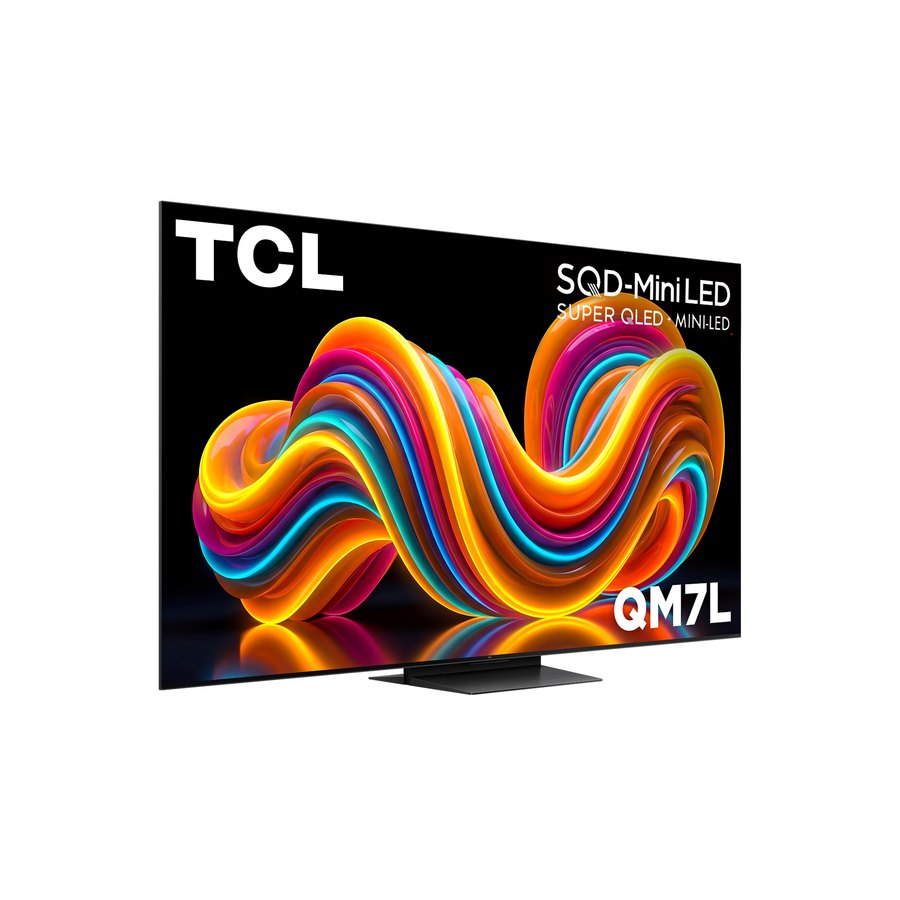
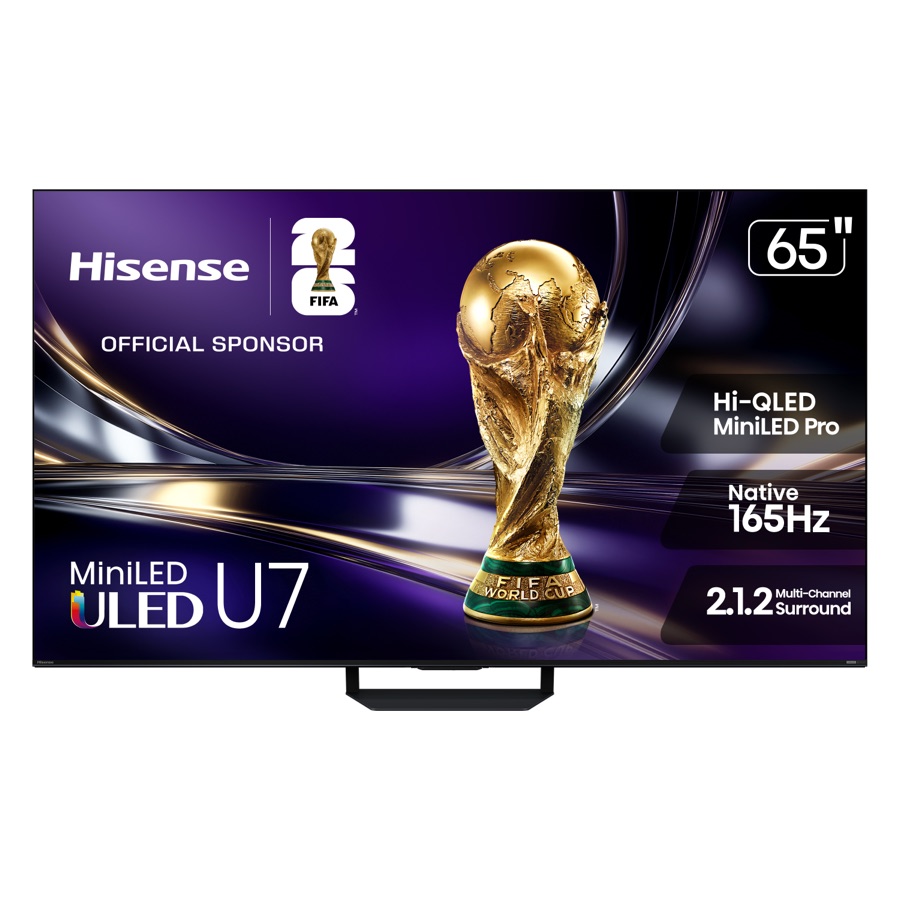
The QM7L Pro removes the one spec that separated the standard QM7L from the Hisense U7SG: it has HDMI 2.1 on all four inputs. That makes this the closest matchup in the budget Mini-LED tier. The TCL keeps its richer SQD color and now the QM8L's processor; the Hisense keeps its matte anti-reflection screen, its 165 Hz panel and the more accurate picture out of the box. RTINGS tested both and gives the Hisense the edge. The one question that decides it: do windows or lamps face your screen?
Black Friday 2026
The sale price that makes each one worth buying
- Hisense U7SG 65-inch Mini-LED ULED (65U7SG)Typically $999. Buy at $750 or under.
- TCL QM7L Pro 65-inch SQD-Mini-LED (65QM7L Pro, Costco)Typically $1,000. Buy at $750 or under.
Checked November 16; prices move by the hour during the sale.
| Spec | TCL QM7L Pro 65-inch SQD-Mini-LED (65QM7L Pro, Costco) Costco members with more than one console Sold only at Costco, in the warehouse and on costco.com | |
|---|---|---|
| Best for | Costco members with more than one console | Bright rooms, gaming on a budget |
| Where it is sold | Costco only | Amazon and most retailers |
| Sizes available | 55, 65, 75, 85, 98 in | 55, 65, 75, 85, 100 in |
| Panel | SQD Mini-LED QLED (VA), HVA 2.0 Pro | Mini-LED QLED (VA) |
| Dimming zones (65 in) | 1,152 (RTINGS) | Not published |
| Peak HDR brightness | Over 2,500 nits at 5% window (RTINGS) | 2,866 nits (Tom's Guide, 10% window) |
| Color (Rec.2020, Tom's Guide on the QM7L panel) | About 90 percent | About 83 percent |
| Refresh | 4K 144 Hz, 1080p 288 Hz | 4K 165 Hz |
| HDMI 2.1 inputs | 4 of 4 (4K144) | 4 of 4 (full bandwidth) |
| Screen finish | Glossy, anti-reflective coating | Matte anti-reflection |
| Out-of-box accuracy (RTINGS) | Warm tint in SDR | More accurate |
| Motion in games (RTINGS) | Noticeable blur | Less blur |
| HDR formats | Dolby Vision, HDR10+ | Dolby Vision IQ, HDR10+ |
| Platform | Google TV | Google TV |
Picture: color against accuracy
The TCL's advantage is color. Its SQD quantum-dot layer is the same one Tom's Guide measured on the standard QM7L at about 90 percent of Rec.2020, against about 83 percent for the U7SG, and RTINGS confirms the Pro has slightly better color volume, though it calls the difference minor and hard to spot on real content.
The Hisense's advantage is everything around the color. RTINGS found it more accurate out of the box, where the Pro shows a warm, reddish tint in SDR until you adjust it, and it displays fast motion with less blur. The U7SG is also a little brighter on a 10 percent window in Tom's Guide's testing. Both are VA panels, so both fade from the side and both glow a little around subtitles in a dark room.
Glare and room light
This is the clearest difference and the one RTINGS weighs most. The U7SG's matte coating diffuses windows and lamps into a soft haze instead of a mirror image, and RTINGS calls its reflection handling superior. The QM7L Pro's glossy screen with an anti-reflective coating is fine in a room with lights off to the side, but a lamp or window facing the screen shows up on it.
If your screen faces windows, buy the Hisense. If the room is dim in the evening and the lights are behind you, the TCL's color is the thing you will notice instead.
Gaming and HDMI ports
A tie on ports, for once. Both have four HDMI 2.1 inputs, so two consoles, a PC and a receiver all get 4K at 120 Hz or more. The Hisense runs to 165 Hz and the TCL to 144 Hz at 4K, which matters only to PC gamers; the TCL adds a 288 Hz mode at 1080p.
Responsiveness favors the Hisense. RTINGS found the Pro's motion noticeably blurry in game mode at 60, 120 and 144 Hz, while the U7SG blurs less. Neither TCL nor Hisense states Dolby Vision gaming for these US models, and both run VRR and ALLM on a PS5 or Xbox Series X.
Price and where to buy
The Hisense U7SG sells for about 1,000 dollars at 65 inches on Amazon and goes on sale often. The QM7L Pro is Costco-only: about 1,300 dollars at list and 850 to 900 dollars during Costco's November 2026 promotions, with Costco's return policy and bundled protection plan. Without a membership, the Hisense is the only one of the two you can buy, and the standard TCL QM7L is the closest TCL alternative.
Pick the TCL QM7L Pro if
- You are a Costco member and want the richest color at this price with HDMI 2.1 on every input.
- The room's lights are behind the seats, so the glossy screen is not a problem.
- Most of what you watch is cable, sports streams or older shows, where the QM8L processor's upscaling helps.
Pick the Hisense U7SG if
- Windows or lamps face the screen; the matte coating is the difference you will see every day.
- You want the more accurate picture out of the box and clearer motion in games.
- You are not a Costco member, or you want the 100-inch size.
Verdict
Buy the Hisense U7SG for most rooms. RTINGS rates it a bit better than the QM7L Pro on the strength of its matte screen, its accuracy out of the box and its cleaner motion, it is sold everywhere, and it matches the Pro's four HDMI 2.1 inputs. Buy the TCL QM7L Pro if you are a Costco member, the room is dim in the evening, and vivid color is what you want from a budget Mini-LED; its SQD panel and QM8L processor give it the richer picture of the two. Either way, a dark dedicated theater is still better served by an OLED such as the LG C6.
Common questions
- Which is better, the TCL QM7L Pro or the Hisense U7SG?
- RTINGS tested both and calls the Hisense a bit better, mainly for its matte reflection handling, out-of-the-box accuracy and clearer motion. The TCL has slightly better color volume. For a bright room choose the Hisense; for a dim room with lights behind the seats, the TCL's color is the draw.
- Do both have four HDMI 2.1 ports?
- Yes. That is what separates the QM7L Pro from the standard QM7L, which has two. Both TVs run a PS5, an Xbox Series X, a PC and a receiver at full bandwidth at once.
- Which is brighter?
- They are close. Tom's Guide measured the U7SG at about 2,870 nits on a 10 percent window; RTINGS measured the QM7L Pro at over 2,500 nits on a 5 percent window. Both overcome daytime glare, and the Hisense's matte screen makes its brightness go further.
- Is the QM7L Pro just the QM7L with more ports?
- Almost. It also uses the QM8L's TSR AI Pro processor, which RTINGS found improves upscaling and HDR accuracy, but the standard QM7L is a touch brighter in game mode with better reflection handling. See our QM7L vs QM7L Pro comparison for the full breakdown.
- Can I buy the QM7L Pro without a Costco membership?
- No. It is sold only at Costco warehouses and on costco.com. The standard TCL QM7L is the same panel with two HDMI 2.1 inputs and is sold at Amazon and most retailers.
- Which is better for a bright living room?
- The Hisense U7SG. Its matte coating diffuses reflections instead of mirroring them, which RTINGS rates as the main reason it comes out ahead. Our best TVs for a bright room roundup covers the alternatives.
- How do they compare to the standard Hisense U7SG vs TCL QM7L matchup?
- The Pro closes the port gap, so this comparison comes down to the screen finish, accuracy and color rather than HDMI. Everything else in our U7SG vs QM7L comparison, including the color and brightness measurements, applies to the Pro's panel too.