Skip to content
Home Theater HubPlan. Build. Enjoy.

7.1.4 Atmos · 10 × 12 ft

7.1.4 speaker placement for a 10 × 12 room

The full experience: 7.1 plus four overhead speakers. Positions below assume the screen on the 10 ft wall, a main seat 8.4 ft from it, and an 8 ft ceiling.

SCREEN10 ft wide12 ft longSEATLRCSLSRRLRRTFLTFRTRLTRRSUBSUB2

Speakers

11

+ 2 subs

Main seat

8.4 ft

from the screen wall

Front spread

50°

between L and R

Front distance

8.2 ft

ears to each front

  • Top Rear speakers hit the back wall before reaching 45° elevation. Mount them as far back as the room allows.
  • Two subwoofers at the front-wall quarter points (or opposing mid-walls) even out bass between seats. Run the subwoofer crawl to confirm.

Every speaker, measured

From the left wall (X), the front wall (Y), and floor to tweeter (Z). Mark these with painter's tape before mounting anything.

SpeakerFrom left wallFrom front wallHeightAngle from seatDolby target
Front Left1.5 ft1 ft3.3 ft25°22–30°
Front Right8.5 ft1 ft3.3 ft25°22–30°
CenterDirectly below or above the screen, angled toward ear height.5 ft1 ft2.8 ft
Surround Left1 ft8.7 ft4.8 ft95°90–110°
Surround Right9 ft8.7 ft4.8 ft95°90–110°
Rear Surround Left3.5 ft11 ft4.8 ft150°135–150°
Rear Surround Right6.5 ft11 ft4.8 ft150°135–150°
Top Front LeftTop Front: about 45° elevation ahead of the seats.2.3 ft3.6 ft8 ft30° / 41° up30–55° up
Top Front RightTop Front: about 45° elevation ahead of the seats.7.7 ft3.6 ft8 ft30° / 41° up30–55° up
Top Rear LeftTop Rear: about 45° elevation behind the seats.2.3 ft11 ft8 ft133° / 51° up30–55° up
Top Rear RightTop Rear: about 45° elevation behind the seats.7.7 ft11 ft8 ft133° / 51° up30–55° up
SubwooferDual subs at the front wall quarter points smooth the bass across the whole row.2.5 ft1 ft0.8 ftn/an/a
Subwoofer 2Dual subs at the front wall quarter points smooth the bass across the whole row.7.5 ft1 ft0.8 ftn/an/a

How we got these numbers

Surround formats are mixed for speakers at specific angles around the listener, so placement starts from the seat, not the walls. In a 10 by 12 foot room we place the main seat 8.4 ft from the screen wall (70% of the length), which keeps it out of the worst bass null at the room's center and off the back wall.

From that seat, the front left and right are placed at 25° (Dolby's 22 to 30° range), side surrounds at 95° (90 to 110°), and rear surrounds at 150° (135 to 150°). Where the room is too narrow or shallow for the ideal angle, the speaker is pushed to the wall and the compromise is noted.

This room's first length mode is 47 Hz and its first width mode is 57 Hz. Two subwoofers at the front-wall quarter points cancel the width mode across the row of seats.

Common questions

Where do the front speakers go in a 10x12 room?
Front left and right sit 1 ft from the front wall and 1.5 ft from the left wall (mirrored on the right), which puts them 25° off center from a seat 8.4 ft back. Tweeters at ear height, about 3.3 ft.
Where do the surround speakers go for 7.1.4 in a 10x12 room?
On the side walls 8.7 ft from the front wall, about 1.5 ft above ear height, which is 95° from the main seat. Dolby recommends 90 to 110° for side surrounds.
Is a 10x12 room big enough for 7.1?
It is tight. Only 3.6 ft behind the seat means the rear surrounds sit close to your head. A 5.1.2 layout is often the better use of two channels here.
Where do the Atmos height speakers go?
Top front at 3.6 ft from the front wall and top rear at 11 ft, each 2.3 ft and 7.7 ft from the left wall. In-ceiling speakers aimed at the seat work best; up-firing modules on the fronts are the fallback.

Gear that fits

We may earn a commission when you buy through links on this site, at no extra cost to you. It never affects what we recommend. Learn more.

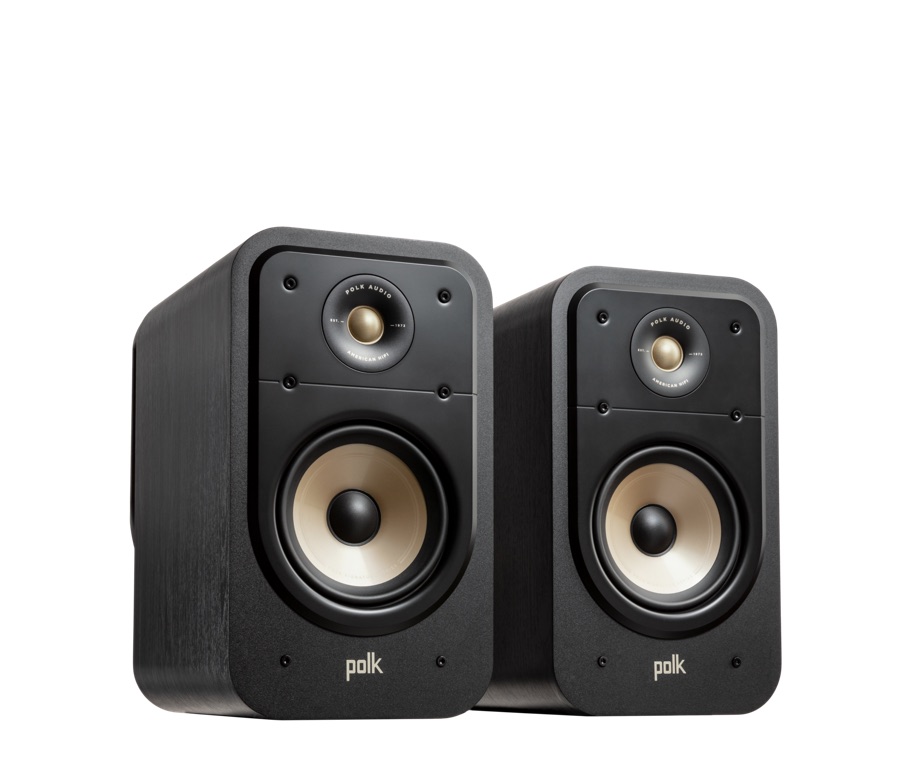
Polk Audio Signature Elite ES20

Surrounds or a small-room stereo pair on a budget

Polk Audio Signature Elite ES20

Price tier 1 of 4
  • 2-way bookshelf, 6.5" woofer
  • 1" Terylene dome tweeter
  • 88 dB measured sensitivity
  • Bass to ~35 Hz in-room (ASR)

Audio Science Review measured genuinely deep bass and smooth, wide horizontal dispersion, and recommended it outright at its price. That wide dispersion and easy load make it a good surround or small-room front pair.
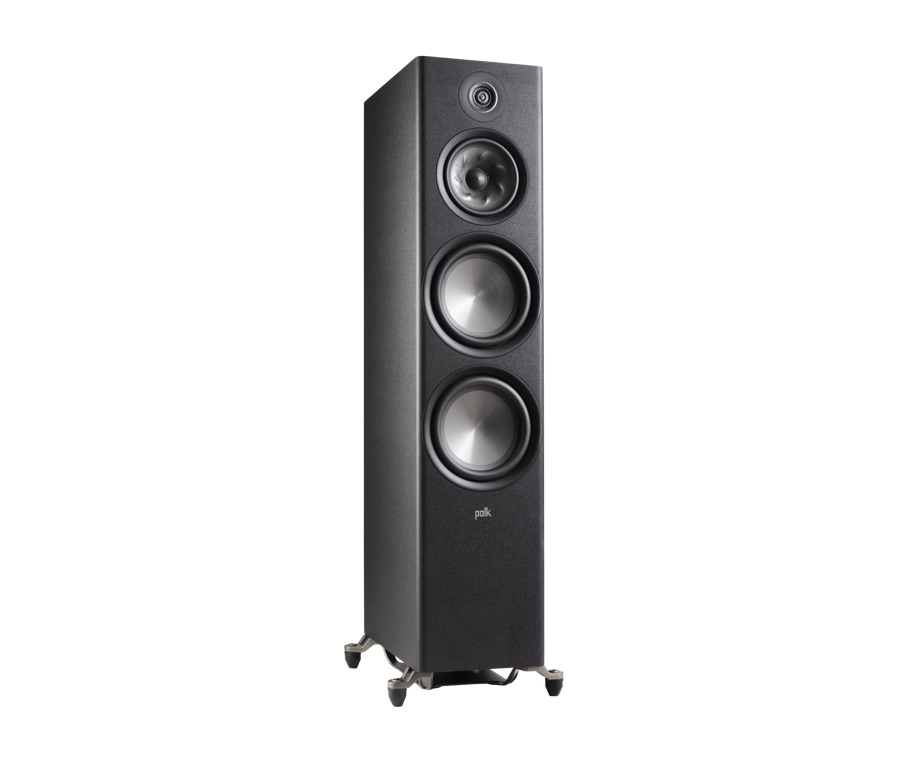
Polk Audio Reserve R700

Front left/right in medium to large rooms

Polk Audio Reserve R700

Price tier 3 of 4
  • 3-way tower, dual 8" woofers + 6.5" mid
  • 1" Pinnacle ring radiator tweeter
  • 88 dB sensitivity, 8 ohm nominal
  • 38 Hz (-3 dB), ported

A three-way tower that measured within roughly plus or minus 2 dB on-axis at Erin's Audio Corner with real bass extension to about 40 Hz, so it can play full range in a medium room. It shares drivers with Polk's flagship Legend series at a fraction of the price.

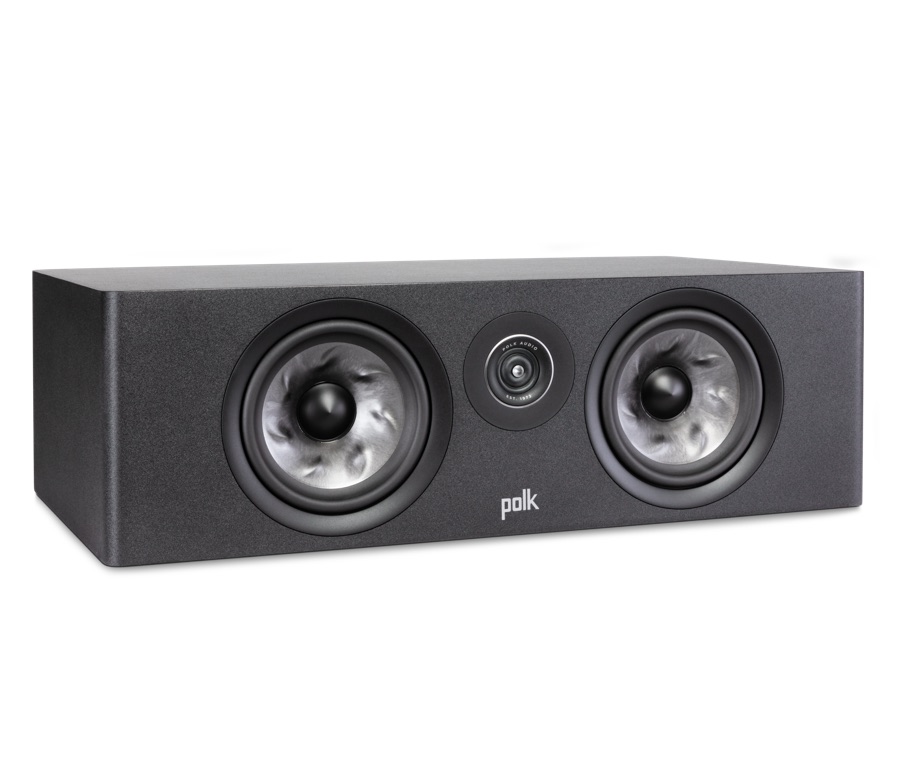
Polk Audio Reserve R400

Center channel paired with Reserve R700 or R600 towers

Polk Audio Reserve R400

Price tier 2 of 4
  • Reserve series center (matches R700)
  • Dual 6.5" Turbine Cone woofers
  • 1" Pinnacle ring radiator tweeter
  • 89 dB sensitivity, 48 Hz (-3 dB)

The large center in the same Reserve series as the R700, using the same tweeter and Turbine Cone woofers so voices match the towers across the front stage. Sound & Vision found the Reserve system dynamic and immersive for its price.

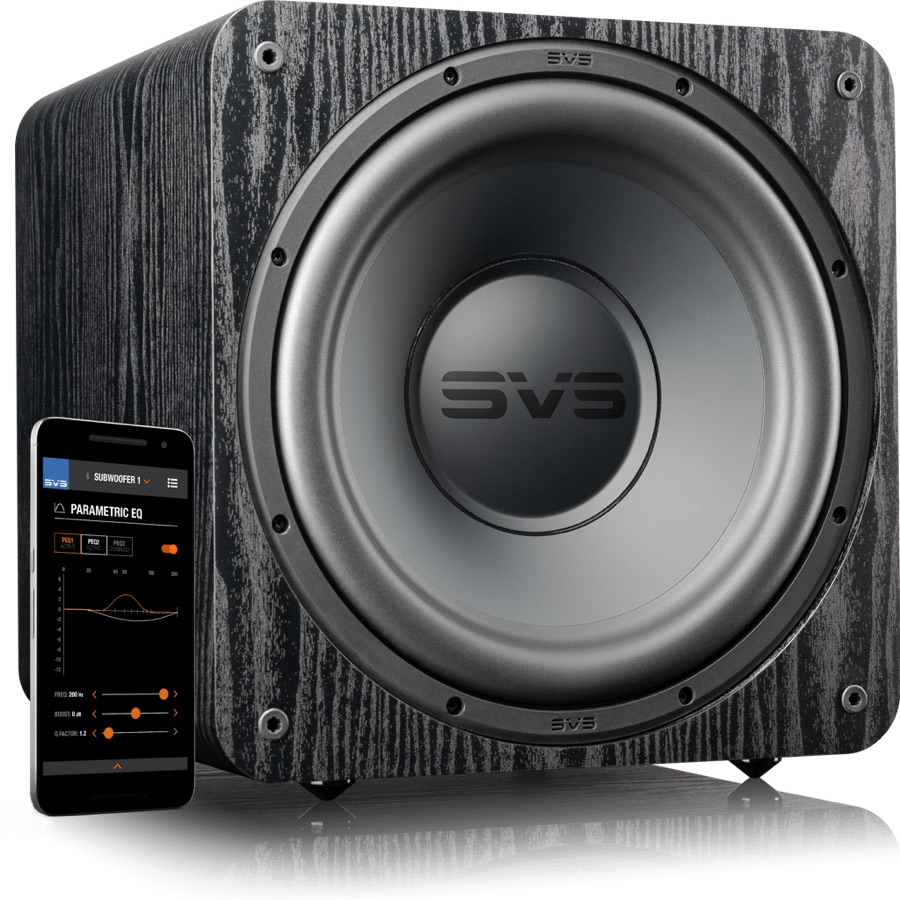
SVS SB-1000 Pro

Small rooms and music-focused systems

SVS SB-1000 Pro

Price tier 2 of 4
  • 12" driver, sealed
  • 325 W RMS / 820 W peak
  • 20 Hz to 270 Hz (+/-3 dB)
  • SVS app with 3-band PEQ

A compact 13-inch sealed cube that Audioholics found goes well beyond entry-level performance, with app control, parametric EQ, and clean 20 Hz extension. The natural pick for small rooms, music-first systems, or a pair on a budget.