Head to head
Yamaha RX-A2A vs Onkyo TX-RZ50
Seven channels and YPAO against nine channels with Dirac Live included. The Onkyo has more channels, pre-outs, and HDMI ports for about 205 dollars more. The deciding factor is whether you will outgrow 5.1.2.
We may earn a commission when you buy through links on this site, at no extra cost to you. It never affects what we recommend. Learn more.
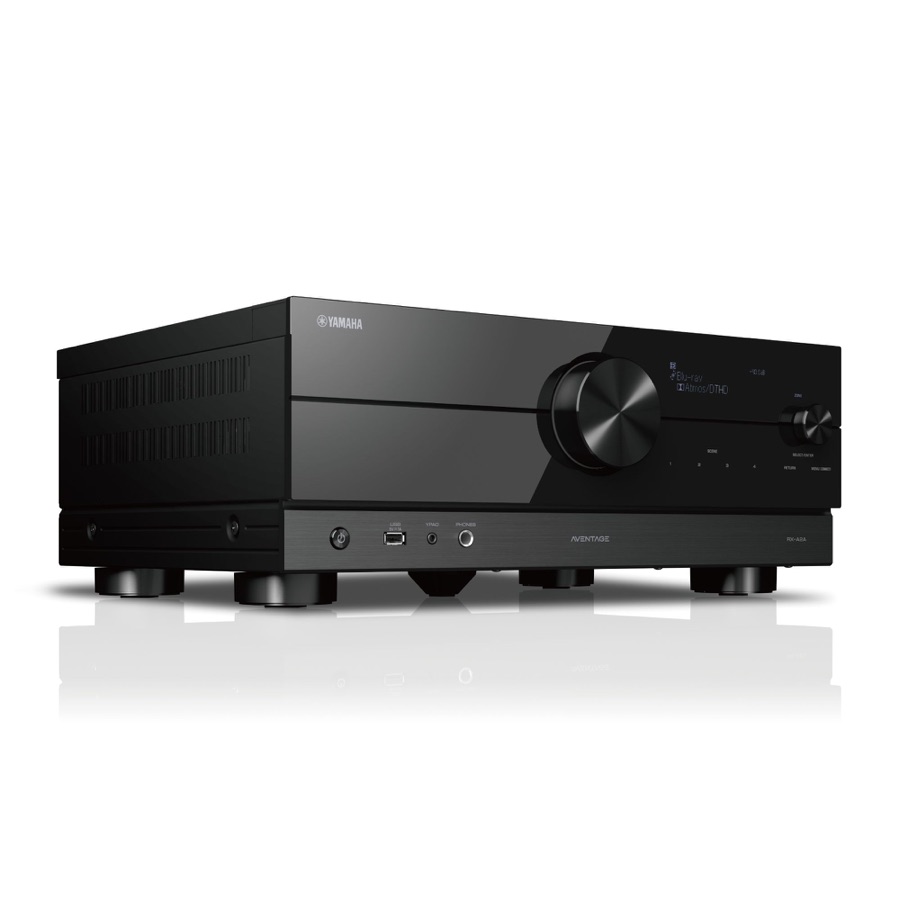
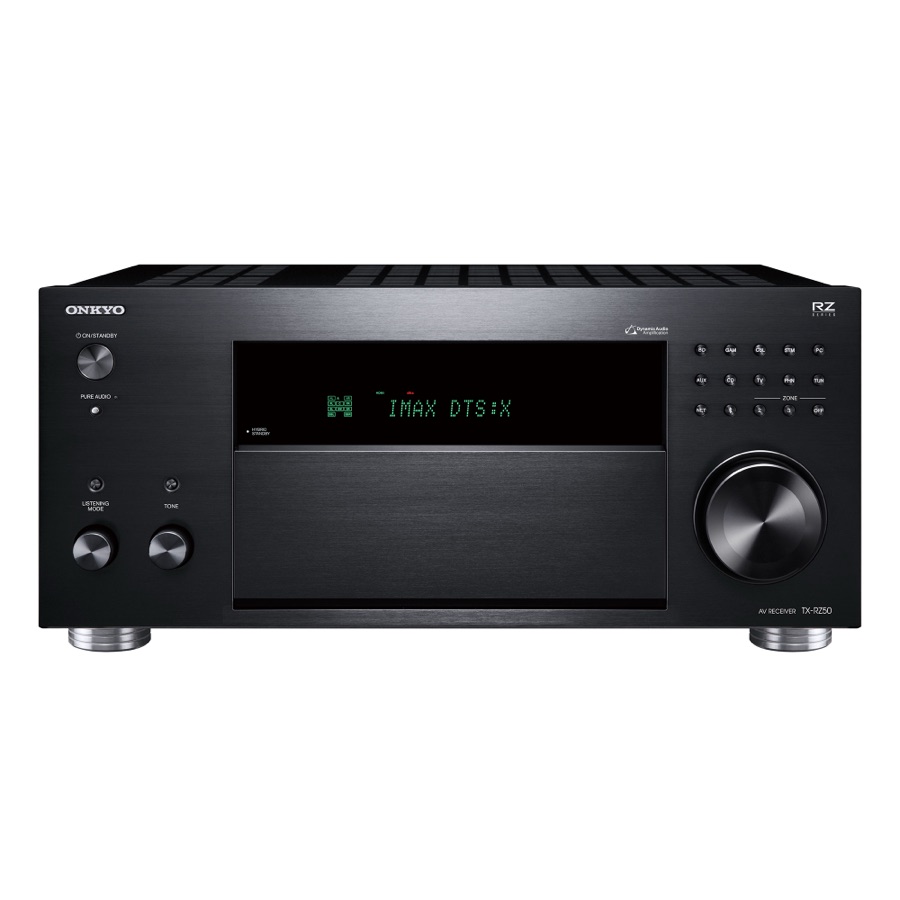
The RX-A2A and TX-RZ50 are the two mid-priced receivers people compare when they want more than the Denon X1800H's seven channels without paying Denon X3900H money. The Onkyo has nine amplified channels, pre-outs for 11.2-channel processing, six 4K120 inputs, two HDMI outputs, and Dirac Live at no extra charge, for roughly 205 dollars more at our November 2026 catalog prices. The Yamaha stays at seven channels but has YPAO, MusicCast, and a sturdier chassis. The one question that decides it: will this system ever need more than 5.1.2?
Black Friday 2026
The sale price that makes each one worth buying
- Yamaha AVENTAGE RX-A2ATypically $844. Buy at $720 or under.
- Onkyo TX-RZ50Typically $1,049. Buy at $890 or under.
Black Friday is Friday, November 27. We check these prices twice a week through Cyber Monday.
| Spec | ||
|---|---|---|
| Best for | 5.1.2 Atmos rooms, MusicCast households | 5.1.4 or 7.1.2 rooms that want Dirac Live without a license fee |
| Price tier | Mid-range | Mid-range |
| Amplified channels | 7.2 | 9.2 |
| Processing channels | 7.2 | 11.2 |
| Rated power (8 ohm, 2 ch) | 100 W (0.06% THD) | 120 W (0.08% THD) |
| Largest Atmos layout without external amp | 5.1.2 | 5.1.4 or 7.1.2 |
| HDMI inputs | 7 (8K on HDMI 1 to 3) | 7 (6 take 8K/60 and 4K/120; front is 4K/60) |
| HDMI outputs | 1 | 2 (Main with eARC, Sub/Zone 2) |
| Room correction | YPAO R.S.C. with multipoint | Dirac Live full bandwidth, included |
| Pre-outs | Front L/R, 2 sub outs | 11.2 pre-outs |
| Formats | Dolby Atmos, DTS:X | Dolby Atmos, DTS:X, IMAX Enhanced, THX certified |
| Streaming | MusicCast, AirPlay 2, Bluetooth | Chromecast built-in, AirPlay 2, DTS Play-Fi, Bluetooth |
Channels and pre-outs: where the money goes
Seven amplified channels means 5.1.2 or 7.1, and that is the Yamaha's ceiling. It has front L/R pre-outs and two subwoofer outs, four in all on Yamaha's specification page, but no surround or height pre-outs.
The Onkyo has nine amplified channels and pre-outs for 11.2-channel processing, so it runs 5.1.4 or 7.1.2 on its own and 7.1.4 with a small two-channel amp. If four Atmos heights or an external amp are in your future, that alone justifies the price gap.
Room correction
Full-bandwidth Dirac Live is included on the Onkyo; only the Dirac Live Bass Control module costs extra. Audioholics and AVS Forum both rated the receiver one of the best values in its class largely because of it.
The Yamaha uses YPAO R.S.C., which measures up to eight seats and adds reflected sound control. In an ordinary living room that is good enough; in a difficult room with bass problems, Dirac gives you more to work with.
Power and known quirks
Onkyo rates the TX-RZ50 at 120 W and Yamaha rates the RX-A2A at 100 W, a difference of about 0.8 dB. The two ratings use slightly different test conditions (0.08 percent THD for the Onkyo, 0.06 percent for the Yamaha), so treat the gap as roughly equal in a normal room.
The Onkyo is a five-year-old platform with documented quirks: Ethernet dropouts on some units and output limiting into 4 ohm speakers at high volume. AVForums found the Yamaha's amplifier closer to a mid-range RX-V than its 100 W rating suggests.
Pick the Yamaha RX-A2A if
- Your room is small or medium and 5.1.2 is the end goal.
- You already use MusicCast speakers or prefer Yamaha's presentation and chassis.
- You run 4 ohm speakers and would rather not depend on the Onkyo at high volume.
Pick the Onkyo TX-RZ50 if
- You want 5.1.4 now, or 7.1.4 later with an external amp on the pre-outs.
- You want Dirac Live included rather than buying a license.
- You have more than three 4K120 sources, or need a second HDMI output for a projector or another display.
Verdict
Buy the Onkyo TX-RZ50 if there is any chance the room grows past 5.1.2; for about 205 dollars more it adds two amplified channels, full pre-outs, six 4K120 inputs, and Dirac Live. Buy the Yamaha RX-A2A for a 5.1.2 room that will stay that way, especially in a MusicCast household or with 4 ohm speakers. The exception is a buyer who would stretch for the Onkyo but wants a current platform: the Denon AVR-X3900H is the newer nine-channel option, at a considerably higher price.
Common questions
- Is the Onkyo TX-RZ50 better than the Yamaha RX-A2A?
- On specifications, yes: nine channels against seven, full pre-outs, more 4K120 inputs, and Dirac Live included. It costs about 205 dollars more at our November 2026 catalog prices and has documented quirks on its older platform, so the Yamaha is the lower-risk pick for a room that stays at 5.1.2.
- Does the Yamaha RX-A2A include Dirac Live?
- No. The RX-A2A uses YPAO R.S.C. room correction, and Dirac Live is not part of its published specifications. Dirac Live is built into the Onkyo; only its Bass Control module is a paid add-on.
- Can the RX-A2A run 5.1.4?
- No. It has seven amplified channels and no surround or height pre-outs, so 5.1.2 or 7.1 is its ceiling. The Onkyo runs 5.1.4 on its own.
- Which is better for a PS5 and an Xbox?
- Either works. Yamaha takes 8K input on HDMI 1 to 3 and Onkyo takes 8K/60 and 4K/120 on six inputs, so two consoles fit on both. The Onkyo matters once you have four or more 4K120 sources.
- Is the Onkyo's extra power audible?
- Not really. 120 W against 100 W is about 0.8 dB, and the two are rated under slightly different conditions. Room size and speaker sensitivity matter far more.
- Which is safer with 4 ohm speakers?
- The Yamaha, on the evidence. The Onkyo has documented output limiting into 4 ohm speakers at high volume, while Yamaha lists a 4 ohm rating for its front channels. That rating is a manufacturer figure, not a measurement.