Skip to content

20 feet throw

What screen size from 20 feet?

A standard zoom projector 20 feet from the wall fills a 138 to 212 inch 16:9 screen. Short-throw and long-throw lenses widen that range; the table below shows every lens type and the throw ratio you need for common screens.

Standard zoom lens (1.3–2.0)

138–212"

16:9 diagonal from 20 ft. Image width 120–185 in.

Ultra short throw (0.25)

1101"

16:9 diagonal

Short throw (0.5 – 0.65)

424–551"

16:9 diagonal

Standard fixed lens (1.2)

229"

16:9 diagonal

Long throw (1.5 – 3.0)

92–184"

16:9 diagonal

What 20 feet of throw gets you

  • Note: 20 ft gives you room to choose

    At this distance nearly every home theater projector can fill a large screen, often without running the zoom to its limit. Keep the zoom near the middle of its range, where lenses are sharpest and brightest, rather than at either extreme.

  • Note: Up to 212 inches is possible, which does not mean it is wise

    Light spreads over area, so doubling the diagonal quarters the brightness on screen. A 212 inch image from a typical 2,000 lumen projector will look dim unless the room is fully light-controlled. Size the screen to your lumens and your light control, not to the maximum the lens allows.

  • Watch: The smallest image from here is 138 inches

    Even at full wide zoom this distance cannot produce a smaller picture, so check that 138 inches actually fits your wall with the borders and speaker placement you have planned. Moving the projector forward is the only way down from here.

Screen20 – 20 ft lens to screen

Throw ratio needed at 20 feet

Screen (16:9)Screen widthThrow ratio neededLens type
100"87.2 in2.75Long throw
110"95.9 in2.5Long throw
120"104.6 in2.29Long throw
135"117.7 in2.04Standard
150"130.7 in1.84Standard

Lumens needed for the standard-zoom image

TargetBrightnessLumens (gain 1.0)With 30% margin
SMPTE reference (dark room)16 fL2130 lm2770 lm
Punchy SDR / light ambient30 fL3990 lm5190 lm
HDR or bright room50 fL6660 lm8650 lm

How we got these numbers

Throw ratio is the lens-to-screen distance divided by the image width. Rearranged, image width = distance ÷ throw ratio. At 20 feet (240 inches), a 1.5 throw ratio produces a 160-inch-wide image, which is a 184-inch 16:9 diagonal.

Zoom lenses have a range of throw ratios, so a given distance gives a range of image sizes. The standard range on home theater projectors is roughly 1.3 to 2.0; short-throw lenses run 0.5 to 0.65; long-throw lenses up to 3.0. Ultra short throw projectors (about 0.25) are designed to sit on furniture directly below the screen and are not meant for a 20-foot throw.

To go the other way, the throw ratio you need for a particular screen is distance ÷ screen width. Compare that to the projector's published zoom range before you buy a screen or drill a mount.

Common questions

How big a screen can I get from 20 feet?
With a standard 1.3 to 2.0 zoom lens, 138 to 212 inches diagonal (16:9). A short-throw lens reaches 424 inches or more; a long-throw lens tops out around 184 inches.
What throw ratio do I need for a 120-inch screen at 20 feet?
A 120-inch 16:9 screen is 104.6 inches wide, so you need a throw ratio of about 2.29. Check that this falls inside the projector's zoom range.
Can I use an ultra short throw projector at 20 feet?
No. UST projectors sit inches from the wall. At 20 feet a 0.25 throw ratio would produce a 1101 inch image, far larger than any screen. UST belongs on a console under the screen.
Is 20 feet measured from the lens or the back of the projector?
From the front of the lens to the screen surface. A ceiling-mounted projector's lens is typically 6 to 12 inches in front of the mount, so measure the lens, not the bracket.

Gear that fits

We may earn a commission when you buy through links on this site, at no extra cost to you. It never affects what we recommend. Learn more.

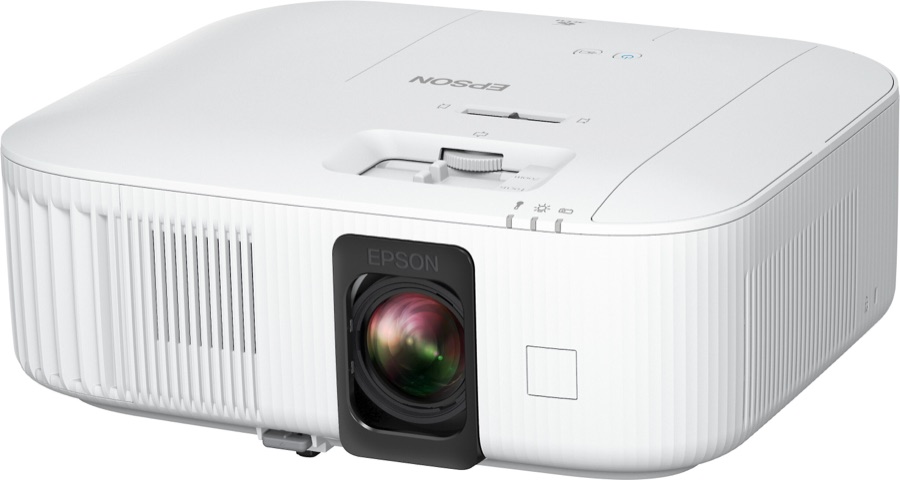
Epson Home Cinema 2350 4K PRO-UHD

First home theater, light-controlled living rooms

Epson Home Cinema 2350 4K PRO-UHD

$1,279
  • 3LCD pixel-shift 4K
  • 2,800 lumens
  • Throw 1.32 to 2.15
  • Vertical lens shift

A bright, color-accurate 3LCD projector with real vertical lens shift and a 1.6x zoom, which makes it far easier to place than most DLP projectors at this price. Lamp-based, so budget for a replacement bulb eventually.
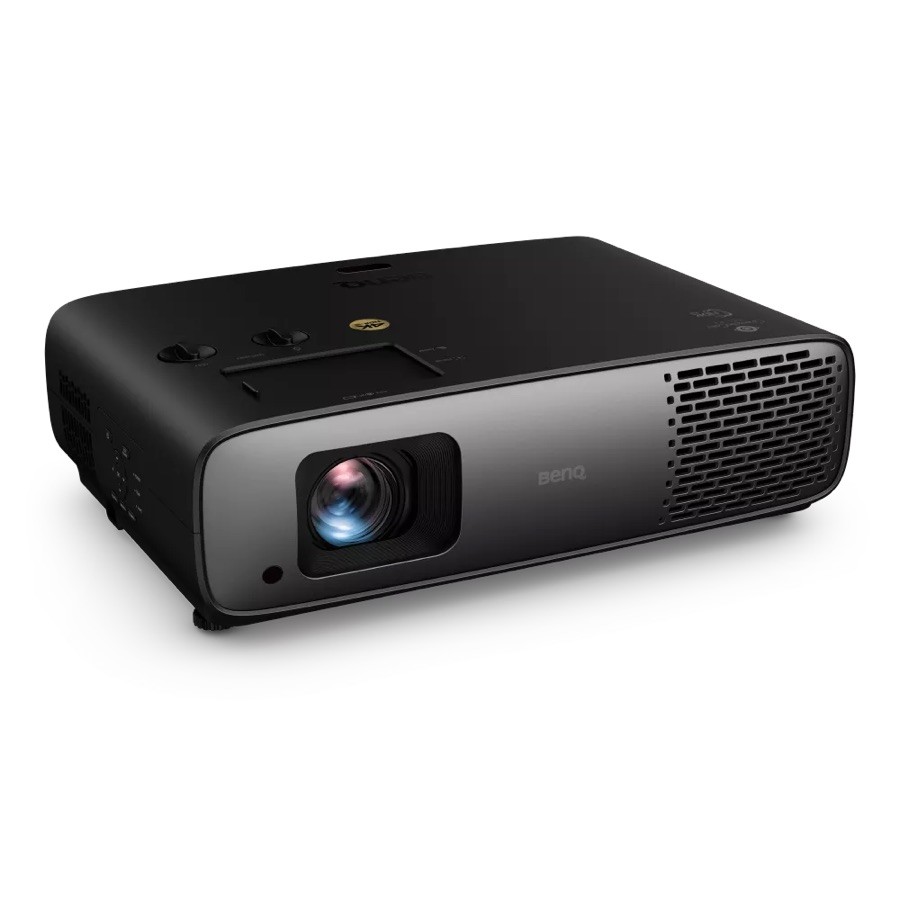
BenQ W4100i 4K 4LED Home Theater Projector

Dedicated theater rooms, color-critical viewing

BenQ W4100i 4K 4LED Home Theater Projector

$2,755
  • 0.65-inch DLP pixel-shift 4K
  • 3,200 lumens 4LED
  • Throw 1.15 to 1.50
  • H/V lens shift

The sweet spot for a dedicated theater: factory-calibrated 100 percent DCI-P3 color, a long-life LED light source, low input lag, and both vertical and horizontal lens shift, which is rare for DLP under three thousand dollars.

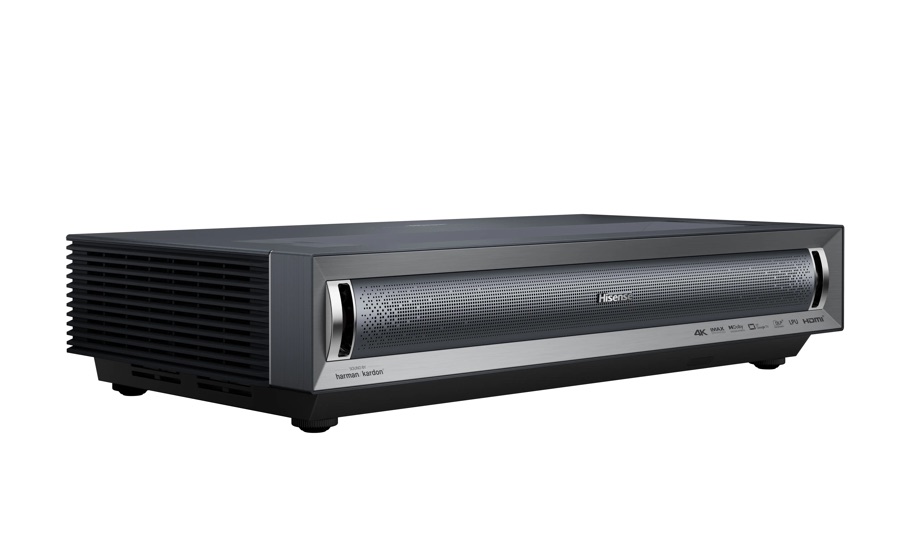
Hisense PX3-PRO TriChroma Laser Cinema UST

Living rooms, no ceiling mount, UST ALR screens

Hisense PX3-PRO TriChroma Laser Cinema UST

$2,900
  • RGB triple laser UST
  • 3,000 ANSI lumens
  • Throw 0.22:1, 80 to 150 in
  • Dolby Vision / HDR10+

The most-recommended ultra-short-throw in its class: wide-gamut triple-laser color, Dolby Vision, 3,000:1 native contrast, and low input lag for gaming, all from a cabinet a few inches from the wall.

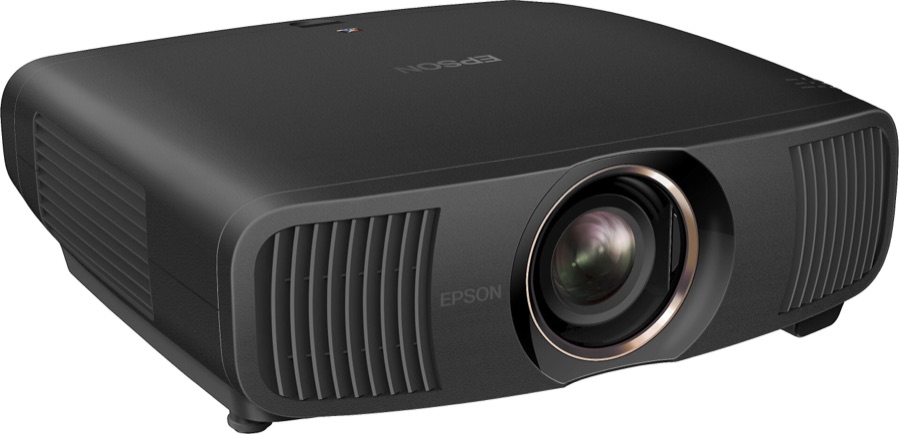
Epson QB1000 4K HDR 3LCD Laser Projector (Black)

Large dedicated theaters, 130 to 150 inch screens, awkward mounting positions

Epson QB1000 4K HDR 3LCD Laser Projector (Black)

$6,695
  • 3LCD laser, 4-way pixel shift
  • 3,300 lumens (3,383 measured)
  • Throw 1.35 to 2.84, 2.1x zoom
  • Motorized H/V lens shift

Epson's Q-series entry brings a motorized 15-element glass lens with huge shift range, ProjectorCentral-measured 3,383 lumens and 5,833:1 native contrast, and 4K120 gaming at 21 ms. It is the long-throw for a large dedicated room where the projector cannot sit exactly where you would like.