Buying Guides
Perlisten X Series Buying Guide: X5w, X3w, X2w, and X2ic
Which Perlisten X Series on-wall and in-ceiling speaker to buy for each channel, what a 5.1, 5.1.2, or 7.1.4 system costs, the receiver it needs, and how to hang them. Specs are Perlisten's until independent measurements arrive.
We may earn a commission when you buy through links on this site, at no extra cost to you. It never affects what we recommend. Learn more.
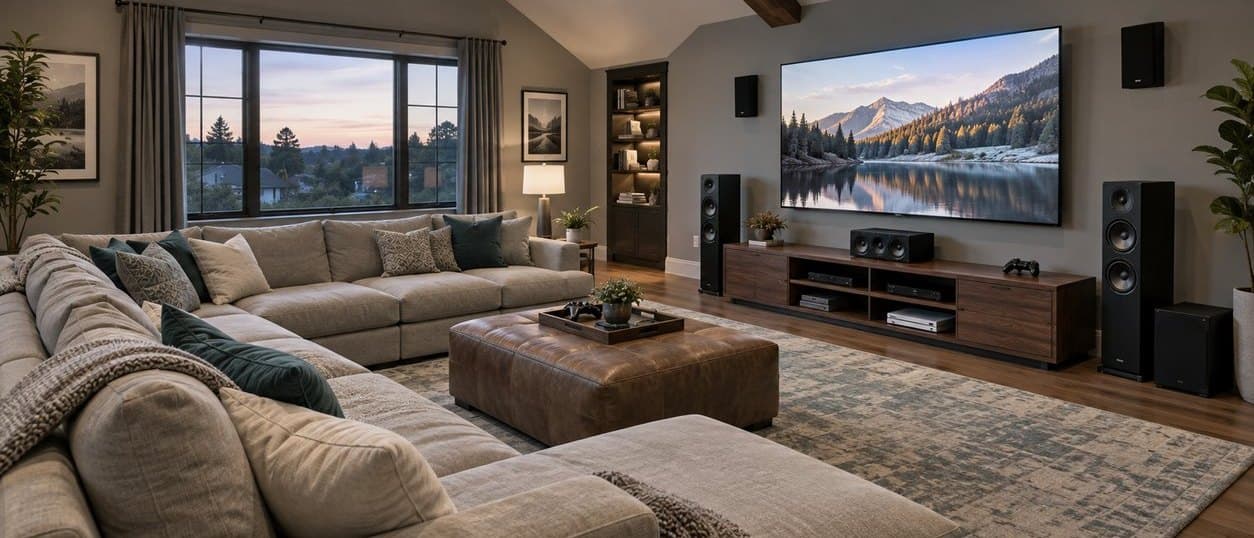
Perlisten's X Series is a family of four speakers built for walls and ceilings: the X5w, X3w, and X2w on-walls, and the X2ic in-ceiling, with an X3iw in-wall still to come. They share one tweeter, one woofer type, and a cabinet about 4 inches deep, so any mix of them sounds like one system. This guide covers what the line has in common, which model belongs on which channel, what a complete system costs, the receiver it needs, and how to hang the speakers so they sound the way they were designed to.
Why on-wall speakers are a hard problem
Most speakers are designed to sit in free space, a foot or more from the wall behind them. Put an ordinary bookshelf speaker flat against a wall and two things go wrong. Bass that wraps around the cabinet reflects off the wall and arrives a little late, which carves a dip into the response somewhere between 100 and 300 Hz. And the tweeter, now inches from a large hard surface, sprays treble sideways and upward that bounces straight back into the room and smears the image.
A speaker designed for the wall solves the first problem by being thin: with the baffle only 4 inches out, the rear-wall reflection arrives almost in step with the direct sound and reinforces the bass instead of cancelling it. The second problem is harder, and it is where most thin on-walls give up. Perlisten's answer is the same one it uses on its floorstanding speakers: the tweeter sits in a waveguide that narrows how widely it spreads sound, so less of the treble reaches the wall and ceiling in the first place and more of it reaches you.
Perlisten made its name with controlled-dispersion designs. Its S7t tower was the first speaker certified to THX Dominus, the highest THX tier, and that engineering reputation is the reason to pay attention to a new line that has not yet been measured by anyone outside the company.
What every X Series speaker shares
- A 38 mm silk dome tweeter in a waveguide. The same part in all four models, which is what lets effects move from the front speakers to the surrounds to the ceiling without changing character.
- 5.5-inch carbon fiber woofers in the on-walls (the X2ic uses a 6.5-inch version).
- Sealed cabinets. No port to fire into the wall or the floor, and a gradual bass roll-off that blends predictably with a subwoofer.
- 100 mm (3.9-inch) depth on the on-walls, so the speaker hangs about as proud of the wall as a wall-mounted TV.
- Rated 60 Hz to 30 kHz, 4 ohm, 50 to 200 W recommended. Every model needs a subwoofer and a receiver that is comfortable with a 4 ohm load.
- Satin black or satin white on the on-walls, with matching perforated grilles. The X2ic has a white paintable magnetic grille.
- Mounting hardware in the box. The on-walls ship with a flat wall bracket and an angle bracket for aiming.
The lineup
| Model | Format | Drivers | Sensitivity | Size (H x W x D) | Weight | Price (each) |
|---|---|---|---|---|---|---|
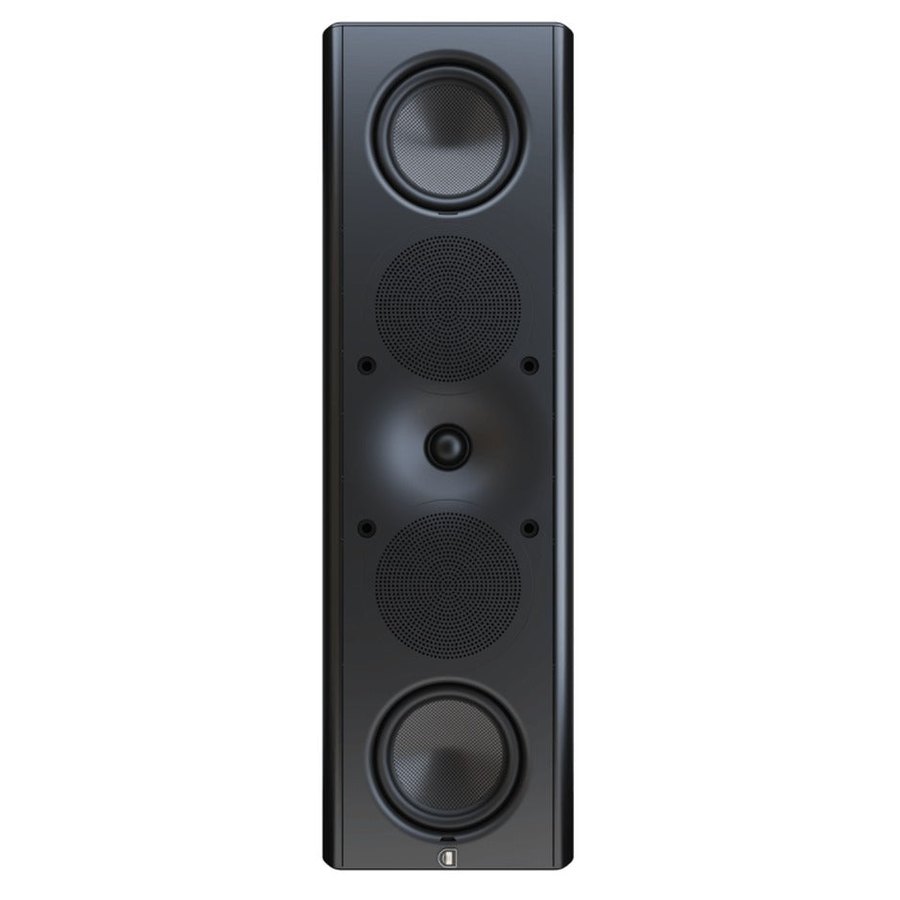
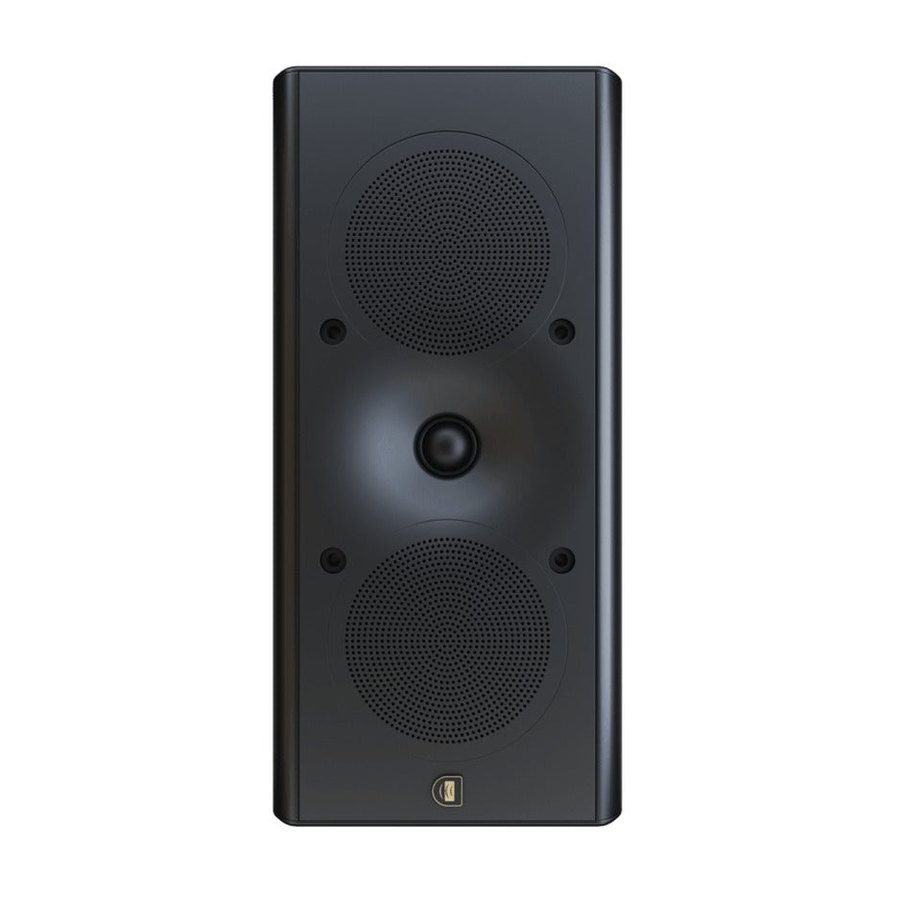
| X5w | 3-way on-wall | 4 x 5.5 in woofers, tweeter | 92 dB | 29.1 x 7.9 x 3.9 in | 44 lb | $1,995 |
| X3w | 2-way on-wall, woofer-tweeter-woofer | 2 x 5.5 in woofers, tweeter | 89 dB | 17.7 x 7.9 x 3.9 in | 20 lb | $1,695 |
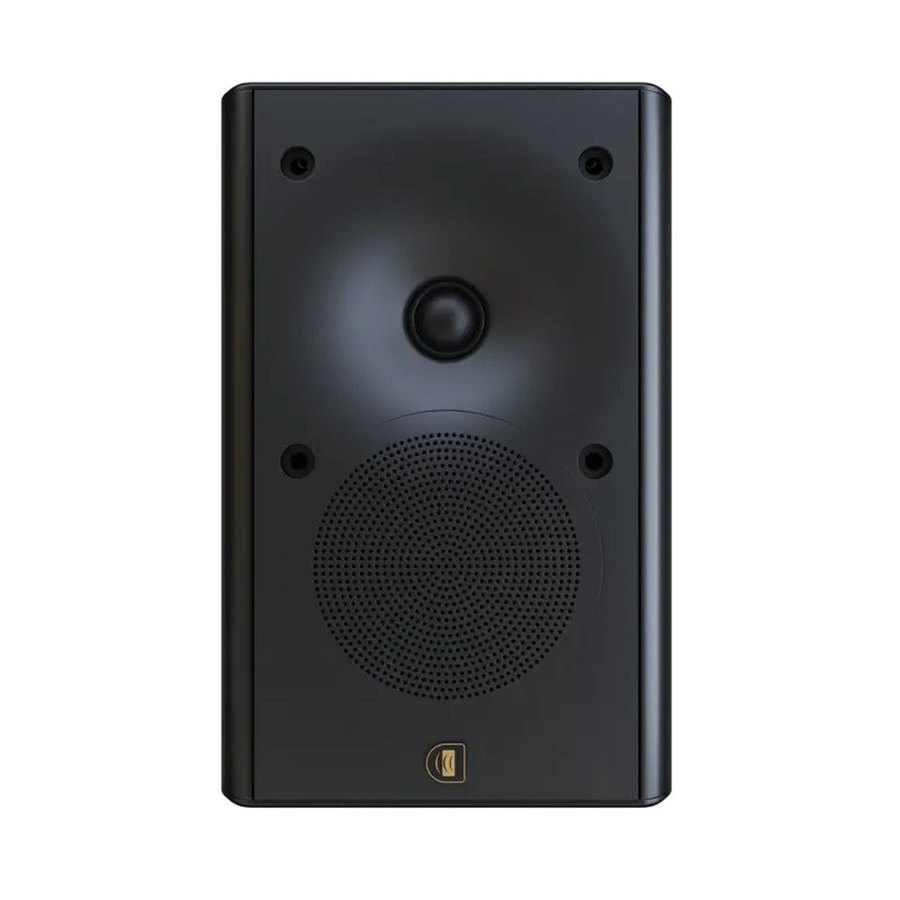
| X2w | 2-way on-wall | 1 x 5.5 in woofer, tweeter | 88 dB | 13.0 x 7.9 x 3.9 in | 15 lb | $1,395 |
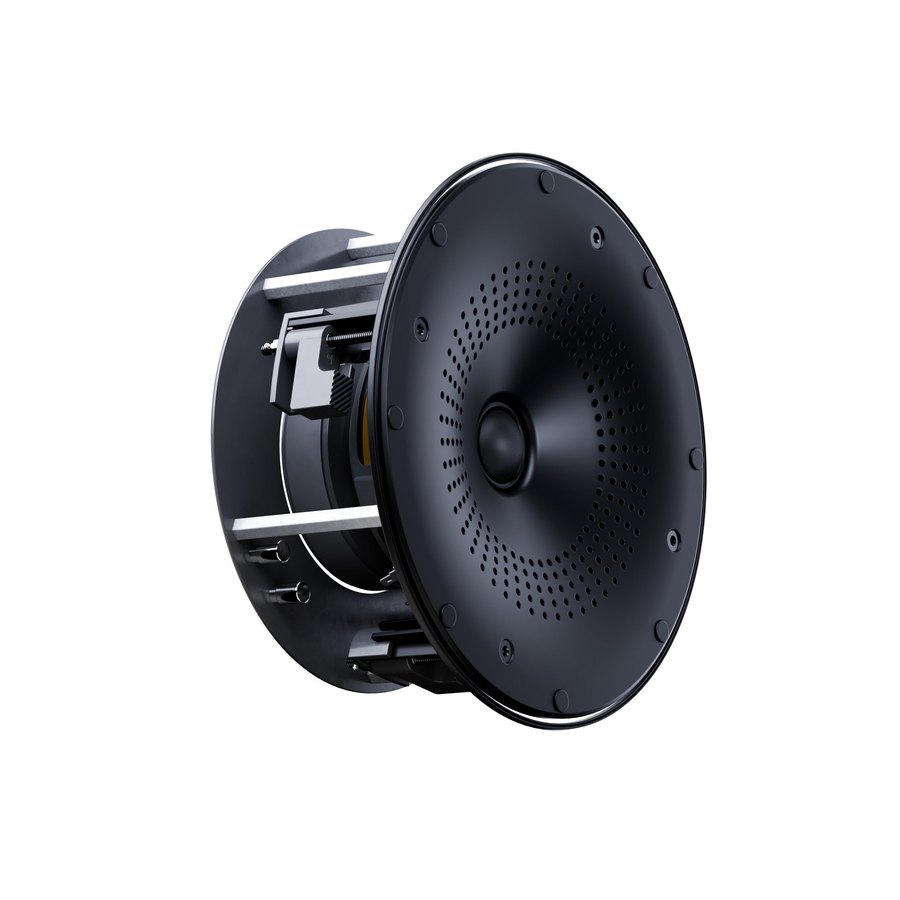
| X2ic | 2-way in-ceiling | 6.5 in woofer, tweeter | 90 dB | In-ceiling | $1,195 | |
| X3iw | 2-way in-wall | 2 woofers, tweeter | Not published | In-wall | Not yet priced |
Prices are The Listening Room's in November 2026. All five are sold individually, so a left-center-right set is three speakers.
 View at The Listening Room
Perlisten X5w On-Wall Speaker (each)
Wall-mounted left, center, and right channels beside a TV
$1,995 each
 View at The Listening Room
Perlisten X3w On-Wall Speaker (each)
Left, right, or center channels beside a mid-size wall-mounted TV
$1,695 each
- View at The Listening Room
 View at The Listening Room
Perlisten X2ic In-Ceiling Speaker (each)
Dolby Atmos height channels in an X Series system
$1,195 each
We have a business relationship with Perlisten's US distributor.
Which model for which channel
Front left and right
The choice is between the X5w and the X3w, and it comes down to screen size and how loud the room needs to play.
The X5w is the one to buy beside a 75-inch or larger TV, or in a medium to large room. It is a true three-way, with separate drivers for bass, midrange, and treble rather than two woofers stretched to cover everything below the tweeter, and its 92 dB sensitivity means it needs half the amplifier power of the X3w to reach the same volume. At 29 inches tall it also looks in proportion next to a big screen, where an 18-inch speaker can look like an afterthought.
The X3w suits a 55- to 75-inch TV and a small to medium room. The tweeter sits between the two woofers, a layout that keeps the sound consistent across the height of the cabinet, which matters for a speaker that ends up a little above or below ear level because the TV dictated where it hangs. Our X5w vs X3w comparison goes through the trade-offs in detail.
Center
The center carries most of the dialogue, so it should match the left and right as closely as possible. In an X Series system it does: use the same model as the mains, or one step down. X5w mains with an X5w or X3w center, X3w mains with an X3w center.
Mount it horizontally under the screen (or above it, if the TV is low), tilted toward the ears with the included angle bracket. One caveat applies to any woofer-tweeter-woofer speaker turned on its side: its coverage narrows left to right near the crossover frequency, so seats well off-center can hear dialogue change tone slightly. The X Series' small woofers and waveguide keep that effect smaller than on a typical center with 6.5-inch drivers, but if your row of seats is very wide, keep the center as close to ear height as the screen allows and aim it at the middle of the row.
Surrounds
The X2w is the surround speaker in the line. It carries the same tweeter as the front speakers, so an effect that pans from the front to the side does not change character on the way, and its 13-inch cabinet is easy to fit beside and behind seating. Surrounds play far less loud than the fronts in almost every mix, so its single woofer and 88 dB sensitivity are not a limitation there. The X3w vs X2w comparison covers when the X3w is the better surround.
In a small room, the X2w can also handle the front channels, which makes an all-X2w 5.1 system the least expensive way into the line.
Height channels for Dolby Atmos
The X2ic is the in-ceiling model: a 6.5-inch woofer and the X Series tweeter behind a paintable magnetic metal grille. Ceiling speakers sit closer to the room's reflecting surfaces than any other channel, and a tweeter that sprays sound widely turns precise overhead effects into a vague wash. The waveguide is Perlisten's answer, and sharing a tweeter with the front stage keeps a helicopter the same helicopter as it passes overhead. It was listed as a pre-order when we checked, so confirm the ship date before planning around it. Our X2ic vs KEF Ci200QR comparison explains when a wide-dispersion ceiling speaker is the better choice, and the Dolby Atmos setup guide covers how many you need and where they go.
In-wall
The X3iw is a two-way in-wall with the X3w's driver layout, voiced to match the rest of the line. Perlisten says the extra volume of a wall cavity lets it play lower than the on-walls. It was listed as coming soon with no price when we checked, so we have left it out of the system costs below.
What a system costs
There is no package price, so a system is the sum of its parts. These totals are speaker prices only; add a subwoofer and, if you do not have one, a receiver.
| System | Speakers | Total |
|---|---|---|
| Compact 5.1, small room | 5 x X2w | $6,975 |
| 5.1, small to medium room | 3 x X3w, 2 x X2w | $7,875 |
| 5.1.2 Atmos, medium room | 3 x X3w, 2 x X2w, 2 x X2ic | $10,265 |
| 5.1.4 Atmos, large room | 3 x X5w, 2 x X2w, 4 x X2ic | $13,555 |
| 7.1.4 Atmos, large room | 3 x X5w, 4 x X2w, 4 x X2ic | $16,345 |
A sensible way to stage it: buy the front three first, run the system as 3.1 with a good subwoofer, then add surrounds and heights as the budget allows. Because every model shares the same tweeter, nothing you buy first becomes a mismatch later.
The subwoofer matters more here than in most systems, because every X Series speaker stops at 60 Hz. Treat it as part of the speaker budget, not an accessory. Our best subwoofer for home theater picks are sized by room, and the subwoofer placement guide covers where to put it.
The receiver it needs
Two numbers on the spec sheet decide this.
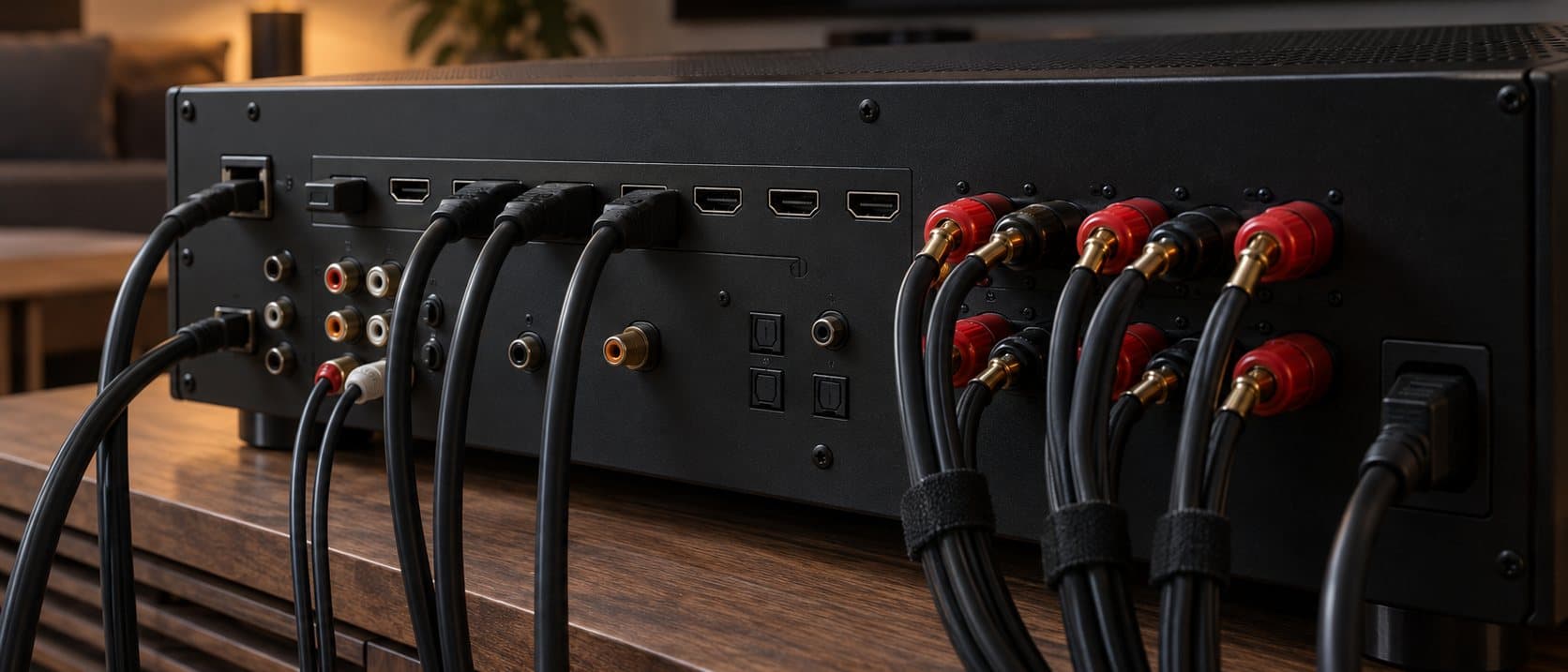
4 ohm impedance. Every X Series speaker is a 4 ohm load, which draws more current from the amplifier than the 8 ohm speakers most receivers are rated with. Mid-range and better receivers from the major brands handle 4 ohm speakers without complaint; entry-level models may run hot or shut down at high volume. Check the manual for a 4 ohm rating before buying. Some receivers have an impedance selector switch; it works by limiting power rather than adding protection, so most reviewers leave it at the default setting and make sure the receiver has room to breathe.
Power. Sensitivity tells you how far the power goes. A 100 W per channel receiver puts an X5w at roughly 100 dB on peaks at a 12-foot seat, which is loud movie level, with the wall behind the speaker adding a little more in the bass. An X3w lands about 3 dB lower and an X2w about 4 dB lower for the same power, which is still plenty for a medium room. For a large room with X5w mains, a receiver rated for 100 W or more with all channels driven, or a separate power amplifier on the front three, is the comfortable choice. Perlisten recommends 50 to 200 W.
For a 5.1.2 system you need 7 amplified channels; for 5.1.4, 9; for 7.1.4, 11. Our AV receiver guide explains how to read the channel and power figures, and the best receivers for Dolby Atmos list covers the models we recommend.
Hanging them
On-wall speakers remove most of the placement decisions, since they go where the wall is. The ones that remain matter.
- Tweeter height. Aim to get the tweeter within a few inches of seated ear height, 36 to 40 inches for most seating. With the speaker beside a TV, that usually means aligning it with the lower-middle of the screen rather than centering it on the screen. The TV mount height calculator gives the screen height to work from.
- Angle. If the TV forces the speaker higher than the ears, use the angle bracket to tilt it down so the tweeter axis points at the main seat. The waveguide only helps if it is aimed at you.
- Spacing. For a 5.1 or larger system, the left and right should sit 22° to 30° off the center line from the main seat. The speaker placement calculator turns that into inches from the screen center for your seating distance.
- Surround height. About 1 to 1.5 feet above seated ear height, which clears heads in the row and keeps the surrounds distinct from the height layer. Surrounds go beside the seats at 90° to 110° in a 5.1 layout, and both the side and rear pairs are covered in the speaker placement guide.
- Heights. The X2ic pairs go at 30° to 55° of elevation in front of and behind the seats, spread left and right about as far as the front speakers. The Dolby Atmos setup guide has the measurements for common ceiling heights.
- Wire. On-wall runs are often longer than they look because the cable has to travel inside the wall, and a 4 ohm speaker halves the distance a given gauge can cover. Using the 5 percent resistance rule, 16 AWG is good to about 25 feet, 14 AWG to about 40, and 12 AWG to about 60. The speaker wire gauge calculator checks your runs at 4 ohms.
Run the receiver's room correction once everything is hung. A speaker flat against a wall gains several decibels in the bass compared with the same speaker in free space, and room correction is what trims that back to flat.
What we do not know yet
The X Series went on sale in 2026 and, at the time of writing, no independent reviewer or measurement site had published results. Everything above about dispersion, sensitivity, and frequency response is Perlisten's specification. Perlisten's track record on its floorstanding lines, which have measured well in independent reviews, is a reason for confidence, not a substitute for data. We will update this guide when measurements are published, and if the figures do not hold up, we will say so.
Frequently asked questions
Can I mix X Series models? Yes, and the line is designed for it. All four share the same tweeter, so an X5w front stage with X2w surrounds and X2ic heights sounds like one system.
Do I need a subwoofer? Yes. Every model is rated to 60 Hz. Set them to Small at 80 Hz and let a subwoofer handle the rest.
Can the X2w be a front speaker? In a small room, yes. In a medium or larger room the X3w's second woofer gives the front channels more output and more even coverage.
Will a budget receiver drive them? Possibly, but check it is rated for 4 ohm speakers first. The 88 to 92 dB sensitivity figures are higher than most bookshelf speakers, so power is less of an issue than the impedance.
Can I use the X3w or X5w as a center? Yes. Mount it horizontally under or over the screen, tilt it toward the ears, and use the same model as, or one step down from, the mains.
Where can I buy them? From Perlisten dealers. Our links go to The Listening Room, which carries the whole line. We do not earn a commission there.
Get new guides in your inbox
One email when we publish something worth reading. No spam.